











The former Hillsong United frontman has opened up about the personal turmoil that followed the scandals engulfing the global megachurch. From struggling with alcohol to how songwriting has helped him forgive, here are nine revealing insights from his recent conversation with Rich Wilkerson Jr
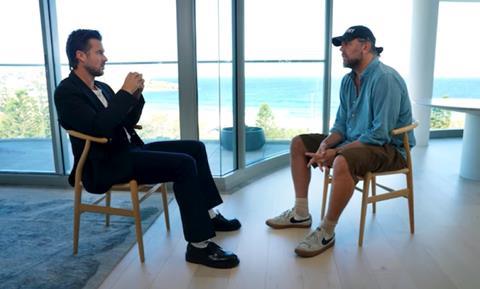
It’s been an unimaginably painful few years for the leader of one of the world’s biggest Christian bands.
Joel Houston is the former frontman of Hillsong United and writer of some of the most-sung worship songs in the world, including ‘The stand’, ‘Oceans’ and ‘So will I’. His parents Brian and Bobbie founded Hillsong, and what started in the 1980s with just one church in Sydney, Australia, quickly grew to become a global movement.
In November 2020, Joel’s close friend and pastor of Hillsong New York City, Carl Lentz, was fired following revelations of marital infidelity. As further allegations of sexual misconduct and abuse of power emerged, Brian Houston went as far as accusing Lentz of being a narcissist. Joel was forced to grapple with the fact that his friend was seemingly reaching millions with the good news of Jesus while secretly living a double life – and his father calling his best friend a narcissist.
The news about Lentz rocked Hillsong. For onlookers, it was another sad case of Christians being so impressed by a pastor’s charisma that they missed – or were willing to overlook - serious character flaws.
The Lentz scandal emerged during the Covid-19 pandemic. Hillsong United had already been forced to pause their world tour – meaning a drastic change in lifestyle for Joel. But matters were soon to escalate even further.
In August 2021, Brian Houston was charged by Australian authorities with knowingly concealing historical child abuse committed by his late father, Frank Houston.
Brian would eventually be found not guilty, but in the meantime, yet another scandal was swirling. The details remain murky, but Brian was accused by the Hillsong board of “inappropriate behaviour” with women. In March 2023, he was forced to resign from the megachurch he founded.
How do you cope when your father is accused of serious crimes and your best friend’s moral failure is on the front pages? How does your faith survive the near-collapse of a church movement your family founded? What is it like for your career, ministry and church to implode while your father is defending himself against criminal charges?
Despite Joel speaking to his friend and fellow megachurch leader, Rich Wilkerson Jr, for nearly two hours, we remain in the dark on the answers to those questions. Wilkerson failed to name any of the above tough topics. Neither was the interviewer able to guide his audience properly through the (admittedly complicated) timeline of recent events. It was a missed opportunity for clarity and closure.
Nevertheless, there is some gold to be mined from their conversation. Most encouragingly of all, Houston’s faith seems as strong as ever. He has a testimony to share that’s worth hearing. Here are the best bits:
1. Even when Hillsong’s press was positive, he suspected a backlash would come
“God opened these doors, and we’re getting to do this amazing stuff. Everyone’s like, ‘This is amazing!’ And we’re winning awards and there’s success. They’re making documentaries about us - positive ones.
“I thought: If they make positive ones, then you know they’re probably going to make not positive ones as well. I always saw it that way. If you’re the darling of the press then, at some point, you’re not going to be. And that wrestle was really obvious to me the whole time. I could see it, and so I felt the tension of that a lot. It felt like things were getting out of control.”
2. Everything looked good on the outside, but he was dying on the inside
“In my 30s, everything was getting bigger and getting crazier. It was nonstop. And on the outside, everything looked incredible, but inside I was dying, and I couldn’t explain why. My family’s amazing. I had a beautiful young boy. And in the ministry, everything we touched felt like it worked. It was great. But I kind of realised: That’s not it.
“If I’m honest, I spent two or three years not really going to church, and that’s probably shocking for a lot of people, but it’s just the truth. Not because I didn’t love [the Church]. It’s almost because I love the Church too much.”
3. Leaving Hillsong felt like a divorce
“Things happened and there was a grieving process there. I’m still happily married but it felt like a divorce. Even going to another church - I was part of one church my whole life! I gave my whole life to that church. That’s all I knew. I still love it. And I never in a million years imagined that wouldn’t be the church that I would be a part of.
“At the same time, I have such a strong conviction about what the Church is and what I believe the Church is meant to be across the earth. My faith has been rock solid, but so many of the other things - I don’t know if they’re constructs or…so many of these things were challenged, in a really healthy way.”
4. He wants the second half of life to count
“[Hillsong United] suddenly all became a job. We’re doing interviews and we’re travelling around the world and I’m like: What am I doing this for? I know it’s helping people, but…I just felt these tensions I couldn’t reconcile.
“I remember as a kid just saying: I don’t know what I want to do with my life, but I want the second half of my life to count more than the first half. That thought hit me when I turned 40. And at that very point [the year 2019-20], it felt like the rug got pulled out from underneath us, and suddenly everything just got discombobulated, and I felt like a caterpillar being completely rearranged inside the cocoon for the last however many years. And I’ve been OK with that, and I’ve found deep joy in that season and a real peace about it. There’s this sense of constantly feeling left behind, feeling like: Oh man, maybe our best days are behind us and all that kind of stuff. And I’m OK if they are. But I don’t believe they are.”
5. He used alcohol and cigarettes as coping mechanisms. But a friend helped rescue him
“There is a shadow side to who you are, and you can hide it or suppress it, but that’s when things are allowed to fester and ultimately those things will manifest in somebody’s life. And so, I’m going through that period, and I turn to alcohol or smoking cigarettes, and it was my coping mechanism - you know, self-medicating. And it got out of hand. Trying to numb pain. So, then I’m going: Well, I’m a fake. I’m a fake. I’m a fake. But deep down in my heart, I don’t feel fake. Everything to me has to be the real thing. I want to be real. I don’t want to lie.
“I took a lot of time off, and I went and saw a friend who’s a bit of mentor, and he spoke into my life. He explained: ‘You’re just trying to reconcile your shadow side, your ego side, and it’s very human. It’s just most people don’t ever bother dealing with it. There’s a dark side to who we are. It’s OK. That’s what makes us human. Everybody has one.’
“I realised there was quite a bit of gaslighting going on in my life. He just goes: ‘God has equipped you with the tools to get through this season.’ And I’m like: ‘What is it?’ He says: ‘It’s probably the thing God has gifted you with.’ And I realised that I hadn’t been writing songs.”
6. Songwriting has helped him process unforgiveness
“I’ve had to search my heart, and I’ve had to go deep with God, and I did that by writing songs and doing the thing that I felt like God gave me. Just spending time with the Lord, without any expectation, without it being for something - not for a record, not for a tour. I’m out in the wilderness, crying out to God and writing these almost streams of consciousness that are coming from some deep well in my heart.
“In the last few years, I can’t help myself, but I keep writing about forgiveness. I was like: Wow, where’s this coming from? I’ve got unforgiveness in my heart. I need to figure this out. That’s what songwriting has become for me. It’s like communion – where God is speaking in a really tangible way as I’m trying to process words and get them to fit to a melody.”
7. God orchestrated circumstances in order to force him to go deeper again
“I’m really grateful for all of it because I feel like it forced me to go deeper in certain areas with God than I ever would have. It’s like God almost orchestrated these tensions in order to get me to a place where I’m that broken and crying out to Him. It starts to become really rich - like suddenly the word comes alive and you start to realise He’s all we’ve got.”
8. He never believed the big events and concerts were the first priority
The impact [of Hillsong] across the across the earth is amazing. All of it’s unreal. The amount of people who found their purpose and found Christ and found gifts to do something really meaningful in the world. That’s one of the great things about the whole journey. But I realised really quickly, an event is an event, a moment is a moment but we’re a part of this kingdom. Those moments are only an overflow of all the stuff that really matters.
”When United was doing this stuff, we’d be in these interviews. And I’d be saying: ‘What really matters is the everyday, ordinary people who are just doing the real stuff of loving God and serving in a local church and loving their neighbourhood.’ It wasn’t just something we said. I felt it with all of my being. We all did. That’s what matters.”
9. He’s found joy amid the turmoil
“I’ve had deep joy and immense peace, even as everything was falling apart around me. I think this is what faith is. I really trust God. I used to say it [on stage]. I remember every night I’d be like: ‘Everything that can be shaken will be shaken.’ And ‘Spirit lead me where my trust is without borders.’ It’s a dangerous lyric.”
























No comments yet