












Was the Church right to welcome Russell Brand to the faith, but wrong to promote him as a Christian celebrity? Following his conviction for rape and sexual assault, questions are being asked of the Christian leaders who embraced him so publicly
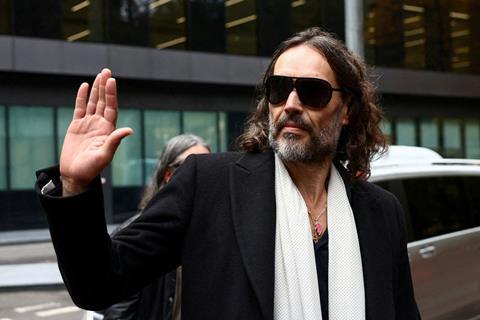
When Russell Brand very publicly converted to Christianity a few years ago, much of the mainstream press rapidly concluded this was a cynical PR strategy, an attempt to distract people from the allegations of rape and sexual assault he was facing, and to build up a following among right-wing Republicans in America where he now focused much of his online output. But for some in the church on both sides of the Atlantic, this was something quite different. A celebrity with a very high profile and a chequered past coming to Christ and being transformed: something to celebrate. He was baptised in the River Thames by former Chief Scout and Alpha ambassador Bear Grylls. He began joining Christian pastors on podcasts, had his own content swiftly absorbed into the online Christian media ecosystem, became a promoter for the prayer app Hallow, and appeared in the pulpit of a Florida megachurch. He even published a book entitled How to Become a Christian in Seven Days. And, as revealed in Premier Christianity in 2024, the British evangelist J.John began doing weekly Zoom studies with Brand, as well as inviting him to his home to meet other church leaders at a weekend retreat.
For a time, this ignited a fierce debate about how the Church should engage with a new convert who was accused of very serious crimes. Did our gospel imperative to love the sinner and welcome all eclipse any concerns about the allegations against Brand? Was this actually something to positively celebrate: a broken person with a terrible past turning their life around after meeting Jesus? Or were the Christian leaders palling around with Brand crassly overlooking the alleged harm he had caused to many women in the hopes of winning some reflected glory from a celebrity convert?
For a time, the debate lingered in limbo as the police investigated behind the scenes. Brand maintained his innocence throughout. But now there is a conclusion. The comedian, actor and influencer has been convicted of raping one woman and sexually assaulting three others, and has begun a decade-long jail sentence. Since his conviction, at least six more women have accused him of abuse, according to The Times.
Does Brand’s conviction change anything for those church leaders who welcomed him in, who mentored and discipled him, who happily posted photos online of them with their high-profile convert?
Sharing the stage
For some Christians the jailing of Brand underlines how inappropriate it was for any church figure to align themselves with the raconteur and controversialist in the first place.
Natalie Collins, a Christian gender justice activist and rape survivor, has been highly critical of figures such as J.John for appearing to “legitimise” Brand. After his conviction she said it was galling none of those who had befriended Brand had anything to say once he was revealed to be a rapist. “I was so angry with all those Christian men, that none of them have come out to say anything. They were all happy to pose with Russell Brand when they didn’t really understand or care about what he’s done to women. And now they’re all silent.”
She said John and any other church leader who had endorsed or collaborated with Brand should now step back from ministry for a time so they could reflect on their “lack of discernment and lack of wisdom”. Speaking specifically about John, Collins added: “I would want to see him pause any formal ministry in order to reflect on what this says about his character and his ability to discern what God says.”
Of course it was not wrong for Christian leaders to walk alongside someone who had been “accused of terrible things”, she clarified. “It’s not that sin should get in the way of offering and extending grace. It’s that Russell Brand is building a Christian audience and J.John is basically advertising it!? That’s where it becomes very troubling.”
Bekah Legg, the chief executive of the Christian domestic violence charity Restored, made a similar point. Writing on Restored’s website, Legg said speculating whether or not Brand had truly become a Christian was besides the point. “A perpetrator can be introduced to Jesus, welcomed into the church, and shown care and compassion, but they must also acknowledge their actions and live with the consequences. That is the root of the gospel.”
Karen Swallow Prior, an American evangelical writer, raised another concern: was basking in the reflected glory of Brand’s celebrity too alluring for Christian figures keen to boost their own profiles and ministries? Writing for the Religion News Service, she noted how well-known US church leaders such as Bishop Robert Barron, Carl Lentz and Tullian Tchividjian (the latter two have been the subject of sexual misconduct allegations themselves) had appeared on Brand’s platforms or invited him and his considerable audience onto theirs. Yes, the gospel requires us to accept all who come to faith, but there is a huge gulf between that and collaborating with an alleged rapist to build your own brand. Swallow Prior concluded: “Neither love nor truth requires sharing a celebrity stage to peddle the gospel alongside trinkets and club memberships.”
Our calling
Not everyone has been silent on Brand after his conviction. Grylls posted on X that Brand’s faith “seemed genuine to me at the time” and that he had only gone as a guest to his “private baptism” in the Thames. He argued that all Christians were called to offer the hand of friendship and service to anyone, including those “who have committed terrible crimes”. “It’s part of our calling as men and women of faith, to love and serve anyone. It is the sick that need healing. Judgement is for the courts and God, and it is right that justice has now been served.”
Grylls and others like him have argued that it would have been wrong for the church to hold Brand at arms’ length when he was earnestly seeking faith or discourage him from converting simply because he had been accused of sexual assault and rape. God and the criminal courts can assign guilt and punishment, the church exists to bind up the broken-hearted, and that includes those who have broken others.
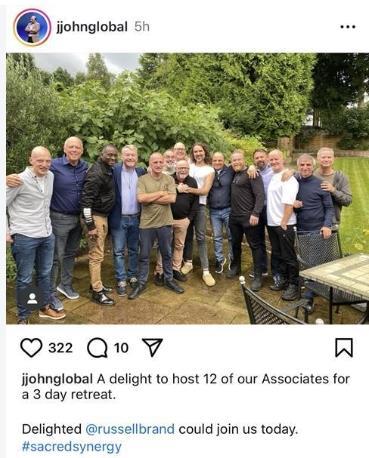
Two years ago, after Brand had been accused of multiple rapes and assaults in a joint investigation by Channel 4 and The Times but before he had been charged or convicted, John told Premier Christianity that Jesus was a “friend of sinners” and that’s all he was trying to be for Brand. “He’s going through that process to find out was anyone harmed,” the evangelist added. “There’s an investigation taking place, and maybe when that investigation is finished, we can have a different conversation. Judge not and be not judged, right?” Premier Christianity has approached John for further comment now that the criminal case against Brand has concluded, but he has declined an interview.
Greg Downes, an evangelist who was also pictured with Brand when he visited a retreat organised by John and later defended his presence, did not respond to a request for comment. Matt Summerfield, another evangelist in the now infamous photo who later apologised for taking part, declined to comment. He said he had “nothing to add” to his statement from 2024 but continued to pray for “peace and healing for the victims”.
Conspiracies
Others have been more pugnacious in their response. Donald Trump Jr posted a video online which raised doubts about Brand’s guilt, suggesting he may have been the victim of anti-Christian persecution. “No-one seemed to think he was a rapist, but then he finds God, changes his ways, talks about conservative life and now he will spend ten and a half years in prison.” Closer to home, a Reform councillor in Wales said the trial revealed Britain’s “two-tier justice system” which only went after the comedian after he “questioned the elites and publicly found Jesus as his Lord and Savior… Anyone who challenges the system and turns to God gets targeted.”
It’s important to recognise that very few (if any) UK church figures have echoed such arguments. The national director of the Fellowship of Independent Evangelical Churches, John Stevens, wrote an article for Evangelical Focus denouncing Christians who were trying to turn Brand into a martyr. “This was not a case of the persecution of a Christian, not of any conspiracy.” Instead, this was a man who claimed to be a believer and yet whose life showed precious little evidence of “repentance and the fruit of good works”. While it was not wrong to baptise Brand after he appeared to profess faith, “it was entirely inappropriate for him to have been elevated to a Christian celebrity status when there were outstanding questions and allegations that demanded answers”, Stevens concluded.
Meanwhile the evangelist Glen Scrivener said he was living in the “tension” of believing Russell Brand is both “a brother and a rapist”.
In an online video posted to his SpeakLife channel, Scrivener said popular culture had “celebrated the environment” which “enabled” Brand’s abuse. “A lot of this stuff was hidden in plain sight. That kind of avaricious, acquisitive male sexuality that just desires to possess others no matter the cost – that was celebrated by Channel 4, MTV and Hollywood.”
“I don’t think he cynically converted to Christianity. I actually think he might be a brother. And a rapist. He still needs to do some repenting of his past.”
Judgement
What should the church have done with Russell Brand when he claimed to have found Jesus? How should it have found the balance between encouraging him like any other sinner to seek forgiveness in Christ without appearing to minimise his actions or promote his brand? Walking that knife edge is challenging, but Stevens – like Collins and others – strongly believes it was a terrible error of judgement to welcome the comedian in so publicly, revelling in his celebrity and relishing his sizeable online audience rather than discipling him in quiet obscurity behind closed doors while the allegations were addressed by the police and courts.

























No comments yet