






The prominent American pastor is selling VIP tickets for his podcast tour. He denies wrongdoing but the preacher’s pulpit pushback has only fuelled the fires of the controversy, reports Tim Wyatt
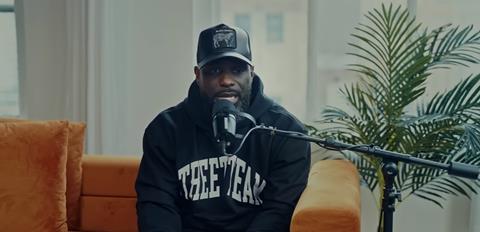
Who is Philip Anthony Mitchell?
Philip Anthony Mitchell was born and raised in New York by parents who had emigrated from the Caribbean. Despite being raised in a Christian home, by the age of just 12, Mitchell was already involved in dealing drugs. By his early 20s, he was a gun-toting gangster, revelling in his flashy lifestyle of fast cars and beautiful women. But underneath he felt empty inside, so much so came close to attempting suicide in 2003.
It was that night (and a series of other coincidences as he hit rock bottom) which began to turn his life around. As he was drawn back to the faith he was raised in, he felt God calling him to ministry. After a few years, he began working for and later leading churches. After his first congregation folded during covid, Mitchell founded 2819 Church in Atlanta in 2023 (named after the chapter and verse of the Great Commission from Matthew 28:19). This has grown rapidly, thrusting the pastor into the spotlight.
What is Mitchell known for?
Always dressed in black - to remind himself of the need to die to sin daily - Mitchell’s powerful, no-holds-barred preaching has turned him into a social media star. Clips of his blunt, direct messages from the pulpit are widely shared online. Mitchell’s preaching often focuses on fear of the Lord, accusing much of American Christianity of becoming “dishonourable” to God and mired in compromise and lukewarm faith.
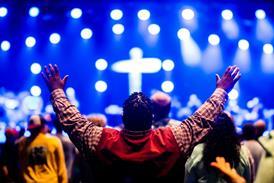
2819 now draws around 6,000 worshippers each Sunday, with tens of thousands following online. Its YouTube page has almost two million subscribers.
Last year, Mitchell launched the Street Preachers podcast with Florida-based megachurch pastor, Tim Timberlake. The episodes, which meander between personal testimony, Bible study and evangelistic appeal, also have hundreds of thousands of followers and have now spawned a spin-off live tour.
Why has this tour become controversial?
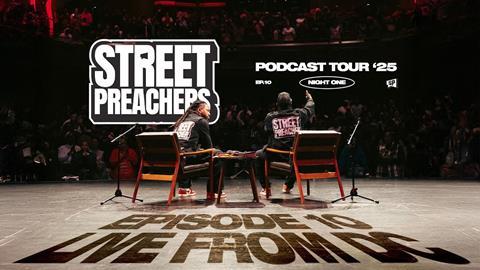
Some have criticised Mitchell for the ticket prices to the podcast tour. General admission costs around $60-70 (£44-52), and VIP tickets for $200 (£148), which include a post-event meeting with the podcast hosts, as well as a free book and discounts on merchandise.
Announcing the tour, Mitchell said he and Timberlake knew that “time was running out and we are very serious about the spread of the gospel” and so wanted to bring their message to eight cities across America.
“We’re not doing this for a bag [of money],” Mitchell added, but to “bring the gospel to your city, obeying the Spirit of God to take the gospel to the streets”, before encouraging fans to go and buy tickets quickly before they sold out.
Some Christian commentators said the general admission ticket prices were too high. Others noted that the tour seemed to be marketed as a primarily evangelistic event, focusing on preaching the gospel to (presumably) non-Christians. If so, how could it be right to charge people?
But most homed in on the VIP tickets. Even if the general admission prices could be justified, why sell a meet-and-greet with Mitchell and Timberlake at more than triple the price of regular tickets? Some cautioned that the pastor might be imitating some of the worst practices from the music industry, which has long sold snippets of time with popstars for eye-watering sums.
Was the whole tour simply an attempt to make Mitchell and Timberlake rich off the back of their burgeoning legions of fans?
How has Mitchell responded?
Shortly after the controversy erupted online, Mitchell partially addressed his critics in a sermon at 2819 Church (having abandoned the sermon he was intending to preach to speak, off the cuff, on repentance).
Drawing on Matthew’s Gospel, Mitchell preached for almost an hour, specifically challenging “corrupt preachers who love money more than people” and those “using the ministry for self-aggrandisement”.
He told his enthusiastic flock - who frequently broke out into cheers and applause - that opposition often meant “you’re moving in the right direction”. He urged them to “pay attention to who the devil attacks”, before promoting 2819’s latest prayer event at a Texas stadium which, he assured his “haters” watching online, would be free to attend.
Towards the end, Mitchell repeatedly quoted John the Baptist calling the Pharisees a “brood of vipers” (Matthew 3:7) and defended the podcast tour ticket prices. As it was funded out of his own pocket, entirely independently of 2819 Church, he had to cover the event costs, he said. If he and Timberlake were “money men” they would charge a lot more than $60, he added, insisting he would nevertheless respond to the “hate and ignorance” he had received by praying for his critics.
Has this satisfied his critics?
Many of those who originally attacked Mitchell have continued to criticise him, especially over the more expensive VIP tickets which the pastor did not directly address in his public rebuttal.
Some have used back-of-the-envelope sums to suggest Mitchell is making large sums from the tour. However, given that he has to pay for venues, travel costs, staff, insurances etc, it seems unlikely that he and Timberlake are making large profits from the $60 tickets. By comparison, the average price of a regular ticket to a music concert in the United States is around $130.
It seems reasonable that the pastors should at least cover their costs, and perhaps make a modest profit to pay themselves for their time. Mitchell’s defenders can point to numerous verses in the New Testament where Paul teaches that it is legitimate for Christian workers to earn a living (see 1 Corinthians 9:9–14, and 1 Timothy 5:17–18). Some have even cited that Jesus’s own ministry relied on donations from his supporters (see Luke 8:1-3).
Then again, if the tour is genuinely aimed at introducing non-Christians to the good news, many churches would baulk at the idea of charging for entry. After all, there is no hint in the Gospels that Christ charged a 60 shekel entry fee to hear the Sermon on the Mount.
Part of the complexity stems from whether the podcast is primarily entertainment for Christians, or evangelistic ministry. There have been similar controversies around worship musicians charging for VIP passes to their concerts: entirely unremarkable if you consider this a normal gig, but if it’s a church worship service, that’s very different.
In 2021, Hillsong and Chris Tomlin were forced to rebrand their VIP tickets after a comparable backlash and accusations of commercialising worship and celebrity culture. But Rend Collective’s Chris Llewellyn reluctantly defended the practice, arguing that without expensive VIP tickets, many tours would not be commercially viable.
Is any of this edifying?
Mitchell’s forceful rebuttal from the 2819 pulpit also sparked a broader debate about call-out culture in modern Christianity. Some are asking whether it was wise - or appropriate - for the pastor to use a Sunday sermon to argue back against his online critics.
Even if Mitchell did not want to turn the other cheek and rise above it, could he not have defended himself on his own social media (or even the podcast in question), rather than on the stage at church, conflating his ministerial authority with his side-gig as a podcaster?
The internet has spawned an entire industry of Christian content creators, all looking to attract as many views as possible. After the first wave of TikTok videos and Instagram reels that poured scorn on Mitchell for his ticket prices, there was a second outpouring of content dissecting the pastor’s response and pushing back against other commentary online. There are now reaction videos to reaction videos, responding to responses on Mitchell’s response.
Increasingly, the Christian influencer economy relies on either attacking other public Christian figures, or defending them from attack by other content creators. Much of this generates a lot of views (and therefore money for the creators) but does it actually build up the Church - or tear it down?
There is legitimate debate to be had about the merits - or otherwise - of charging entry to Christian events, but it is hard not to feel the actual issue being dissected is now secondary to simply generating controversy for its own sake to feed the content machine.























2 Readers' comments