




A delicate diplomacy has been maintained between the Vatican and the traditionalist Society of Saint Pius X (SSPX) for 50 years. But now Pope Leo has expelled them from the Church. Tony Wilson explains what happened and how it might be resolved
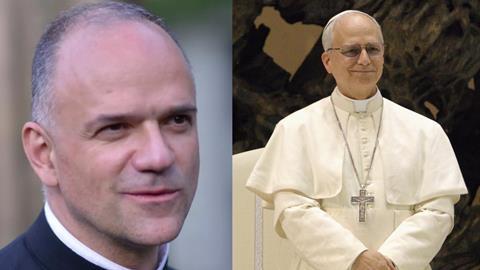
Often regarded as a monolithic institution, the Catholic Church is, in reality, a communion of many local churches. Each diocese functions as a church in its own right, led by a bishop who governs locally while remaining in communion with the Pope. Alongside the dioceses, numerous religious societies have received papal approval to contribute their own distinctive gifts. Missionary orders such as the Jesuits, preaching orders like the Dominicans and monastic communities such as the Benedictines all enrich the Church while maintaining doctrinal unity with Rome. Some, such as the SSPX, can even consecrate their own bishops, subject to approval by the Vatican.
This diversity brings vitality and innovation but also creates tensions that require resolution. In the Gospel of Matthew, Jesus shifted the authority of “binding and loosing” - a Jewish expression referring to the authority to interpret scripture authoritatively and make prudential judgements - from the Sanhedrin to Peter (16:18) and then to the apostles collectively in (18:19). In doing so, he established a pattern that has shaped Catholic governance ever since.
The exercise of authority
As early as AD 180, Irenaeus, Bishop of Lyon, appealed to this principle in his defence of orthodox Christianity against Gnosticism. He wrote that the Church of Rome was “founded and organised by the two most glorious apostles, Peter and Paul” and concluded: “It is a matter of necessity that every church should agree with this church on account of its pre-eminent authority.”
Throughout history, the Pope has exercised this authority together with the world’s bishops, particularly through ecumenical councils that distinguished orthodox teaching from heresy. The Council of Chalcedon in AD 451, for example, affirmed that Jesus Christ is one Person possessing two complete natures, fully God and fully man - a doctrine accepted by virtually all Christians today.
Occasionally, those who rejected the councils’ decisions separated from the wider Church but, more often, consensus prevailed. It is against this background that the present conflict between Rome and the SSPX should be understood.
A more liberal liturgy
The Second Vatican Council (1962–1965), marked a significant turning point in Catholic life. Among its reforms was the encouragement of greater use of local languages in the liturgy, in place of the traditional Latin. The revised Mass (Novus Ordo) sought to encourage fuller participation by the congregation while preserving the historic substance of Catholic worship. However, some Catholics expressed a desire to celebrate the Eucharist using the traditional Latin Mass rather than the Novus Ordu. Rome allowed this, but did not encourage it.
Vatican II also took place amid the social upheavals of the 1960 and, in some places, liturgical experimentation and theological liberalism went well beyond anything the Council Fathers intended. It was against this backdrop that Archbishop Marcel Lefebvre founded the SSPX in Switzerland in 1970.
As well as preserving the traditional Latin Mass, SSPX also took a historically conservative approach to priestly formation. Over time, relations with Rome deteriorated as Lefebevre challenged Church teaching on Vatican II - specifically a perceived liberal approach to unity with other Christian denominations, the right to religious freedom and papal primacy.
Like many traditionalist movements, the SSPX has also attracted supporters motivated by causes extending beyond liturgical concerns, including strongly conservative political and cultural movements.
Breaking point
Relations reached breaking point in 1988 when Pope John Paul II excommunicated Lefebvre after he consecrated four bishops without authorisation. In the decades that followed, Popes Benedict XVI and Francis sought to improve relations while leaving the Society in a poorly defined relationship with Rome – neither integrated nor expelled.
Earlier this month, the SSPX consecrated four more bishops, despite receiving requests from Rome to not do so. Having warned SSPX that the consecrations would be considered a schismatic act, the Society has now been placed outside full communion with the Catholic Church. SSPX have argued that consecrating more bishops was necessary for the continued functioning of the society, and they had been seeking permission to do so for some time. When this was not granted, they were forced them to proceed without authorisation.
The path to reconciliation nevertheless remains open. SSPX clergy and faithful may be restored to full communion by accepting the authority of the Pope, fully recognising the teaching of the Second Vatican Council as interpreted by the Church – parts of which they have argued are ambiguous or erroneous - and adhering to the Church’s common discipline and canon law.
Maintaining unity and orthodoxy within the Church has never been simple and often been messy. Diversity inevitably produces disagreement, making some form of final authority essential if disputes are to be resolved without permanent division. Whether the SSPX chooses reconciliation with Rome or to exist as permanently separate denomination is not yet clear.



















No comments yet