








The man who wants to be PM was brought up as a Catholic, but he has also championed puberty blockers for transgender teens, expressed sympathy for assisted dying and signalled support for a conversion therapy ban. Lois McLatchie-Miller takes a closer look at Andy Burnham’s views on ethical issues
“I’m a gay-rights, feminist, football-loving Catholic kind of guy.”
That was how Andy Burnham famously described himself during his first Labour leadership campaign. He has also said that he was made by “Everton Football Club, the Labour Party and the Catholic Church” - “in that order.”
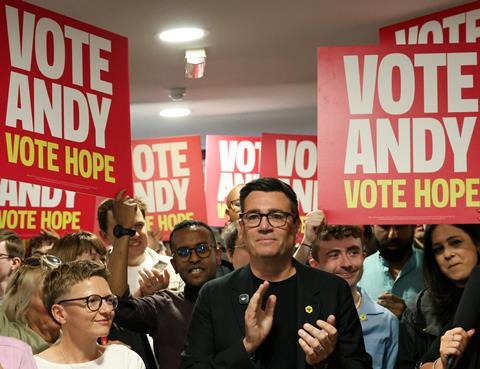
His image has changed a little over the years, but even today, as he delivered his first major speech as potential PM-in-waiting, he evoked soft biblical imagery among his liberal ideological principles – promising to put “hope in every heart” and building on his Makerfield election slogan “Vote Andy, Vote Hope”.
Burnham has never hidden his Catholic upbringing; rather, he has publicly admired the Church’s emphasis on compassion and equality. He has argued that the values of Catholicism and the Labour movement have reinforced one another throughout his life, praising Pope Francis’ concern for the poor and marginalised, and recognising those same instincts in Labour’s historic commitment to equality and public service.
There is much truth in that. Some of the most foundational principles of the left – of lifting up those with the least access to power and ensuring care for the most vulnerable – are inspired by a Christian ethos transmitted by Christ himself. Some commentators have been excited by the prospect of a politician taking office who is openly receptive to parts of the Christian faith.
But neither Catholicism, nor Christianity more broadly, is a collection of values from which politicians may simply pick and choose.
As prime minister, Burnham will need to make hard policy choices that sit right on the pressure points between Christian teaching and a liberal worldview. Within the first few months of entering Downing Street, Burnham is likely to face three defining moral questions: assisted suicide, the government’s proposed conversion practices legislation, and the continued medicalisation of gender-distressed children.
Assisted suicide
The first test is the renewed push for assisted suicide legislation.
Burnham has previously expressed sympathy for the principle behind assisted dying, while raising concerns about whether genuine choice about death is possible while the hospice sector remains appallingly underfunded. His reservations have largely focused on safeguards and implementation rather than on the moral principle itself.
Soon, he will have to decide. If he claims to be influenced by his faith-based upbringing towards a real appreciation for compassion, Burnham will oppose the new attempt to legalise state suicide.
A person’s value is not determined by their physical ability. The most vulnerable patients need improved support, not a lethal injection. Inevitably, it will be the marginalised and the poor who feel compelled to shorten their lives under an assisted dying regime; those without access to a higher standard of end-of-life care, and feeling they are a burden on strained NHS resources.
This narrative runs entirely counter to the principles that led the Labour party to establish the NHS, as well as those upheld in Christian teaching.
Conversion therapy ban
The second challenge will be the government’s draft legislation banning so-called “conversion therapy”.
All Christians should of course condemn violence, abuse and torture – including when used to force a person to change their sexuality or remove their gender dysphoria. But the draft government bill reaches far beyond outlawing abuse.
Its broad definitions have prompted warnings from lawyers and faith leaders that ordinary parental guidance, pastoral conversations and even consensual prayer could fall within its scope. Pastors who pray with a confused parishioner, or who point them to a biblical stance on what marriage means, could be criminalised. Parents who refuse to socially transition a confused child could find themselves facing jail time. Examples include using “economic pressure”. Would this include refusing to buy a 12-year-old son lipstick, or a similar-aged girl a chest binder to hamper her natural body development?
If this legislation was to become law, it would defy core biblical truths concerned with human flourishing - that sex is an objective reality, that marriage is between a man and a woman, and that children are perfect just the way they are - no drugs or scalpels needed.
Burnham has signalled support for conversion therapy bans during his tenure in Manchester. But soon, the power to use this legislation to enforce a severe crackdown on free speech for parents, professionals and pastors will be in his hands. If Burnham effectively places those beliefs outside the boundaries of acceptable public life, he will be legislating against the expression of truth itself. That’s a very dangerous position for any prime minister to take.
Puberty blockers
The third test concerns children experiencing gender dysphoria.
Burnham has consistently positioned himself as a supporter of transgenderism. As Mayor of Greater Manchester, he supported organisations that push gender ideology to schoolchildren, even publishing tips about how to get oneself referred to a gender identity clinic.
Again, compassion in communicating with vulnerable people is essential. But compassion without truth quickly loses all value and becomes toxic. As Burnham enters the race to become the UK’s next prime minister, the PATHWAYS trial will once again permit children as young as eleven to receive puberty blockers within a clinical research setting.
The contradiction in government policy is extraordinary. Children are deemed too vulnerable to access social media freely, to buy alcohol, get a tattoo, vote or marry. Yet they may become participants in research involving drugs that interrupt healthy puberty and carry potentially lifelong damaging consequences, including likely infertility.
Many children who present with gender dysphoria have autism or have suffered unresolved trauma. They should be offered suitable therapy, love and support to feel comfortable in their own bodies, not led down a path to serious bodily damage. If Burnham truly believes in the left-wing philosophy that society should be judged by how it treats the vulnerable, he must answer an uncomfortable question: Do we protect the child or preserve the ideology?
What faith means
Burnham has claimed to be shaped by both elements of Christian philosophy and the Labour Party’s ethics. History suggests that was once possible. Much of Labour’s greatest legacy - from establishing a minimum wage to the very concept of a welfare state - was profoundly influenced by Christian ideas about human dignity and the common good.
But today’s moral questions expose a growing divergence. Christianity is not a coat to put over extreme policies in order to appeal to certain voters. Burnham cannot claim the identity of a man of faith while shutting down expression of Christian values, and putting vulnerable children at risk for the sake of a damaging ideology.
Christians should pray for Burnham, if and when he assumes office, but not be distracted by empty Christian-sounding rhetoric. The Church must now speak more clearly than ever about the need to uphold protections for our most vulnerable members of society – from the sick and disabled at the end of life, to children navigating poisonous ideologies at the start.

















5 Readers' comments