









Supporting our less fortunate brothers and sisters overseas is widely understood to be the Christian thing to do. But when some aid is used to impose contested Western agendas on developing countries, Lois McLatchie Miller argues that the issue is not so simple
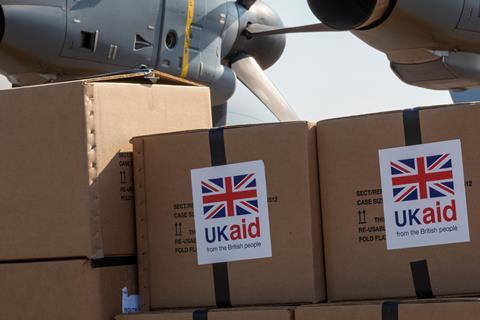
When politicians talk about restoring Britain’s foreign aid budget, Christians often find themselves instinctively sympathetic. Scripture is full of commands to care for the poor, and supporting those suffering beyond our borders is selfless and right.
If Prime Minister Andy Burnham follows through on reports that he intends to restore Britain’s aid budget to 0.7% of Gross National Income (it having been slashed down to 0.3% in recent years), many believers will instinctively welcome the move.
But before we applaud, we should ask a more important question than how much we spend: what exactly are we spending it on?
The debate over foreign aid has become strangely detached from its purpose. The 0.7% target has acquired an almost moral status, as though the percentage itself proves a nation’s compassion. Yet Christians should care less about meeting an arbitrary spending target than about whether our aid genuinely serves the poor and reflects our values.
Over the years, unfortunately, British aid has become far more ideologically-driven than simply providing clean water or disaster relief to communities in need.
Not all is as it seems
Between 2019 and 2025, for example, the UK Government has sent £5 million to the Safe Abortion Action Fund, an international programme specifically designed to expand access to abortion across dozens of developing countries. Part of that funding has been sent to Las Libres, a Mexican organisation which sends abortion pills illegally across the border into the United States.
This is no one-off incident. In fact, between 2017 and 2022, the UK government gave more than £350 million of public money to two abortion giants for use overseas: MSI Reproductive Choices (formerly Marie Stopes International), and the International Planned Parenthood Federation (IPPF). According to the companies’ annual reports, IPPF committed almost 4 million chemical or surgical abortions across 2018 to 2020, while MSI says it provided 4.6 million women with “abortion and post-abortion care services” in 2019 alone.
This funding of abortion is not confined to bilateral aid. A significant proportion of Britain’s aid budget is channelled through multilateral institutions, including United Nations agencies. While these organisations perform vital humanitarian work, they have increasingly used development funding to advance controversial positions on abortion.
During the Covid-19 pandemic, for example, the United Nations launched a $2 billion global humanitarian response. Alongside food security, sanitation and emergency medical care, the plan allocated $120 million to the UN Population Fund (UNFPA), the agency responsible for ensuring access to “sexual and reproductive health services” – UN terminology that explicitly includes abortion.
Western nations using financial muscle to strongarm more conservative developing nations into changing their cultural values to look more Western is modern-day colonialism
Why an abortion is an appropriate response to a pandemic respiratory virus remains a mystery.
Many of the countries identified as critical recipients – including Afghanistan, Somalia, Lebanon, Haiti, Myanmar and the Democratic Republic of Congo – maintain far stronger legal protections for unborn children than most Western nations. But high levels of conflict and poverty render these governments particularly vulnerable to the strings that come attached to UN aid. In such situations, these governments are left weighing up their genuine need for assistance against the public will to ward off the imposition of abortion in their country, thus threatening the lives of the unborn and the rights of women and girls to authentic maternal health care.
In short, humanitarian assistance is becoming a means of strong-arming such nations into policies that local populations have neither requested nor democratically endorsed.
Help or pressure?
Britain has also funded programmes promoting LGBT initiatives in developing countries in need of aid through FCDO’s human rights work. In May of this year, the government announced a £21m fund to support such initiatives.
In 2024, £5.3 million of taxpayer funding went to the ISDAO (Initiative Sankofa D’Afrique de L’Ouest), a money pot for LGBT initiatives in West Africa. According to their latest 2026 report, they focus on funding artistic ventures, including a poetry writing workshop for transgender people in Burkina Faso.
Wherever one stands on contentious culture war issues, this is undeniably far flung from the water wells and vaccine packages we typically believe our aid budget is being spent on. The fact that wealthy Western nations are using financial muscle to strongarm more conservative developing nations – desperately in need of aid to tackle famine, conflict and poverty – into changing their cultural values to look more Western is surely nothing but modern-day colonialism.
The Bible commands us to care for the poor. But caring for the poor does not mean thrusting women in need of better maternity care into abortion clinics, nor enforcing trans ideology into a nation who already knows what a woman is.
Christian compassion is always generous, but it is also discerning. Stewardship means asking whether our resources are being directed towards what truly helps people flourish especially at a time when governments insist resources are limited. If there are difficult choices to make, should scarce funds be directed first towards clean water, vaccinations, food security and emergency healthcare – or towards programmes promoting abortion and contested social agendas?
The real measure of Britain’s compassion is not whether we hit 0.7%, but whether our aid reaches those who need it most without becoming a vehicle for exporting values they have never chosen.
It is not our job to make our neighbours “just like us” when it comes to social values. After all, are we as a nation so much happier than our African brothers and sisters, now that we abort 1 in 3 British babies, and have countless vulnerable individuals harming their healthy bodies in the belief that they were “born in the wrong gender”? Our nationwide mental health crisis, chronic loneliness and depression rates would suggest otherwise.
If Africa want to take another route when it comes to protecting their children, it is not for us to deny them.
For an alternative perspective, see this piece by Tommy Sharpe

















5 Readers' comments