








As the new prime minister promises to fix the UK’s broken social care system, Christians say they are hopeful but cautious
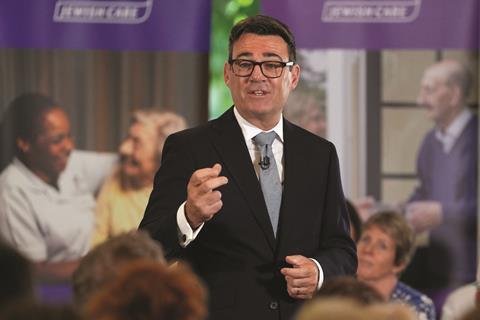
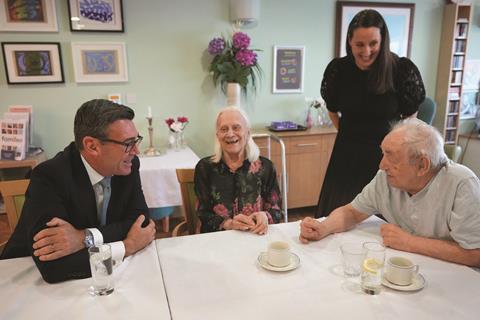
Nine days after entering 10 Downing Street, the prime minister stood in a Jewish care facility in London and declared the reform of the UK’s social care system one of his first priorities.
Andy Burnham described Parliament’s failure to reform social care as a “major dereliction of public duty” before announcing plans to bring forward the Independent Commission on Adult Social Care (known as the Casey Commission) report by a year. He also promised to begin cross-party talks and improve the pay, training and security of the social care workforce.
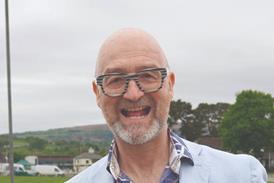
For Christian organisations who have spent years caring for older people, there is plenty to welcome in Burnham’s early promises. Stephen Hammersley, chief executive of Christian care provider Pilgrims’ Friend Society, said a prime minister who was prepared to make “a raft of bold declarations” could “only be a good thing”. But he also noted that 22 reviews of social care have taken place in the past 27 years, with successive leaders promising change, only to retreat when confronted by the complexity and cost of reform.
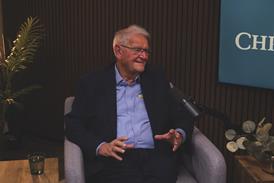
Christian economist Sir Andrew Dilnot knows that frustration well. He chaired the government Commission on Funding of Care and Support, which reported in 2011. He told Premier Christianity that “very little progress” has been made since.
Legislation introducing changes has twice been passed, he says, only for governments to abandon their final implementation. His conclusion is straightforward: “I think we need a prime minister who is committed, because there will be a cost.”
Why is social care so difficult to fix?
The scale of the challenge Burnham has inherited is considerable. The Health and Social Care Committee estimates that two million people aged 65 and over, alongside 1.5 million working-age adults, are not receiving the care they need. Demand is only expected to grow as the population ages and rates of dementia, disability and other complex needs increase.
Where formal provision falls short, family and friends often step in. According to the Office of National Statistics, approximately 4.7 million people in England provide some form of unpaid care, with many taking on significant responsibility for relatives alongside work and other commitments.
Part of the problem may be a widespread lack of understanding of how the system actually works.
Research cited by Christian campaign group CARE found that 31% of adults incorrectly believe the NHS provides most social care, while 33% believe services are free. Other research found that almost half had little to no understanding of what the term itself actually means.
Baroness Casey, chair of the Independent Commission on Adult Social Care, identified the same problem. Giving evidence to the Health and Social Care Committee in June, she said previous attempts at reform had repeatedly lacked a proper conversation about what social care is and what society expects from it. “It’s not difficult to see how [it] fails to get overhauled if most of us are unaware of what is involved,” added CARE’s Dan Wells.
The reality is often harsher than people realise. In England, those with more than £23,250 in capital are expected to meet the full cost of their care until their assets fall below that threshold. Dilnot, whose 2011 commission suggested raising the threshold to £100,000, argues that the current system is “both unfair and inefficient”. The government should increase the point at which means-tested support disappears and introduce a cap on lifetime liabilities, he says.
Money is also a central issue for those providing care. Burnham said carers “should be the best paid people in society, not the worst”, promising reform that encompassed better pay, training, career progression and job security. Casey has similarly described social care as being delivered by some of the lowest-paid and least secure workers she has encountered. Hammersley, too, believes successive governments have failed to adequately recognise “the skill and the value” of people working in care, contributing to longstanding problems with recruitment and retention.
Putting politics aside
Burnham has made the Casey Commission central to his plans for longer-term reform. Established in 2025, it was tasked with recommending how to “define and build” a system capable of meeting the country’s current and future needs. Burnham has now asked Casey to bring her work forward by a year and begun cross-party talks aimed at building political consensus around reform.
For Hammersley, there are reasons to believe these proposals could amount to something more substantial than previous attempts. “The bringing forward of the report by Baroness Casey and her commission into social care, greater engagement with leaders of other political parties, better pay for carers, a National Care Service that’s free at the point of need, a funding system that’s easier to navigate…these are all significant moves that could amount to a real difference.”
Burnham himself acknowledged the need to move beyond the political divisions that have frustrated previous attempts at reform. “It’s shameful, to be honest, that politicians have put point scoring before fixing this issue,” he said.
We absolutely need our government to step up. At the same time, Christians need to carry on doing our bit
The need to put political allegiances aside if meaningful reform is to be achieved appears to be widely recognised. In its July report on the Casey Commission, the Health and Social Care Committee warned that the process “should not be bound by political convenience”, adding that the closer it gets to the next general election, the harder it may become to secure the broad political and public support required to implement it.
Hammersley believes Burnham’s ability to overcome longstanding hindrance to reform will prove decisive. “For him to succeed, he’s going to need tenacity and buy-in from his political opponents. It’s my prayer that he will have both.”
Care before assisted dying?
After his speech on social care, Burnham was asked about assisted dying.
“I think there’s something that needs to happen first,” Burnham told reporters. “That is the fixing of the funding of palliative care and social care.”
He added that it was “very challenging to introduce that wider debate” while people did not have “peace of mind” about the level of care they could expect, should they need it.
The government cannot legislate neighbourliness
His intervention has been welcomed by many Christians. Most Rev John Sherrington, Archbishop of Liverpool and lead bishop for life issues, said the Catholic Bishops’ Conference has consistently called for investment in palliative and end-of-life care.
The role of the Church
However, valuing human dignity doesn’t begin and end with opposing assisted dying. It also means affirming the value of those who need care, those who provide it and the work of caring itself. Dilnot believes churches and faith communities have a particular role to play in this. Worshipping communities, he says, can be particularly effective during the “early and informal stages of care”, when somebody may need companionship, practical help or simply a community around them.
Hammersley points to churches that already run seniors’ lunch clubs and dementia-friendly cafes alongside countless smaller acts, such as checking on someone who lives alone, that never appear in social care statistics.
“We absolutely need our government to step up and do its bit. And at the same time, Christians need to carry on doing our bit…However much Burnham and his political colleagues do in Westminster, it will only ever be from a distance and on high.”
Within this, Dilnot highlights a need for balance: churches are not a substitute for a functioning care system, and the government cannot legislate neighbourliness. Complex and long-term care requires “the whole community, acting together through government”, he says.
Burnham’s reforms will be judged on whether he can deliver structural change where so many of his predecessors have failed. Christians face a parallel challenge: while calling on government to value older and vulnerable people, are we prepared to embody that value in our own communities?
As Hammersley puts it: “The person best placed to check in on and love an older neighbour is always going to be the person nearby.”
























No comments yet