






After his arrest during a livestream, Christian content creator JiDion announced he was quitting livestreaming. AJ Gomez reflects on the danger of an online world that rewards escalation and spectacle for a Christian trying to put those impulses to death
The red dot begins to flash. Subscribers across the world are notified that you are online. The viewer count cycles upwards like a slot machine, and with it comes the responsibility to entertain as instinctively as you breathe.
Welcome to the world of streaming.
There is an inherent danger in how far some creators feel pressured to go in order to fulfil that responsibility, particularly when the rewards they receive for doing so can continually push them to go even further.
The Christian walk on cam
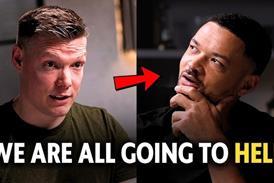
For 25-year-old Christian content creator Jidon Adams, better known as JiDion, teetering around the boundary of ‘too far’ has brought him success as often as it has brought him trouble. His latest debacle has been no different.
In 2023, JiDion made a public declaration that he was giving his life to Christ. Before then, his journey had been one of knowing about God while still being pulled by the allures of the world. By his own admission, fame, money and attention had made surrender difficult.
That, he said, was going to change. “I’m not trying to put my pinky toe in anymore, I’m not going to just be sitting on the edge of the pool, I want to dive all in. I don’t want to just talk the talk. I want you guys to see it in my actions.”
As the ongoing change happened internally, he knew a pivot in the content he produced had to accompany it. Before his declaration of faith, he had built an audience on videos that fed the internet’s insatiable appetite for someone to laugh at. Through antagonistic pranks designed around disruption and public embarrassment, he often provided two: himself, and his victims.
JiDion said himself that viewers commenting on his drift away from his Christian values had been a mirror held up to his face
He was banned from Wimbledon after disruptive antics during the 2022 quarter-final between Jannik Sinner and Novak Djokovic. Later that year, he was removed from the US Open men’s quarter final after getting a haircut during the match. Another video saw him approach men walking in public alongside their other halves with deliberately satirical, provocative enquiries such as: “Is thou girlfriend single?”
His content consisted of disorder in public spaces that almost warranted admiration for the warped sense of courage it required. JiDion understood that this sat in conflict with the Christian walk he was publicly claiming. So he pivoted.
The prank videos made way for Sunday streams, Bible studies with pastors, personal readings of scripture and discussions with other Christian creators on faith and theology. Then came his “catch a predator” era, in which he and others posed online as minors, arranged meetings with men attempting to meet underage boys or girls, and confronted them on camera.
Environments that take you back
On the surface, that kind of content appears easier to reconcile with Christian values. Exposing predators appears, at least outwardly, to be a protective act for the public good. But in the age of the internet, it is unwise to judge an act only by its outward appearance, particularly when dealing with matters of faith. Motive matters. Method matters. The condition of the heart matters. And when a camera is involved, all of these things become too easily called into question.
That is the tension at the centre of JiDion’s story. A morally serious aim can still be warped by the incentives of content creation. With the desire to trend, righteous anger can become performance and accountability can become entertainment.
While JiDion may have begun with the language of justice, he appears to have caught himself still operating according to the old rules that prioritise attention, escalation and spectacle. His latest controversy seems to have forced that realisation back to the surface.
In his to-catch-a-predator-like series, JiDion linked up with another content creator, Skeeter Jean, who does a similar thing. Jean, however, was purusing another storyline. Jean claimed that his uncle Joe had been financially exploiting his mother, Jean’s grandmother, and squatting in her home for months. In an attempt to force him out, they had others squat alongside him, JiDion being one of them. And, of course, streamed it for content.
They repeatedly filmed Joe until they achieved their goal and drove him out of the house. Skeeter, JiDion and their camera crews then followed him to a McDonald’s, leading Joe to call the police.
The call of Christ is not simply to rebrand the old self. It is not even merely to resist it. It is to die to it.
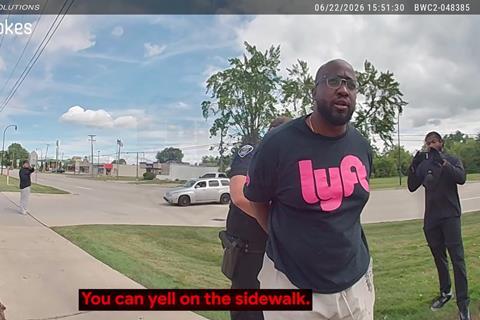
Despite warnings from law enforcement to leave the McDonald’s property, the YouTube crew returned, creating a public disturbance and interfering with customers. After ignoring further warnings to vacate the premises, officers arrested JiDion, charging him with breach of peace and misdemeanour stalking.
Bodycam footage of JiDion’s arrest later spread widely online, and he came under heavy scrutiny for his conduct, including a moment in which he said to an officer: “I am a multi-millionaire. I promise you I can take this as far as I want.”
Truth, grace and accountability
The scene struck me as one many Christians will recognise from some point in their walk. What does it look like when someone trying to follow Christ keeps returning to environments that reward the very impulses they are trying to put to death?
JiDion seems to have acknowledged that wrestle himself. “I shouldn’t have ever been there with my values as a Christian…I have been falling back to my old self.”
In an apology video reflecting on the incident, he admitted: “I’ve come to realise that streaming makes me the worst me.”
He said he had been “spiralling” and “losing the plot”, and conceded that the pressure of live chat, viewer expectations and constant performance had pushed him towards escalation rather than wisdom. He also declared that he would be quitting streaming in a manner reminiscent of his original pivot.
And weirdly, my first response to this was admiration.
JiDion displays a level of self-awareness that is indicative of someone who holds himself to a higher standard. And maybe my sympathies are driven by first-hand experience that sanctification is seldom a clean, linear process. How much more when the instincts, desires and behaviours you are trying to surrender are monetised, elevated before the world, pedestalling you alongside them, as funny and entertaining?
Equally, I believe that grace and understanding cannot exist without accountability. And I think JiDion agrees.
JiDion said himself that viewers commenting on his drift away from his Christian values had been a mirror held up to his face.
“I’ve seen some of you guys in the comment section calling it out. ‘JiDion, you’re going back to your old self.’”
The call of Christ is not simply to rebrand the old self. It is not even merely to resist it. It is to die to it.
JiDion is in a unique position of having the world watch as he tries to do so. If you ask me, the response to that is no new, groundbreaking evolution in theology. It is one clearly depicted in the Bible: accountability, a firm call to surrender to both the love and lordship of God, and grace even when he falls short.






















No comments yet