



500 years after William Tyndale risked everything to translate the New Testament, Christians are finding increasingly creative and sometimes covert ways to spread scripture. Across war zones, persecuted nations, remote communities and offline regions, here are five organisations fighting to get the Bible into the hands of every believer
‘A smuggled microchip helped him meet Jesus’
The Lord is the Lord of all technology, and we want to see it used for gospel advancement. One of the things OneHundredFold focuses on is mobile phones. There are billions of them, all around the world, in people’s pockets.
Through a micro-SD card called “the mustard seed”, we created a custom Android app that we place on the card. Users load it onto their device, the app then looks back at the chip and populates itself with the content - a Bible, gospel materials, evangelistic films and discipleship training.
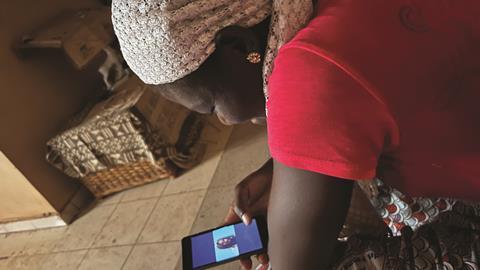
There are many nations that block access to the internet; we bypass that by delivering content directly to the device. There are also a lot of places in the world where authorities monitor your access to Christian content online and will identify you as somebody to be persecuted or tracked.
It’s much easier to move something the size of your fingernail than something the size of a Bible. I have taken thousands of these chips into places, and no one batted an eyelid. I know others who’ve carried even more.
One team member was working in a Middle Eastern country. He received a notification that there was going to be a secret baptismal service, so he followed the message to a warehouse. At the back were a couple of oil drums, filled with water. Two people were standing in them, ready to dunk themselves. But before they did, they were asked to give their testimony. One person held up a little chip and said: “This is how I met Jesus.” Our team member walked up to him and asked: “Can I borrow that for a second?” He checked it and realised it was one we produced. He was just so excited!
We’ve had pictures from pastors in canoes on the Amazon River getting pastoral training materials, and we just produced some for the deaf community in Ethiopia. The deaf community is considered to be one of the largest unreached people groups in the world. Fortunately, in Ethiopia, a great deal of scripture has been converted into Ethiopian sign language, so we created a sign-language-first application. For many people, it is the first time they’ve had any resource in their language at all. It is truly exciting to be part of that.
Ed, chief executive officer of OneHundredFold 100fold.org
‘In North Korea, owning a Bible can mean prison. Still, Christians are desperate for scripture’
Open Doors has always been about smuggling Bibles to people in persecuted places. That began with Brother Andrew in 1955, and continued in 1990 with Project Pearl, the initiative to smuggle one million Bibles into China in one night.
A number of years ago, I was in Iraq, being driven around by a brother called Sam. He had smuggled a vast number of Bibles. As he retold stories of putting the Bible into people’s hands, and of those people then coming to know Jesus, he wept.
I have also met Christians in South Asia who learned parts of the Bible by heart because they know it may be taken from them. But they also memorise it so they can pass it on to others.
Our World Watch List identifies the countries where following Jesus is most opposed, and North Korea is currently number one. It is illegal to possess a Bible there, and you can be thrown into prison for it. A couple of years ago, an 84-year-old woman from North Korea, who had spent nearly a decade in prison camps, came to the UK and stayed with my family. She had escaped to South Korea but had come here to share her story.
One evening, she asked whether I could take her on a road trip to Wales. We drove to Abergavenny, to a little church called Hanover Chapel. I opened the door, and as she crossed the threshold, she fell to her knees, weeping. I asked her translator: “Is she OK?” The translator said: “Yes, she’s just overwhelmed because, in 1863, a young man called Robert Jermain Thomas left this church with a Bible in his hand and a call to bring the gospel of Jesus to Korea.” He was attacked, his Bibles were burned but, a couple of years later, he felt God stirring his heart again to travel up the Pyongyang River. He took Bibles, distributed them and his boat was attacked again. He was taken to the shore and decapitated. The Bibles fell around him; various villagers picked them up, took them home and learned to read them.
The woman said: “That young man’s sacrifice is the reason I have an eternal hope for my life today.” Such is the hunger for the word of God in places where people are denied access to it. When you meet Christians for whom scripture is that precious, it challenges and compels you.
Sam Miller, director of strategic relations for Open Doors opendoorsuk.org
‘They thought the Pharisees performed miracles – until the Bible spoke their language’
Wycliffe Bible Translators was founded in 1953 by mission organisations and Bible colleges in the UK that had heard about Bible translation work happening internationally. In the 1950s, Bible translation often looked like Westerners going to a place, particularly where there were no churches, learning the language and translating the Bible. Because of the growth of the global Church, it now happens differently. First, we speak to Christians and churches in places where the Bible is not available in their own language. They identify people they believe could work on translation, and we train, mentor and equip them. We provide software and help them run their own translation programmes. The method is about strengthening local churches so they can do their own translations. It is not us arriving and telling people what to do.
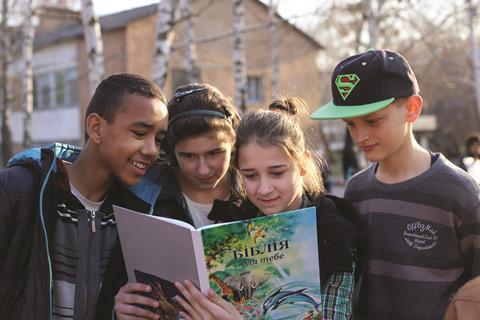
People sometimes imagine we work only with small, remote tribes. But the languages we work with represent people groups from 5,000 to 20 million people.
In Nigeria, there are more than 400 languages spoken. New Testaments have now been translated into more than half of those languages, but there is still a lot of work ongoing to get more Bibles translated in every context.
When people receive the Bible in their own language, you see churches grow in understanding, growing spiritually and then growing numerically.
There is a church in central Nigeria where the congregation had been meeting in English. But people did not understand English as well as they thought they did. As a result, the church taught that the Pharisees had performed some of the miracles in the Bible. That misunderstanding made its way into their own Bible translation and caused complete confusion. But because someone from Wycliffe Bible Translators was working alongside them, they queried it. Beyond correcting a translation misunderstanding, people have been given access to the knowledge of who Jesus is. He is not just one miracle worker among many. He is supreme. As Colossians 2:9 tells us, the fullness of God dwells in Him.
We don’t do this because of languages alone. We do it because people need to know Jesus better. If you misunderstand the Bible, you misunderstand what God is saying to you. But when the Bible is available in your own language, you can hear God’s voice so much more clearly. That is where lives are changed. That is where churches grow.
James Poole, executive director, Wycliffe Bible Translators wycliffe.org.uk
‘Every Bible has a name on it. Somebody has asked for it’
EEM began in 1961, when seven couples in their 20s travelled behind the Iron Curtain. The Soviet Union was in power, the Berlin Wall stood, but their enrolment in graduate school in Vienna, Austria, gave them visas to cross into restricted territory.
They went to teach people about Jesus. But one of them, Gwen Hensley, came back from a trip and told his wife, Gayle: “This is impossible. How do you teach people about Jesus when they don’t have Bibles in their language? We can’t do this.” So the ministry started printing Bibles. One of the originals was a Russian Bible affectionately known as the “Marlboro Bible” because it was roughly the size of a packet of cigarettes. Guards would ask: “Do you have any guns or Bibles?” But they did not care if people smuggled in cigarettes. So hundreds of thousands of these tiny Bibles were printed and carried across borders.
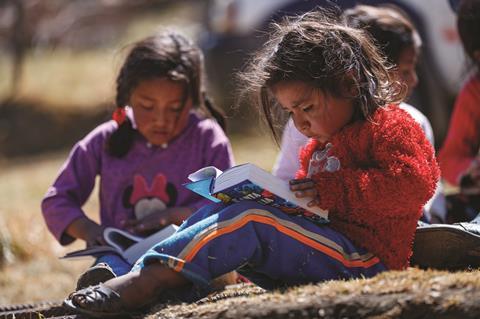
Today, we publish, print and deliver Bibles and Bible-based materials to 37 countries in 33 languages. But I always say we are not a Bible distribution ministry. We are a Bible delivery ministry. Every Bible has a name on it. Somebody has asked for it. It is not going on a shelf or in a drawer; it is going into someone’s hands. These are not Bibles looking for people. These are people looking for their Bible. They are waiting for scripture in their heart language.
I will never forget one Roma woman who received a Bible in her own dialect. She began to read and said: “Oh. God speaks my language.” That is what William Tyndale was about. He wanted the Bible to be accurate, but he also wanted people to have access to it. The way to do that is to put it in their language.
Last year, we produced 2.2 million Bibles. This year, we have budget for 2.7 million. But requests came in for 4 million. That is the hardest part of my job. These are not just books. They are people saying: “Please give me a Bible in my language. I’ve never read God’s word in my heart language before.” I can say yes to 2.7 million of them. To the others, I have to say: “Not yet.”
In Ukraine, demand has increased. When a foundation gets rattled, people start looking for hope. Delivery has become very challenging, and we are looking to move our warehouse from Kyiv because the bombings have been so intense. But distribution has gone up. Around 6 million refugees have left Ukraine, with millions more internally displaced. So, we are receiving requests for Ukrainian-language Bibles not only inside Ukraine, but in Poland, Slovakia, Hungary, Moldova, Germany and the UK. At the same time, requests for Russian-language Bibles have skyrocketed too. People are searching. And we want to say yes to as many of them as we can.
Dirk Smith, president, Eastern European Missions eem.org
‘The Bible App is helping people read scripture, even without internet access’
The idea for the Bible App came to our founder, Bobby Gruenewald, in the early 2000s. He wasn’t a consistent Bible reader and wondered if technology could help him. The idea to make scripture free and digitally accessible to all came to him while in an airport security line, and after much trial and error, it was developed into one of the first free apps available when the App Store launched.
Since then, YouVersion’s family of apps have been installed on more than 1 billion devices worldwide, providing access to the Bible in more than 2,400 languages and 3,800 different versions, alongside video content, Bible plans and other features designed to help people understand and engage with scripture.
Through the Bible App, we’ve seen individuals and communities access the Bible who wouldn’t have otherwise. Sometimes, that’s because of limited technology or internet connectivity. In 2022, we launched Bible App Lite to address that. It offers an offline-optimised way to read the Bible from anywhere, even without an internet connection. It has seen rapid adoption across Africa, South-east Asia and Latin America and has been installed on nearly 140 million devices.
In other circumstances, digital access means people can read the Bible in countries where doing so is dangerous or illegal. Kia, from Iran, was raised Muslim, but soon found himself with questions that Islam could not answer. He sought a Bible on the black market, finding a New Testament, and after being impacted by the teachings of Jesus, he converted to Christianity. He was arrested three years later for evangelising, and his Bibles and religious materials were confiscated. So, he turned to the Bible App to read scripture on his phone and, for the first time, he was able to read the Bible in its entirety.
Access is one thing, but getting local people involved is even better. YouVersion is passionate about serving different cultures and communities well by increasing partnerships that provide content to address different contexts. We have regional hubs in Central and South America, Africa, Europe and Australia and are opening locally staffed offices globally. We’re also mindful of supporting how different people engage with scripture. The app offers an audio feature for those who are visually impaired. We have a separate app, Bible App for Kids, available in more than 65 languages and designed specifically to help children explore God’s story.
When we think about the importance of reading scripture in your own heart language, we’re grateful for William Tyndale and others throughout history who made it possible for people to read the Bible in their own language. That same desire – to make scripture accessible to everyone, no matter where they are in the world or what language they speak – is what drives YouVersion today. We hope to be just one part of ensuring that everyone, everywhere has access to the Bible in a language they truly understand.
Greg Hall, chief operations officer, YouVersion youversion.com
How William Tyndale translated the New Testament
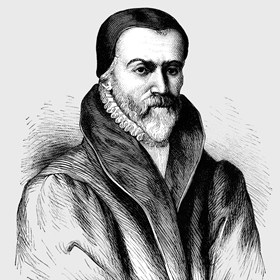
William Tyndale was born in approximately 1491 in Gloucestershire. He was a gifted child and was sent to the University of Oxford. In 1515, Tyndale graduated and was ordained as a Catholic priest.
In 1516, the Dutch scholar Erasmus produced a printed edition of the Greek New Testament and in 1517, Martin Luther pinned his 95 Theses to the church door in Wittenberg, which triggered the European Reformation. Luther then used Erasmus’ Greek text to translate the New Testament into German. This was published in 1522.
Tyndale was inspired by Erasmus and Luther to translate the New Testament into English. He went to London to ask the Bishop of London for permission, but was refused. So, Tyndale went to Hamburg to continue his work, before moving to Wittenberg and then Cologne.
In 1525, Tyndale completed the New Testament in English, but it was not fully published until 1526, in the German city of Worms. Thousands of copies were smuggled by ship into England, where they were eagerly bought and read. Only three copies of the 1526 New Testament are known to exist. One is in the British Library, one in the Württemberg State Library in Stuttgart and a partial copy in St Paul’s Cathedral.
In the late 1520s Tyndale moved to Antwerp (in modern-day Belgium), the great printing centre of Europe. Having also learned Hebrew, Tyndale started to translate the Old Testament. In 1530 he published the Pentateuch and Jonah. As part of his translation work Tyndale coined some new words, including “Passover” and “scapegoat” which are still used in English Bibles today. Tyndale never got to finish his work because he was arrested, imprisoned and executed for heresy at Vilvoorde near Brussels in 1536.
Tyndale’s work was the first New Testament to be translated into English from Greek, and the first English New Testament to be printed. The Oxford English Dictionary (OED), which quotes the first printed citation of words and phrases, cites Tyndale’s publications more than 800 times.
Tyndale’s New Testament was taken, with just a few edits and revisions, into the Geneva Bible, Henry VIII’s Great Bible, and the King James Version. It is still readable today. Nowadays, modernised and updated forms of Tyndale are the basis for the New Revised Standard Version (NRSV) and the English Standard Version (ESV). Tyndale’s words and phrases seeped into Shakespeare, and into many of our hymns and everyday conversations.
Neil Rees is the chair of Tyndale Society. For more information on Tyndale’s legacy and the 500th anniversary of his New Testament translation, see tyndale.org



















No comments yet