









24-7 Prayer leader Pete Greig is reluctantly stating that war may be coming. Sam Hailes unpacks the claims and considers how seriously Christians should take the warning
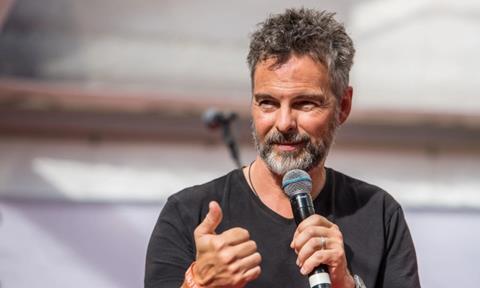
The “bewildered founder” of the 24-7 prayer movement, Pete Greig wants you to pray and fast that his latest prophetic word is wrong.
“Prepare for war”. That’s the phrase Greig heard while worshipping with other 24-7 prayer leaders in South Africa back in March.
Greig hoped he was somehow mistaken and tried to ignore the word. But within an hour, another leader in the movement was briefing Greig that the 24-7 prayer team in Beirut, Lebanon was being displaced ahead of expected bombing by Israel.
Greig decided to take another Christian leader aside who had experience working at the Foreign Office. “Am I barking mad?” Greig asked him.
The leader reportedly replied, “During my nine years working in the Foreign Office, we’ve done almost nothing else but quietly, behind the scenes, prepare for war. And in the last two years, it’s become frenetic.”
On returning to England, Greig says he received a handwritten letter from a lady he had never met. It read, “I had a dream. I saw young men’s bodies piled up, and I was told I must tell Pete Greig, ‘prepare for war.’”
Greig was shocked to discover the lady dreamed this on the same night he had heard God speak to him in South Africa.
A reluctant messenger
The above events were recounted by Greig during his seminar at this summer’s Wildfires festival. The full talk - entitled ‘Prepare for war’ is available online.
Greig doesn’t make specific predictions, but the clear implication is that a significant global conflict could be on the horizon – one with serious consequences for the UK. The scenario he seems most convinced of is that cyberwarfare could cause communications failures and disruption to supply chains, with the potential for a wider conflict to escalate further.
In his address, Greig urges Christians to pray for peace and to have a robust theology of Christian hope, rather than panic. Nevertheless, he does suggest churches, ministries and families should make sensible preparations, including stockpiling basic essentials and preparing for a time when the internet may be temporarily inaccessible due to a cyberattack.
Greig also emphasises the first duty of any government is to protect its citizens, therefore in his opinion, the UK’s spending on defence needs to be significantly increased in order to deter hostile forces. He pushes back against Christians who might adopt a purely pacifist position, arguing instead that because “bullies” are in charge of some nations, it is necessary to build up our military, even if only as a deterrent.
Greig seems very conscious of wanting to avoid causing unnecessarily alarm. At one point he implies his message is primarily for leaders, rather than those in the pews, because he doesn’t want to “sow fear”. This may also partly explain why Greig gave his message within the smaller setting of a Wildfires Lab (seminar), rather than from the main stage.
On the one hand, Greig is inviting as many Christians as possible to pray into these prophecies - and to even take action in the form of contingency planning. On the other hand, he’s reluctant to push his message through other platforms. The first question during the Q&A following his talk was, “I just wonder whether what you said really needs to be heard by so many more people? It feels to me like it lends itself to being published in some way?”
“Ah, yeah, maybe,” Greig replied. “I’ve been grumbling about having to do this seminar, to be honest!”
Could it be true?
Wild and wacky predictions and prophecies are made every day online. But Greig is not prone to making especially outlandish claims. He’s arguably one of the most trusted charismatic voices in the evangelical church today. His books God on Mute (Kingsway), Dirty Glory and How to Pray (Hodder & Stoughton) are bestsellers in the Christian market. His ministry’s Lectio 365 app is used by hundreds of thousands of Christians around the world. All this means that when Pete Greig speaks, evangelical leaders are likely to listen.
None of that makes him right about this particular issue - and Greig himself wants to be wrong. “I believe we should not just be praying, but fasting that this prophecy does not come to pass,” he said.
Prophecies like this need to be carefully weighed and tested. If we were to believe such a word purely because it comes from a well-known leader or someone whose books we appreciated, we would be guilty of contributing toward an unhealthy culture of celebrity within the Church.
The context
We should also be mindful that very little of the geopolitical picture Greig describes in his talk requires prophetic insight to perceive.
For anyone paying close attention to global and military affairs, Greig’s prophecy may feel less revelatory than it first appears. The possibility of China invading Taiwan (mentioned in Greig’s talk) has been discussed by military analysts for years. Countless commentators have already observed the growing strains within NATO. Many believe the West is already fighting a cyberwar with Russia - as Greig himself acknowledges.
If one were to put this prophecy to one side, you could come to similar conclusions simply from reading the newspapers. Earlier this week, The Guardian reported, ‘UK to warn citizens to stock up on food amid threat from climate crisis and hostile states’.
What should we do?
When Jesus told his disciples to expect “wars and rumours of wars” he added, “but see to it that you are not alarmed.” (Matthew 24:6) That verse, along with Jesus’ instruction to “take heart, for I have overcome the world” (John 16:33), may become more poignant in the months ahead.
The Australian church leader Mark Sayers has been speaking for many years about Christians becoming “a non-anxious presence” in an increasingly disoriented world. Greig referenced Sayers’ book of the same title and underlined its importance: “You would think that if the world’s getting scarier, you should be more anxious. But if your hope is in Jesus, it is possible, of course, to be less anxious.”
“Ultimately, everyone is facing scary stuff, but in Jesus, we really do have hope. In the words of Julian of Norwich, ‘all shall be well, and all shall be well, and all manner of things shall be well.’”
Some will write off such sentiments as lightweight Christian platitudes. But I’m mindful of our brothers and sisters around the world in the Middle East, Ukraine, Nigeria, Myanmar and many other nations who are already living through war. Their testimony is that God is good, even in times of great difficulty. And this has been the testimony of most of the Church through most of history.
We do not know what the future holds. But perhaps the wisest response is to pray that Greig is wrong, while preparing for the possibility that he is right.






















5 Readers' comments