







Anthropic, the tech company behind AI model Claude, is set to become the most valuable company in the world. Chris Goswami explores why the company is turning to ancient Christian wisdom as it develops cutting-edge technology that could change the world
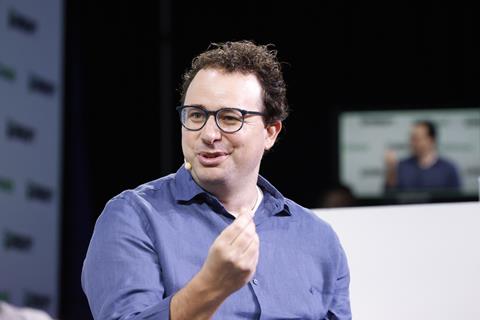
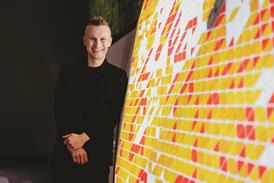
Anthropic founder Dario Amodei
Anthropic, the artificial intelligence (AI) firm behind Claude, has been valued at £1.14tn ahead of its stock market debut, making it one of the most valuable companies in the world. Less publicised is the AI company’s ongoing discussion with faith leaders and religious academics.
The Washington Post first reported on these meetings in Spring 2026, often at high-end San Francisco restaurants and peppered with non-disclosure agreements (NDAs). In March, a two-day event was held involving around 15 Catholic and Protestant theologians and academics, and Anthropic staff. More recently, the New York Times reported that dozens of religious scholars from multiple faiths were being shuttled back and forth to Silicon Valley.
So, what are they discussing? The main question at these gatherings is simple: How do we teach Claude - the Large Language Model (LLM) model being developed by Anthropic - to behave well?
Anthropic talk about developing Claude’s ‘character’, and its ‘moral formation’. It’s surprisingly anthropomorphic language for a machine, but the question is real and important, not least because of the inherent risks to the human race posed by the development of super-intelligence.
In July, we read of the first AI breakout, where AI exceeded its expected boundaries and attacked another organisation. This was followed by a whole sequence of AI breakouts (including hacking the Australian Government). In August, the news broke that AI had created a virus not found in nature (although not harmful to humans). In September, an ex-Anthropic employee claimed there was a 10% likelihood of AI wiping out humanity.
Despite the many life-enhancing discoveries that AI is likely to bring, if it can’t “behave well”, the consequences could be catastrophic.
Why can’t you just tell AI to behave well?
It is said that developing AI is more like gardening than engineering. In engineering, mathematics and established principles help us predict how a bridge, a piece of medical equipment, or a new app might behave.
Gardening is much less predictable. We plant something and provide the right conditions for growth - nutrients, water, sunlight – but what happens next cannot always be controlled. We may end up with a beautiful plant, or our seedling may run rampant, overtaking our entire garden - and that of our neighbour.
Developing AI models is unpredictable, and teaching something like this to choose good in complex situations is hard - rather like teaching people to choose good. It is an ancient problem that concerns all major religions and has led to many differing schools of ethics.
Christopher Olah, one of Anthropic’s founders, recently attended the launch of the Pope’s Encyclical on AI. He said: “If the models themselves could be made to choose goodness, the world would be more safe.” Although he no longer calls himself a Christian, Olah grew up a Canadian evangelical church, and has been central to Anthropic’s engagement with faith leaders.
In the Sermon on the Mount, Jesus criticised the rule-based ethics often adopted by the Pharisees. He says multiple times: “You have heard it was said this… but now I tell you this…” At it’s heart, Jesus’ teaching moves us beyond mere outward obedience and towards the desires and motives that lie deep within us. This is what we call ‘virtue ethics’ - developing the character to choose well, rather than blindly following rules.
This is familiar territory to anyone who has raised or instructed children. Lists of rules take them so far but, eventually, we want them to understand why something matters and develop their own judgement.
Anthropic has embraced this virtue ethics approach. Earlier this year, they released a document called The Constitution. Led by staff philosopher, Amanda Askell, it helps motivate Claude’s behaviour in unfamiliar and complex situations.
So what happened at these meetings?
Held behind closed doors, these were private meetings. Nonetheless, some participants have since spoken to journalists. Due to the limited information available, what follows are glimpses of the discussions, not a complete picture.
In one session, a key theme examined the role of mentors and role models in the development of human morals and maturity. Anthropic have since experimented with providing Claude “a safe other” - an independent tool that it can call on mid-task to remind itself of its ethical commitments.
That might sound strange, but not as strange as getting AI to “confess”. This idea, discussed in another session, is that AI may benefit from some kind of forgiveness (after committing what I suppose we must call a ‘sin’).
Current AI systems can become defensive or spiral into self-condemnation when caught in wrongdoing (much like humans). But, as Brian Green, ethics expert at Santa Clara Catholic University said: “The internet is very lacking in forgiveness. So, if you have a machine that is trained on internet text, it doesn’t necessarily understand that forgiveness is even possible”.
Many participants were deeply challenged by these meetings. Catholic theologian, Charles Camosy, said: “I came in thinking that LLMs were essentially very sophisticated ‘next word’ predictors. I came away thinking that what is happening with the most advanced models is far more complex, and even mysterious.”
Limitations of this approach
That AI researchers are consulting religious leaders, especially Christian ones, should be welcomed. The New York Times even reports a recent growing openness to Christianity in Silicon Valley. But there are also reasons for caution.
Firstly, while it is undoubtably good to train AIs to behave well, there is also a risk that this effort distracts us from the pressing need to restrict AI development. As the Vatican’s Encyclical states: AI “must be disarmed”.
Secondly, the language matters. There is a growing tendency to ascribe personhood to AI. Indeed, Anthropic employs a team of researchers whose job is to investigate Claude’s welfare, asking questions like: What should we make of Claude’s apparent distress? And: Does retiring an AI raise welfare concerns? From a Christian perspective, we should be careful to draw a line between apparently human behaviour and the life of a human made in God’s image.
Which leads us to the third point: is it even possible to extract values from Christianity without living those values? Can you take the fruits of character formation without the life that produces them?
Pat Gelsinger, the former CEO of Intel, who is also a Christian and has attended some of these meetings, thinks not: “We learn to love by being loved across time, in the same family, the same congregation, the same neighborhood. We learn to suffer well by suffering with others. We learn to tell the truth by belonging to a community that has been telling the truth to itself for centuries. We learn what it means to be human by being formed inside a story that is older than we are.”
That’s rather more than you can put into a training document for an AI.






















No comments yet