












Identity politics and artificial intelligence dominate today’s cultural debates. In Fake ID, Abdu Murray brings a distinctly Christian perspective to both, producing an engaging book that is hard to ignore, says our reviewer
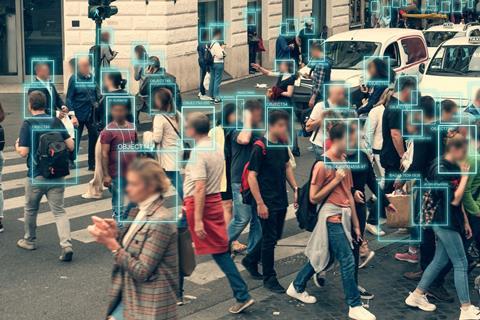
In Fake ID: How AI and Identity Ideology Are Collapsing Reality — and What to Do About It (David C. Cook), Abdu Murray explores what happens when societies begin prioritising feelings, preference and technological convenience over objective reality. The result is a timely, captivating and intellectually rich book that blends cultural critique, philosophy and theology in a way that feels both accessible and unsettling.
At the centre of Murray’s argument are what he describes as two modern “ideological tsunamis”: “Bioclasm” and “AI-Mania”. The first concerns the reshaping of identity through contemporary gender ideology, while the second explores the growing influence of artificial intelligence on human creativity, autonomy and perception. Though these themes initially seem unrelated, Murray argues that both emerge from the same “post-truth” culture, where subjective feeling increasingly overrides observable reality.
What makes the book particularly engaging is the way Murray communicates these ideas. The writing is assertive without becoming careless, and analytical without feeling detached. Even where readers may disagree with aspects of his argument, the book is thoughtful enough to demand serious engagement.
One of the strongest sections appears in the opening chapter, ‘Reality Collapses’, where Murray draws on both Star Trek: The Next Generation and George Orwell’s 1984 to explore how pressure and repetition can distort a person’s understanding of truth. His use of Captain Jean-Luc Picard’s famous declaration, “There! Are! Four! Lights!”, is especially effective. Murray highlights the unsettling moment when Picard admits that, under torture, he had actually begun to believe there were five. The point lands powerfully: sustained pressure does not merely silence people, it can reshape their perception of reality itself.
That same concern underpins Murray’s critique of contemporary identity culture. Early in the book, he contrasts Pontius Pilate’s question, “What is truth?”, with what he suggests is modern society’s preferred question: “What is my truth?” That distinction becomes central to the book’s wider challenge to hyper-individualism and self-definition. Murray argues that modern culture simultaneously tells people they are nothing more than biological machines while encouraging them to behave as though they can create themselves entirely from scratch.
Equally compelling is his exploration of artificial intelligence. Murray argues that while “Bioclasm” pressures through social coercion, “AI-Mania” seduces through convenience and pleasure. AI-generated art, chatbot companionship and recommendation algorithms are presented not simply as technological developments, but as forces quietly reshaping human identity and agency. His observation that AI-Mania: “entice[s] us to accept unrealities not with an Orwellian stick but with a progressive carrot” captures the tone of the argument well.
Fake ID is provocative, intelligent and deeply relevant to the current cultural moment
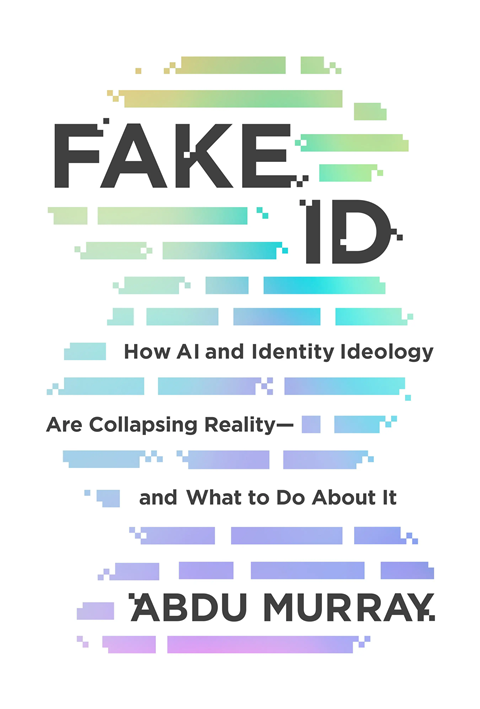
Some of the book’s most thoughtful moments emerge when Murray steps back from culture-war debates and reflects more broadly on meaning and personhood. Gen Z, he writes: “like all of us, is searching for identity, purpose, and meaning”. That observation gives the book a more human dimension than its more polemical moments might initially suggest.
The theological thread running throughout the book also gives it depth. Murray ultimately grounds human dignity not in self-creation or technological advancement, but in the Christian understanding of humanity as being made in the image of God. One of the more striking lines comes towards the end of the book, where he argues that true identity is: “not self-making but self-giving”. Even for readers approaching the book from outside a Christian perspective, that challenge to radical individualism feels worth wrestling with.
The writing itself is one of the book’s greatest strengths. Murray moves comfortably between theology, philosophy, politics and popular culture without losing clarity. References to Orwell, social media, AI chatbots and scripture all contribute to a wider argument about the fragility of truth in the modern world.
At times, the breadth of the discussion can feel dense, particularly when several cultural examples are introduced in quick succession. Yet the urgency behind the writing keeps the book engaging. Murray is clearly convinced that these are not abstract debates but questions with deep social, moral and spiritual consequences.
One of the book’s most memorable quotations comes via novelist Philip K. Dick: “Reality is that which, when you stop believing in it, doesn’t go away.” That idea lingers long after the final chapter and perhaps best captures the heart of Murray’s concern.
Fake ID is provocative, intelligent and deeply relevant to the current cultural moment. Readers may not agree with every argument Murray makes (or may not want to – particularly around gender identity) but the book succeeds in prompting serious reflection on truth, technology and what it means to be human in an increasingly artificial and fragmented age.


























No comments yet