


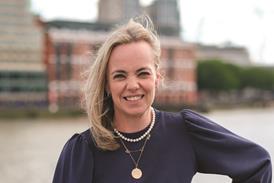






The prime minister faces a rebellion over his government’s proposals to limit jury trials in England and Wales in an attempt to tackle a record backlog of 79,619 crown court cases. The Christian Legal Centre’s Andrea Williams believes there are Christian principles behind juries. They play a vital role in ensuring no single human authority has unchecked power, she says
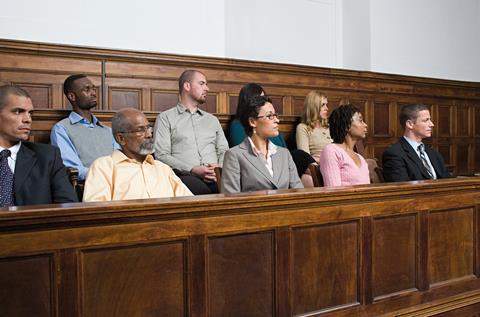
I qualified as a barrister, aged 23, in 1988. For eight years, I stood in criminal courts, placing evidence before ordinary men and women, peers drawn from every walk of life. I learned something vital in those years: justice lives or dies by an effective rule of law. Justice lives or dies on whether truth can be tested in the light, and whether judgement is anchored in the common sense and moral instincts of the community.
This is why the government’s proposal to scrap - or even diminish - jury trials strikes at the very heart of our legal heritage. It is not a procedural tweak. It is a threat to one of the oldest safeguards of liberty that humans have conceived.
Shaped by Christ
Our nation’s roots are Christian; shaped by a biblical understanding of law, equity and order and put into place by men and women who honoured God.
The right to trial by jury is not a bureaucratic invention, it is an ancient rite. Its genesis runs deep into Christian soil: the idea that no single human authority should have unchecked power; that guilt or innocence should be discerned by witnesses, tested by cross-examination, and weighed by a group of peers rather than dictated by a ruling elite.
If jury trials are diminished, we will see more state power exercised without accountability
These principles did not grow from human invention or goodness but were derived from the Bible, which is realistic about each person’s capacity for evil (Mark 7:21-22) yet critiques overbearing kings and corrupt judges (Micah 7:3). In Deuteronomy 19:15, God says that two or three witnesses are needed to charge someone of a crime.
These concerns led Christians to write laws that have served us well for centuries. Juries enable a plethora of people to examine the evidence and determine what is right. Justice belongs to the people, not to a professional class shielded from accountability.
Challenging the narrative
At the Christian Legal Centre, we observe daily what happens when justice becomes the exclusive domain of courts that are increasingly ideologically and politically captured.
In so many of our employment cases, findings of fact bear no resemblance to what actually happened. Professional judges, however conscientious, operate within a highly bureaucratic, tightly managed system that, too often, leans toward protecting institutions and ideologies rather than seeking truth.
The problem is not necessarily that judges are malicious, but human. Those who want to survive in this system feel the pressure to lean towards one side of a case at the expense of another. When one worldview dominates, unchallenged by the broader public, justice becomes distorted.
A jury breaks that monopoly.
Behind closed doors
Nowhere is the danger more visible than in the family courts, courts of protection and social services. These proceedings take place behind closed doors, shielded from public scrutiny. This is justified in the name of protecting children and privacy, but it also protects bad decisions, flawed assessments and institutional overreach.
I have stood beside parents whose lives were torn apart by judgements untested in open court, based on ‘professional opinion’ masquerading as fact. I have watched as the narratives of doctors and social workers went unchallenged simply because no ordinary citizen was present to say: “That doesn’t ring true.”
The right to trial by jury is not a bureaucratic invention, it is an ancient rite
If jury trials are diminished, we will see more state power exercised without accountability, reality reinterpreted through ideological lenses, and ordinary people excluded from the administration of justice. This does not mean that the population at large cannot be equally biased or ideologically blinded, but it is usually harder to create such conformity.
Into the light
In my years at the Bar, I repeatedly witnessed something astonishing: jurors took their responsibilities incredibly seriously. They listened carefully. They weighed evidence with humility. They deliberated not as technicians but as human beings, people with moral intuitions shaped by life’s ups and downs, community and common sense.
Jurors often saw straight through what the professionals missed. Their very ordinariness is their strength, because justice is not merely technical. It is moral. And in the UK today, ordinary people retain more of a moral compass than our ideologically captured institutions.
Juries ensure that evidence is tested, arguments are scrutinised, bias does not go unchecked, power is diffused and justice is seen to be done
If jury trials are scrapped, or chipped away at, we will lose more than a legal mechanism. We will lose the people’s direct participation in the pursuit of truth. We will lose a restraint on state power that has safeguarded liberty for centuries.
I am not pretending that we don’t have a backlog of cases that need attending to. But the answer is not in scrapping the jury. We must defend this ancient, Christian, democratic safeguard we have inherited.
For justice belongs in the light. Justice is for the good of the people. God delights in justice.
























1 Reader's comment