









Despite having no formal fashion training, Omoyemi Akerele founded Lagos Fashion Week and won the most prestigious environmental prize on the planet. It’s all thanks to God leading her every step of the way, she says
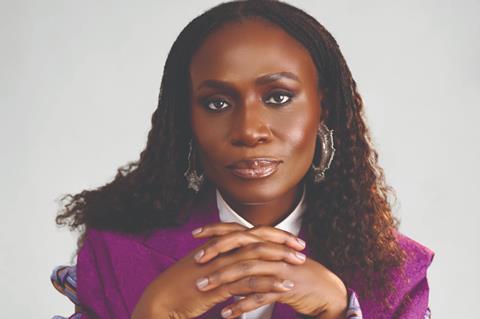
The night before the presentation ceremony for the 2025 Earthshot Prize, Omoyemi Akerele was sitting in her hotel room in Rio de Janeiro, Brazil. Several months earlier, she had received an email to tell her that she had been nominated for the world’s most prestigious environmental award, founded in 2020 by HRH Prince William.
Yet despite the importance of the occasion, she had still not replied to the organiser’s request that all ten nominees submit an acceptance speech in advance. The idea that she would win just seemed so far-fetched, she says. “No other fashion company had won The Earthshot Prize before, so I was like: ‘Yeah, what are the odds that it would be an African platform? I doubt it.’”
But while Akerele had her doubts, the judging panel did not, commending Lagos Fashion Week for “transforming one of the world’s most wasteful industries by creating a new fashion economy rooted in purpose, sustainability and cultural integrity”.
“Till tomorrow, we have no idea who nominated us,” Akerele says. “My husband and I were like: ‘Wow. This could only have been God!’”
An unconventional path
Today, Akerele runs the largest fashion week in Africa, showcasing fashion designers from across the continent and bringing them to the attention of a global audience. Lagos Fashion Week has also been instrumental in pioneering a circular fashion economy in Africa and championing traditional artisan craftsmanship and skills.
As well as receiving international recognition for her work, Akerele has held roles advising the UN, the British Fashion Council and the Victoria and Albert Museum. Yet hers was not a conventional route into the world of sustainable fashion.
In 2003, aged 24 and just about to get married, Akerele quit her job as a lawyer. At the start of what should have been a lucrative career, she had no clear plan for what came next, but knew she didn’t want to work long hours at a law firm for the rest of her life.
“I wanted to do something that I truly enjoyed. I couldn’t articulate it then, but something that I was called to do, that I was meant to do.” She applied for several jobs but shortly after getting married, she became pregnant. The enforced time away from a career gifted her space to pray, research and listen to God.
No other fashion company had won The Earthshot Prize before, so I was like: ‘Yeah, what are the odds?’
Akerele had always loved fashion. “Dressing up was one of the reasons why I wanted to be a lawyer,” she laughs. “I loved the power suits!” But she knew she was not called to be a fashion designer. Instead, during a “back and forth conversation” with the Holy Spirit, she decided to become a stylist.
Led by His presence
A chance meeting led to an internship at a new Nigerian fashion magazine. “I started at the bottom and worked my way up to fashion editor.” Despite her lack of formal experience, doors opened. “God’s always been there, navigating and orchestrating things,” she says. “I just felt His presence every step of the way.”
But still, Akerele had a sense that there was more for her to do. She prayed to God: “I realise that something’s missing. I know this was where You sent me, but this is not where I’m supposed to be forever.”
So, in 2011, she launched Lagos Fashion Week. Having travelled to fashion shows around the globe, she could see that African designers needed more support to bring their clothes to a wider audience. Skills passed down from generation to generation needed a better infrastructure to grow and flourish.
Today, Akerele is passionate about making the fashion industry more sustainable – and the progress she has made so far remains her proudest achievement. “In 2011, at least 90% of the designers were sourcing their fabrics from outside of Nigeria,” she says. “Fast forward to 2025, and it’s pretty much the opposite. It’s very craft-focused, working with communities across the continent, skills that have been passed down from generation to generation.
“When you focus on craftsmanship as a tool, you’re less dependent on polyester and other byproducts of petroleum,” she adds.
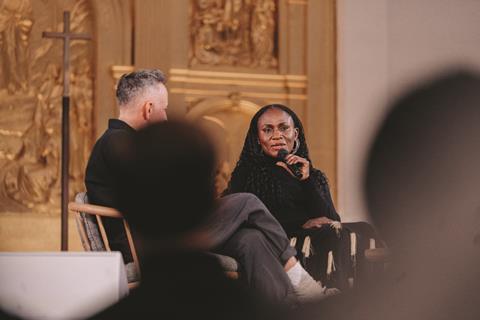
For Akerele, valuing natural products and traditional skills is an extension of her Christian faith. “God created nature,” she says. “Isn’t it beautiful?” Built on the model of “less is more”, everything that is used during Lagos Fashion Week is reused, recycled or gifted.
There is no formal criteria forced on designers; people don’t need a set of rules to make them conform, Akerele says. Rather, they need an environment that creates “a sense of responsibility and accountability, to want to do the natural, right thing…to create in a manner that honours and respects tradition and to be a part of an ecosystem that’s contributing to the preservation of skills”.
Taking the next step
The recognition of The Earthshot Prize comes after a decade and a half spent doing what Akerele felt God had called her to do. “For people to have noticed that, it meant a lot. It’s an honour, but it’s also a huge, huge responsibility.”
Looking back at all she has achieved, she says her prayer is constantly: “God, just give me a little light for the next step I have to take.” She’s also clear that, without God, she couldn’t have achieved any of it. “God is the foundation of everything we do. My strength when I’m totally exhausted. When I’m like: What next, God? He always shows up, even down to the theme for each year. I could not do this any other way.
“The scripture that comes to mind is Exodus 33:15. Moses said to God: ‘If your Presence does not go with us, do not send us up from here.’ I often tell people that my journey is one of obedience, but also learning to listen and understand when it’s time to move. It’s just so much better doing life with God.”


‘I’ve been more discipled in three years than in the rest of my life’: Why Christians are embracing communal living

‘Science is catching up with scripture’ Meet the neuroscientist revealing what prayer does to your brain

Explained: Why has disgraced Hillsong pastor Carl Lentz written a book about his infidelity?





















No comments yet