










Filmmaker Poppy Jay has lots of questions for the tradwife couples she meets – most notably around the Christian concept of submission. But the documentary’s failure to explore alternative biblical interpretations risks reinforcing harmful stereotypes about Christianity and women, argues Emma Fowle
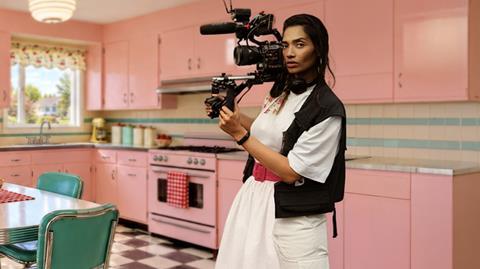
In the past few years, the #tradwife (short for “traditional wife”) trend has racked up more than 400m views on social media, according to the new BBC documentary, Young, British and Tradwife.
Often accompanied by an attractive, slow-living aesthetic (as pioneered by original tradwife, Hannah Neeleman from Bellerina’s Farm), it presents an appealing alternative to our fast-paced world, centring homemaking, child rearing, baking, cooking and crafting home-made garments from (usually organic) cotton, among other wholesome past-times. So far, so Instagrammable.
However, there is also a shadow side to this picture-perfect world (as captured so cleverly in Caro Claire’s summer bestseller Yesteryear): the presentation - and monetisation - of a ‘perfect’ world that is unobtainable for most and perhaps heaps even more pressure upon the modern woman.
And then, of course, there’s the strict gender roles – often grounded in a specific understanding of the Christian faith.
There isn’t room here to properly examine all of the arguments held by Christians on the difficult – and often contentious issues – of male headship, female submission and the role of men and women in marriage, church and society. Neither am I a scholar or an expert in this area. If you want to know more, look up the writings of Lucy Peppiatt, Paula Gooder or Elaine Storkey. Preston Sprinkle’s From Genesis to Junia is also worth a read.
But I do have some skin in the game when it comes to taking a long, hard look at what the Bible really says about women. Mainly because I am one. Because I am a wife and a mother who also works full-time and serves on the preaching team at my local church.
And, most importantly, because I have seen the damage that misunderstanding these ‘clobber verses’, particularly around the deeply divisive idea of female submission, can do. Which is why I was so disappointed that Young, British and Tradwife centred so heavily on the idea and then failed to properly interrogate it.
The set up
Filmmaker Poppy Jay was raised Muslim and forced into an arranged marriage, aged just 19 (she divorced six years later). She says she was motivated to explore this trend, at least in part, because of her own experiences.
The programme focuses on three couples. The first, Megan and Joseph Landreth-Smith (@ourslowhome), feature for less than five minutes, presumably because there was little that was actually controversial about their relationship.
Yes, Megan has chosen to stay at home with her small children while her husband continues to run the Kombucha company they set up together. Yes, she and her family are ridiculously photogenic. But, honestly, beyond that, there’s not much to see here. They love Jesus, they seem happy, and she earns a bit of pocket money from a couple of promotional posts each month. That’s about it.
I’d love to explain to her that not all Christians see married life this way
Laura and Zion Zachary (@mrslaurazachary) get more airtime - and are far more divisive. Married just three months after meeting, Laura makes provocative content for her 100,000 followers, such as: “Women get upset when I tell them I treat my husband like Jesus”, and: “No, I don’t let my husband clean”.
Showing Jay around her opulent home, Laura explains that online trolls don’t cause her to lose much sleep: “The more disagreement on a comments section, the more people come to it – and the more you get paid,” she says, shrugging and laughing. “They pay me – and my husband.”
For Laura, this is a lucrative lifestyle (despite her insistence that women shouldn’t work). Her Academy of Biblical Wifery, a “90-day transformation” in which she teaches women to “dress respectably”, “be intentional about how you speak to your husband” and represent him “with honour” costs £10,000 to attend. For many Christians, their approach to monetising the debate around traditional gender roles (all couched within Christian teaching) will feel uncomfortable.
But the majority of the Young, British and Tradwife is dedicated to Molly and Aaron Edwards who, whatever you may think of their theology and/or lifestyle choices, do seem to have the most normal life. Dr Aaron Edwards is well known for his outspoken, conservative Christian views. It is no surprise therefore, that he and his wife Molly have taken a traditional approach to raising their seven children, with Molly seeming to do the majority of the heavy lifting when it comes to homeschooling the children, cooking, cleaning and running the household.
Molly has written about her reasons for wanting to take part in this documentary, and while she says she has not watched it yet, she comes across as genuine, warm and sincere about her Christian faith. In the time that Jay spent with the family and alone with Molly, it is clear that the filmmaker is sympathetic towards her and works hard to find points on which they can agree.
Unsurprisingly, though, the point that Jay cannot reconcile is the idea of a Christian wife choosing to submit to her husband’s authority. And it is frustrating that this is not properly explored, nor an alternative Christian viewpoint at least offered, considering how complicated, divisive and often dangerous, this idea can be.
Offering a counterpoint
I know young girls who spent years thinking that the Christian faith was not for them because their preconception (or misconception) was that it was an old-fashioned institution that enforced a patriarchal society in which women’s freedom, agency and equality were restricted.
I know friends who spent years trapped in abusive marriages because their church failed to properly teach the full breadth of Ephesians 5, emphasising a straightforward reading of wifely submission (v22) without any expectation that husbands should love their wives “just as Christ loved the church” (v25) – and ignoring Paul’s exhortation to mutual submission (v21).
If I could take Poppy Jay out for a coffee, I’d love to explain to her that not all Christians see married life this way. That submission to one another in love is something all Christians are called to; not as a hierarchy of authority but as a loving group of people, working out a life of faith, together with the Holy Spirit.
Contrary to some interpretations of the Bible, many churches allow women to lead, preach and teach
I’d tell her Jesus elevated women, allowing them to learn from Him at a time when it was considered scandalous, and even entrusting them with the first proclamation of His resurrection. That Paul wrote of the many women he worked alongside, valuing them as equals.
I’d tell her that many churches allow women to lead, preach and teach – not because modern society has led them astray but because there are good, robust biblical reasons for doing so. That the common construct of a ‘biblical woman’ is actually a fairly modern phenomenon (as Dr Beth Allison Barr explains in The Making of Biblical Womanhood).
And I’d ask that, the next time she makes a documentary that centres the tradwife trend so clearly on one faith group (ignoring others that far more obviously and systematically oppress women), she invite some other, more expert voices into the debate.
























No comments yet