












The Justice of Jesus argues that Christianity in the West has been shaped by colonialism to resist justice – but does the case fully convince? Whether you agree with the author’s arguments or not, the issues raised in this book deserve your consideration, says our reviewer

At a time when Christianity is increasingly visible in public life, from high-profile athletes professing their faith to far-right marches seeking to ‘reclaim the faith’, it is ever more important to understand and articulate what it means to follow Jesus.
Joash P Thomas’ book, The Justice of Jesus: Reimagining your church’s life together to pursue liberation and wholeness, begins by describing the author’s quest to investigate a concern that many Christians share. “Too often, Western Christians narrow down Jesus’s gospel to a hyper-spiritual, soul salvation, punch your ticket to heaven…that ignores people crying out for physical liberation.”
Thomas is a much-needed voice, not least as a Christian from the Global South. Having also spent time studying and working in the North American Church, he is well placed to compare and contrast different approaches to theology, living out faith and pursuing justice.
Missing and marginalised
It is illuminating to discover that many churches in the Global South can trace their founding to the first century AD. Therefore, the stories of how Western missionaries, accompanying and supporting colonisers, imposed their churchmanship on those communities are sobering and deeply shocking.
While studying in the US, Thomas realised that the majority of voices in Christian academia are white American men, and that Black and Majority World theologies are often missing or marginalised.
Too often, Western Christians narrow down Jesus’ gospel to a hyper-spiritual, soul salvation
Finding this problematic, he deconstructed his faith. “Disentangling it from its Western influences” ultimately led to “a realisation that the Western Church’s historical support for colonisation has shaped it to resist justice.”
The relationship Thomas draws between these historical influences and the contemporary Western Church’s disposition towards justice is not always convincing. The book sometimes conflates resistance to addressing injustice with the legacy of colonisation. This risks overlooking the diversity of theological traditions and social engagement within Western Christianity. Such generalisations will undoubtedly prompt disagreement and even cause offense.
Nevertheless, Thomas writes with calmness and grace, avoiding the angry polemic that can characterise such discussions.
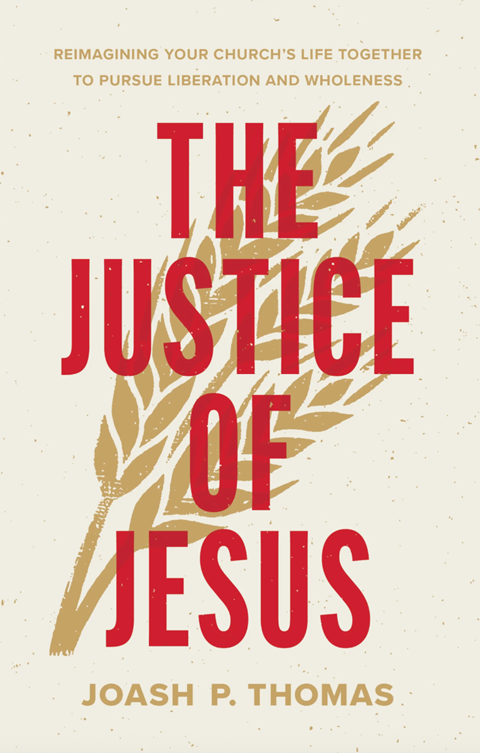
Part one examines the “Coloniser’s Gospel”, which Thomas argues has shaped Western theology to prioritise the salvation of souls. It also explores a tendency towards “cheap justice”, such as virtue signalling on social media, in contrast with the more costly, “roll up your sleeves” approach of Jesus.
Part two considers how the Western Church might decolonise its theology, communities and budgets, emphasising financial giving. Thomas argues that this is necessary because of how wealth was accumulated in the West. As he puts it, giving is “not the only thing we can do…it must be the first thing we do.”
Finally, in part three, he sets out recommendations for prioritising justice through prayer, advocacy and partnership.
Time to consider
Even if you are not fully convinced by his arguments, there is much to ponder in this book. It would be a good investment of time to consider whether, or how, one’s own understanding of faith and justice has been shaped or reinforced by a confirmation bias in favour of white Western theologies.
Thomas’ exposition of the Lord’s Prayer and the parable of the Good Samaritan provides much food for thought, while a section entitled “The Western Church on the Road to Emmaus” offers a fresh perspective on this well-known story.
Among the many positives in the book is a plea for a greater commitment to theological diversity, including making room for the voices of marginalised peoples to be heard from our pulpits.
The book would benefit from exploring other factors that have shaped the Western Church’s engagement with justice - including opposition to what became known as the “social gospel”, and the repentance expressed by evangelical leaders at the 1974 Lausanne Congress for their failure to engage in socio-political activism.
Nevertheless, whether readers subscribe to its core thesis or not, the issues raised in the book deserve our prayerful attention.


























No comments yet