







In the midst of a loud and angry national debate about migration, a new study guide rooted in the book of Ruth offers churches a calm, compassionate and biblically grounded place to start, says our reviewer

Have you ever used noise-cancelling headphones? They are amazing, revolutionising train journeys by cutting out extraneous noise, leaving the wearer free to read, think and concentrate without unhelpful distraction.
Similarly, in the midst of the loud, shouty and angry debate about migration, asylum-seekers and refugees currently dominating the airwaves, Bishop Pete Wilcox has produced a welcome antidote.
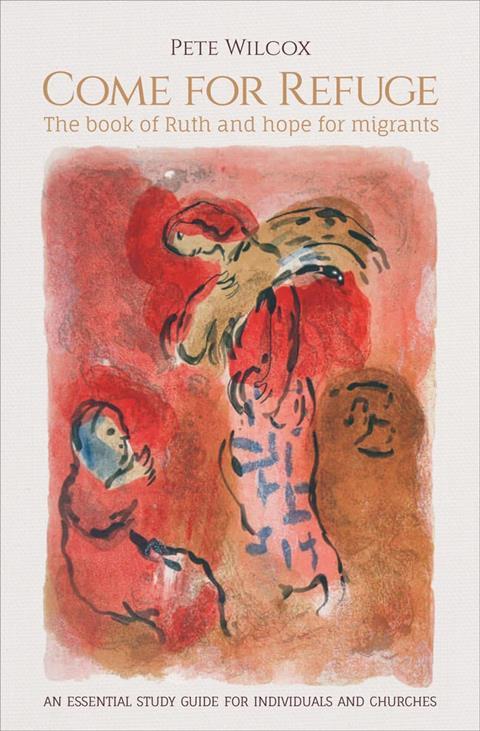
Come for Refuge: The book of Ruth and hope for migrants (BRF Ministries), is the literary equivalent to noise cancelling headphones, enabling the reader to quietly listen for what the “still small voice of God” would say.
Written as a study guide for individuals and churches, its aim is to turn the reader’s gaze onto experiences of migration by “creating a conversation” between the lives of the biblical characters, Naomi and Ruth, and those of contemporary asylum seekers and refugees. In doing so, it creates a calm and safe place to consider not only these issues but also one’s own attitudes, from a biblical perspective.
Far from being a book of dry theology or theory, Wilcox draws on his own experience of asylum projects to weave stories together and guide readers towards a biblical understanding of this sensitive and often controversial topic.
Each chapter begins with a commentary on the Old Testament text with insights drawn from biblical scholarship followed by a contemporary migration story. The chapters end with a thoughtful study guide for small group discussion, prayer and action, that is also suitable for individual study.
While noting that migration is: “a global challenge requiring a global response” the book does not propose or critique government policy. Instead its focus is to help the reader understand the plight of those seeking asylum and to consider how they and their church could respond.
We learn from the stories of Naomi and Ruth that migration is not a new phenomenon and see how their migration journeys foreshadow those of contemporary asylum seekers who also hope for a reversal of fortunes akin to those of Ruth and Naomi.
The book describes these journeys as beginning with an unexpected crisis leading to migration, often accompanied by a loss of kinship which itself opens doors to precarious subsistence and extreme vulnerability. We see how Boaz’s kindness initiated a change in direction: first by providing security and sustenance then integration into the community. He finally enables them to make a contribution and leave a legacy, most notably in the birth of a child who became the grandfather of King David.
Interwoven into the story are other parallels for the reader to consider including the additional peril for women, especially if they are unaccompanied. Themes of kindness, loyalty and welcome are shown to be key factors in the biblical text and have parallels with the survival and eventual flourishing of the people we meet in the contemporary stories. In both the biblical and current day accounts, Wilcox shows how God’s purposes are worked out through the actions of his people in practical expressions of kindness and welcome. It is here that the study sessions come into their own as the questions gently probe and help uncover any preconceived ideas and attitudes that may lie hidden. The format is never judgy, rather it creates a safe place to consider the issues and leads the participants into prayer and action.
The last chapter reflects on the genealogy in the book of Ruth compared to the one in the first chapter of Matthew, highlighting that the latter isn’t a “list of the great and the good” but rather shows that: “Jesus was born into a line riddled with the sins of the flesh” and not “tidy respectability.” He continues by noting Matthew emphasises in his gospel that Jesus associated with: “the despised, the marginalised, and the stigmatised, with refugees and asylum seekers”. The message for us is clear.
This last chapter has an additional section that draws together the points of kindness and generosity seen earlier using a study of how the name of the Lord is referenced in Hebrew scriptures. Some may find this section a little harder to follow, but it leads to the conclusion that if the book of Ruth is a “study in kindness”, it is because it: “explores what human community can look like when it is shaped by the nature of God.”
While it is a timely contribution to a hotly debated topic, the book’s importance is that it isn’t content to merely pass on information to be used in noisy debates. Rather it casts a vision for how the Church can demonstrate the love of God through everyday acts of kindness and generosity.
Come for Refuge: The book of Ruth and hope for migrants (BFR Ministries) by Pete Wilcox is out now
























1 Reader's comment