












Kindness is about far more than taking out your neighbour’s bins. Drawing on more than 50 conversations, Ellen Louden’s new book challenges Christians to rediscover kindness as a virtue that can transform our pursuit of justice, bridge deep divisions and reshape our common life, says our reviewer
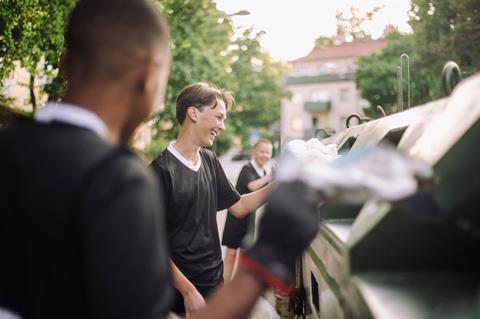
Did you know that 17 February is ‘Random Acts of Kindness Day?’ No? Me neither! It’s a global initiative to encourage people to cheer up someone’s day. For example, taking out the bins when it’s not your turn or letting a harassed mum go ahead of you at the supermarket checkout.
But does this encourage us to believe that kindness is limited to a ‘good deed for the day?’
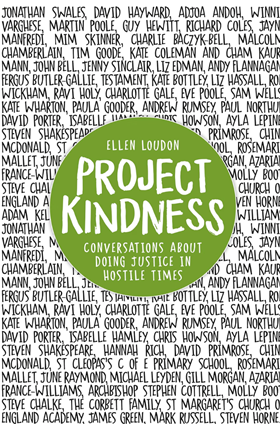
If so, Ellen Louden has done us all a service by producing Project Kindness: conversations about doing justice in hostile times. It’s a volume of ‘Random Chats of Kindness,’ recording over 50 conversations with an eclectic range of people, mostly, but not all, Christians.
The great cloud of witnesses that Louden has assembled include clergy, socio-political activists, educators, social commentators, schoolchildren and broadcasters. People who know what they are talking about and have serious skin in the game.
Each chapter reflects one of these conversations resulting in a rich tapestry of observations, reflections and suggestions alongside cautions and caveats.
It presents a much deeper, richer and ultimately more Christ-like way of thinking about kindness
The combined effect of their diverse experiences is to disabuse the reader of any small-minded thinking that kindness is like handing out slices of cake. Instead it presents a much deeper, richer and ultimately more Christ-like way of thinking about kindness. But why is such a book needed? Sadly, many will agree with the observation of one contributor: “Christian public thought is rife with ways of speaking that shuns and isolates those who do not share our theological sensitivities.” More broadly, another speaks of the present culture wars where: “it’s all about shouting and nothing about listening” while helpfully pointing out that: “Kindness pours oil on the catastrophes of the present culture like oil on the head of Aaron.”
To explain the genesis of the book Louden shares movingly of the loss of her husband in lockdown during Covid, but explains that the immense kindness extended to her helped transform her grief and despair. But, mindful that this isn’t everyone’s experience of church, she concludes that: “we need to do better.”
Consequently, Louden’s aim is to help foster an “emerging kindness movement” as kindness has the potential to: “influence the way we interact with each other, how we model social justice, shape the political landscape and seek the common good.”
Louden doesn’t attempt to define kindness but rather, through her conversations, takes the reader through an exploration of the many different ways kindness can be expressed, experienced and drawn upon.
Not surprisingly, the parable of the Good Samaritan crops up with one contributor noting that while the Priest and the Levite believed they had: “legitimate institutional reasons not to act” the Samaritan went “beyond the institutional and socio-cultural limitations to obey the love command”. Another observed that Jesus put kindness ahead of legal obligation or social norms.
This breaking free of social norms helps explain why pursuing justice is so frequently spoken of in the book. While kindness may not be equivalent to justice (discuss!), many urged the prioritisation of kindness when seeking justice as it was too easy to: “…let our desire for justice become hard or brittle and our language mean.” Or as one schoolboy contributor beautifully stated: “Justice without kindness isn’t justice.”
Turning inward, it was refreshing to read of many in the church and other faith-based institutions who are actively seeking to embed kindness into organisational cultures. The importance of this becomes evident when considering the current debates in the wider church. Several spoke of the importance of maintaining relationships with those who don’t share our views. The need to “lengthen the table” was suggested, noting kindness can help form a bridge with those who hold different political or theological positions.
Intriguingly some asked whether kindness has been “feminised” as it’s often associated with tenderness, while others spoke of “obstinate kindness” or being “fiercely kind”. The notion that kindness was about “being nice” or sentimental was roundly dismissed. It was also most definitely not “a soppy feeling”, but rather “a muscular thing.”
But it was also sobering to hear that kindness can be used in a manipulative or transactional way or come across as patronising and self-serving. With so much to ponder and pray about, it was a relief to be reminded to be kind to oneself, with practical tips including setting boundaries to help build “kindness stamina” to deter burnout.
A small quibble is that the book is structured chronologically in order of the conversations held, not thematically, which given the breadth of issues, may have been more helpful.
But back to the bins: The book’s inspiration to think more deeply and broadly about kindness does not suggest we can neglect those random acts of kindness! As Bono has said: “it’s okay to be angry at injustice, but perhaps start with an act of kindness. That’s sometimes even more challenging.”

























No comments yet