









A new book marking Christian Aid’s 80th anniversary offers valuable insights into the charity’s pioneering approach to poverty. But sadly it fails to explain how faith makes it distinctive from secular development agencies, says our reviewer

“Aren’t you just Oxfam with hymns?” This question was posed to Michael Taylor when he was director of Christian Aid in the late 1980s and illustrates a common and sadly persistent misunderstanding about the work of faith-based agencies. This question, simple as it is, does not have a simple answer.
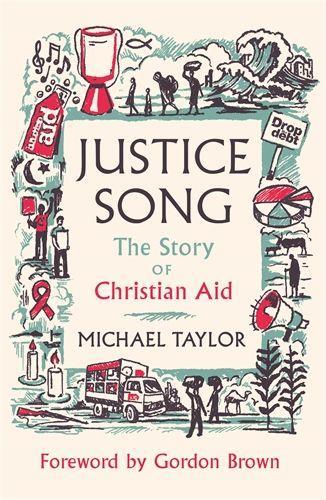
Justice Song (SPCK), written to commemorate the 80th anniversary of Christian Aid, is therefore a welcome contribution as it provides a well structured and thoughtful account of the organisation’s aims, objectives, modus operandi and achievements while being frank and honest about remaining challenges.
The book is structured around thematic chapters such as Partnership and Campaigning which are interspersed with others focussing on specific countries where Christian Aid has had significant involvement. This format means the book will be of interest not just to stalwart, or potential, supporters of Christian Aid, but also to a much wider audience. First, those interested to learn more about the underlying causes of poverty will discover the country-focussed chapters to be excellent primers as they place current day issues into an historical context.
And for those who may feel helpless when hearing, yet again, of natural disasters, wars, poverty and oppression, the activism and achievements of local communities and networks will inspire and encourage continued commitment and action in support of these endeavours.
A persistent theme in the book is Christian Aid’s “bias to the local”, which refers to its ”bottom-up rather than top-down approach to humanitarian aid” that has underpinned its decision making since its earliest days. Initially this was an instinctive response that respected the work and lived experience of local groups but has developed into a more explicit and intentional approach, now firmly established as policy and practice.
A linked theme is ‘Partnership’, prevalent throughout the book. Whether in supporting diverse networks and church councils overseas or working in concert with aid agencies in the UK, there are numerous examples of how, when and why Christian Aid invests in these relationships.
One striking example is the Village Savings and Loans Associations (VSLAs) in Sierra Leone that supported women in small business ventures. The confidence and self-reliance gained through the success of the scheme spilled over into their involvement in public life. Taylor writes: “In public affairs women increasingly made their presence felt. They stood for election to village councils and won. The lionesses were beginning to roar.”
Despite this, the book’s main drawback is its reticence to highlight or affirm how and where faith has contributed to its work or where it has potential to do so. This was disappointing as the tendency in secular accounts of international development is to airbrush out any contribution related to faith, leading to the above Oxfam/hymn misunderstanding.
This book, with its wealth of information and stories had an opportunity to set the record straight but it stopped far short of doing so. It even went as far as asserting: ”when the chips were down there was little difference in practice between Christian Aid and development NGOs like Oxfam and Save the Children…. The jibe ‘you’re only Oxfam with hymns’ had more than a grain of truth in it.” Continuing: “whatever faith has to contribute.. it cannot tell you how to treat disease.. or run a hospital.”
This is self-evidently true, but completely misses a much broader point that Christian Aid is actively promoting in wider development circles.
In April 2024, in the context of an international Faith & Development conference co-convened by Christian Aid, their CEO, Patrick Watt, wrote: “With faith influencing the lives of billions, and a major element of the social and political context in which global development efforts take place, it is simply too significant a force in the world — both for good and for ill — to be disregarded.” He continues by referencing the: “unique trait of being locally rooted and globally networked” which is “a powerful asset in reaching parts that other development groups cannot reach… and can become indispensable in a decolonized approach to development.” It is baffling why this perspective and Christian Aid’s current efforts to improve understanding of faith among development actors were omitted from this account.
Nevertheless, Taylor has done a great service by distilling 80 years of compassionate activism into a well structured book that challenges us all to keep our foot on the gas as there is still much work to do.
Justice Song: The Story of Christian Aid by Michael Taylor (SPCK) is out now

























No comments yet