










In a culture shaped by distraction and achievement, Arthur Brooks explores what it means to live with purpose. His approach is thoughtful and practical, though not explicitly Christian, says our reviewer
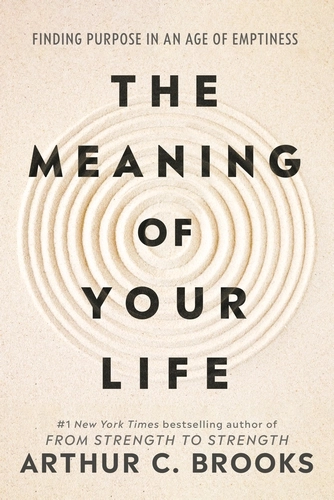
It’s unusual to find a book written by a Christian that has been commended by the Dalai Lama, Oprah Winfrey and Sheryl Sandberg. If the leader of the world’s Tibetan Buddhists, a US TV legend and the woman who was Facebook – now Meta – chief operating officer for more than 14 years, all agree that a book on rebooting your life is worth reading, then I for one want to take a look.
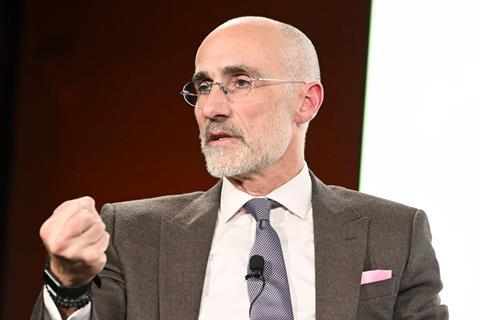
Its author, social scientist and ‘happiness expert’ Arthur C Brooks, makes no secret of his Christian faith but this book is far from an evangelistic tract. He avoids arguing that ‘Jesus is the answer’, when your life feels empty and without direction. Instead, Brooks draws on a range of faith traditions, philosophers and research to put forward a set of practical proposals to help us rediscover the reason we are alive.
“The happiest people”: explains Brooks: ”enjoy their lives, take satisfaction in their activities and accomplishments, and have a sense of the meaning of their existence.” The missing element for many people is to discover that meaning. Brooks, a professor at Harvard Business School and a former classical musician, states clearly: “As a Christian, I believe God exists and has a plan for my life and the universe, a lot of which we can learn about by studying science but much of which will also always be a mystery to me.”
On lifestyle, he writes: “Personally, I try to align my habits to my beliefs by praying every day. I tell God what I desire but also ask that my will be conformed to His will and that He has mercy on me. I try to act with honesty and virtue, and encourage others to do so as well.” Brooks’ career teaching ‘the science of happiness’ began after undertaking the Camino de Santiago, a long walking pilgrimage, searching for life’s meaning and purpose. At the end, he wrote out this description of his life’s meaning: “I will lift people up and bring them together in bonds of happiness and love, using science and ideas.”
To that end, he sets out the challenges facing modern-day people, the keys to discovering new ways of living, and action plans to help his readers redirect their lives in ways that will bring fulfilment and purpose. On religion, Brooks advises, “Just go to your house of worship or wherever the faith is practiced. Leave your phone in the car. Sit in silence, in the back. Listen with an open mind and heart. And then, little by little, let your soul do what it is there to do.”
Brooks explains that many, especially younger, people and those who are ‘strivers’ seeking to achieve in today’s competitive societies, are experiencing a profound lack of meaning. Their relationships with technology, screens and social media mean that many are divorcing themselves from real-life social interaction, the natural world, the arts and creativity. As an indication, Brooks says, “I have students who are utterly fearless about starting companies with millions of dollars at risk. But they are deathly afraid of approaching a potential romantic partner.”
Brooks contends that modern life pushes people into the brain’s ‘left hemisphere,’ focussed on solving technical, discrete problems with technology and detail obsession. This neglects the ‘right hemisphere’: ‘where meaning, purpose and deep connection reside.’ As a result, people turn to addictive technologies – such as social media – out of boredom and emptiness.
The solution, Brooks maintains, “is to reclaim the mystery of real life: love, beauty, faith and the unknowable aspects of existence.” He advocates that people “put technology in its place, intentionally foster meaning, and live with openness and courage in the face of life’s unanswerable questions.”
The best-selling author gives much practical advice and includes helpful summaries and questions. His style of writing is accessible and he draws on much personal experience, including the romantic account of falling in love with his future wife, before he could even speak her language.
Brooks is writing for a broad audience, many of whom may be sceptical about faith, or dubious about the role of the church in modern society, so don’t expect this book to be packed with Bible verses. Nevertheless, it is disappointing how a Christian author has largely overlooked Jesus’ life and teachings as a model for how to live a full and meaningful life. Doesn’t Jesus have plenty to say to our modern world about living with purpose and intention, coping with distraction and living out deep relationships?
Christians looking for guidance on how to find their vocation and the meaning of their lives may want to turn to John Ortberg’s The Life You Always Wanted or John Mark Comer’s The Ruthless Elimination of Hurry for more Christ-centred life advice.

























No comments yet