










Giles Goddard’s new book offers wisdom for spiritual seekers, though some readers may long for firmer theological grounding, says our reviewer
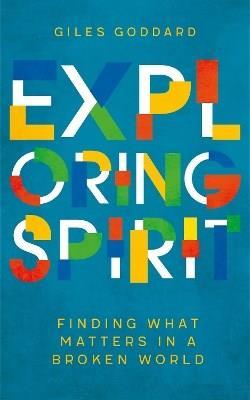
In Exploring Spirit (Canterbury Press), Giles Goddard sets out to write for the spiritually curious rather than the doctrinally certain.
This is clear from the opening chapter, where he recounts an email of complaint from someone regarding an event at St John’s, Waterloo, which had sought interfaith dialogue beyond typical confessional boundaries. Goddard’s response is telling: “This book is not for her.” Instead, Goddard says this book is for the “person who is seeking a deeper understanding of what it means to be human, under the eye of some kind of glimpsingly understood divinity ….It is not a book of answers. It is a palimpsest of thoughts and ideas that may, taken together, help you in your exploration.”
If you’re reading this from a more ‘evangelical’ backdrop, it’s probably wise to note the above. Yet, I would disagree with Goddard, in that I do think this book is for the woman he describes. Even if she may not agree with everything in this book, there are places that will be of benefit for everyone.
One of the book’s chief strengths is its honesty about the contemporary spiritual landscape. Goddard writes as a parish priest deeply aware that many people are searching, but not necessarily in ways traditional churches always know how to recognise. His portraits of seekers – Henry, Francesca, Deepti and others – are among the most engaging parts of the book. These conversations convey the texture of contemporary spirituality: suspicion of organised religion, attraction to beauty and ritual, unresolved questions around identity, and a longing for something more than consumerism or bare secularism can offer. Goddard is especially perceptive when reflecting on why younger adults, many of them wounded by exclusion or disillusioned by institutional religion, still find themselves drawn toward practices, places and communities that carry spiritual resonance.
Theologically, one of the most interesting sections is his reflection on language. Goddard is clear that words like “God”, “spirit”, “soul” and “salvation” are slippery and contested. He distinguishes between “god” with a lower-case g, referring broadly to divinity or ultimate reality, and “God” in the specifically Christian sense of the Trinity. He also explains the difference between apophatic and kataphatic ways of speaking about God, arguing that we need both: speech about God is always inadequate, yet still necessary if we are to explore the spiritual life at all.
Another strength of the book is its tone. Goddard is pastoral, intelligent and patient. He writes with the kind of generosity that does not panic in the face of ambiguity. He is open to drawing wisdom from different traditions and voices, and the book’s posture is notably hospitable. This is not the hospitality of relativism, however, but of attentiveness. Goddard remains recognisably Christian, yet he is unafraid to learn from Muslim, Hindu, mystical and secular sources. The opening epigraphs alone – from Islamic tradition and Hildegard of Bingen – signal the range of voices he is willing to place in conversation.
That said, the book is not without limitations. Readers hoping for a clearer doctrinal centre, or a firmer theological account of how Christian faith differs from generic spirituality, may find the book frustrating. Goddard’s broad definitions are often illuminating, but they can also blur boundaries that some readers will want to see drawn more sharply. Likewise, while his conversational and exploratory style is attractive, it occasionally comes at the expense of argumentative precision. Some chapters feel more like thoughtful essays than tightly developed arguments.
I am no biblicist, yet I found myself wishing Goddard had engaged the Christian tradition more fully. Scripture, along with the riches of Christian theological reflection, offers a deep well of spiritual insight, but at times the book seems more eager to draw from other traditions than to linger within its own. In much of the discussion around “Spirit”, for example, I kept thinking that engagement with works such as Clark Pinnock’s Flame of Love (IVP) might have served the book’s aims more fruitfully.
There is also a risk that the book’s hospitable tone may leave more conservative Christian readers uneasy, not only because of its interfaith openness but because it is more interested in spiritual seeking than in defending orthodoxy. This is of course a deliberate choice; Goddard is writing for people on the threshold, not for those seeking confessional certainty.
Even so, Exploring Spirit is a rich and humane book. It is marked by wisdom, honesty and pastoral sensitivity. In a world where many people feel both spiritually restless and institutionally homeless, Goddard offers something genuinely valuable: not a map with every route marked out, but a thoughtful companion for the journey. He knows the terrain is difficult. He knows the language is imperfect. But he also believes that the search matters, and that beneath the confusion of modern life there remains a deep human ache for transcendence, meaning and love.
In that sense, Exploring Spirit is a hopeful book. It does not solve everything, but it invites and challenges readers. For many, that may be exactly what is needed.
Exploring Spirit (Canterbury Press) by Giles Goddard is out now























No comments yet