












Tom Wright’s new commentary on Ephesians is pastoral and spiritually nourishing, says our reviewer
Tom Wright is no stranger to writing biblical commentaries.
In fact, he has written on every New Testament book in his accessible New Testament for Everyone series.
Now, around two decades later, Wright offers us another commentary on Ephesians – again in a devotional style, yet with fresh perspective. As readable and engaging as this book is, it remains deeply theological, offering readers a renewed vision of Ephesians that reminds the Church of its profound purpose.
In the opening pages, Wright describes Ephesians as a letter that “offers a breathtaking vision of the creator’s purposes for the cosmos, of how those purposes were and are fulfilled in Jesus the Messiah and the holy spirit, and – not least – of the vital role within these purposes that the church is now called to play.” For many, including perhaps Wright himself, Ephesians is a favourite among Paul’s letters. Though brief, Wright refers to it as a “visionary letter.” Throughout, he presents Ephesians as a sweeping narrative of God’s purposes, from creation to new creation. In just a few chapters, Paul offers a stunning overview of the gospel: grounded in the work of Jesus, empowered by the Spirit, and pointing to the day when all things are made new. At the centre of it all is the Church – not a side project, but God’s new humanity, called to reflect his reconciling love in the world.
The book is structured into nine short chapters, each corresponding to a portion of the biblical text. Rather than offering a verse-by-verse exposition, Wright follows the flow of thought through larger thematic units. He draws attention to key Pauline themes such as grace, unity, and the nature of the Church.
Wright is clear that this book isn’t designed to answer every burning question about Ephesians, and he helpfully offers suggestions for further reading towards the end.
What sets this book apart is the way Wright situates Ephesians within the broader sweep of the biblical story, showing how Paul’s words echo Genesis, Exodus, the Psalms, Isaiah, and more. As is characteristic of Wright, he also highlights the cultural influences shaping Paul’s world – from the Wisdom of Solomon and the Dead Sea Scrolls to the writings of Seneca – inviting us to hear Paul’s voice in full historical and theological surround sound.
This wider contextual awareness is something Wright also demonstrates in his earlier Ephesians commentary in Paul for Everyone, but The Vision of Ephesians is more thematic, reflective, and unified in tone.
One of the dominant themes in this book is the idea of the Church as God’s new humanity. According to Wright, Ephesians presents the Church as: “a new image-bearing people…there in order to display God’s glory and love to others, to show the watching world who the one God really is.” He adds, “Humanity, central to creation from the start, is now central to the new creation,” As the Church, we are part of God’s: “justice-project in Jesus…God puts us right through the gospel so that we can be part of his putting-right project for the world.”
In a time when many are disillusioned with institutional Christianity, Wright’s vision is both refreshing and challenging: the Church is not perfect, but it is essential. Another strength of the book is Wright’s ability to draw connections between Ephesians and contemporary issues – whether referencing the Me Too movement or reflecting on global injustice. His reflections are intellectually rich, drawing on decades of scholarship, but written in a tone that is pastoral and spiritually nourishing.
That said, readers looking for technical exegesis or engagement with secondary scholarship will need to look elsewhere. This is not an academic commentary – there are few footnotes and no extended scholarly debates. Instead, Wright offers a pastoral-theological reading, written for every Christian.
One area where the book may have gone further is in exploring the discussion around gender and household codes, particularly given how central Ephesians 5 is to modern debates.
Still, this is a minor critique in what is otherwise a brilliant and timely work. Wright’s reflections on Ephesians feel particularly relevant in our fractured, post-pandemic Church context.
He offers not just a reading of Paul’s letter, but a vision of what the Church could be.
In summary, The Vision of Ephesians is a richly theological and pastorally grounded commentary that invites readers to encounter the letter not as abstract doctrine, but as a song of praise and a blueprint for Christian life. Wright helps us hear Paul’s words not only with fresh understanding but with renewed wonder. As expected, this book reflects Wright’s theological emphases – particularly his focus on inaugurated eschatology, the corporate nature of salvation, and the Church’s role in God’s kingdom purposes. Whether you’re new to Ephesians or have read it many times, this book will deepen your appreciation of one of Paul’s most majestic letters.

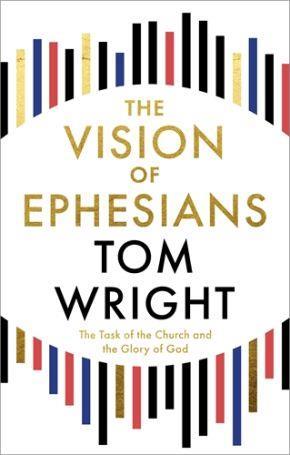
The Vision of Ephesians (SPCK) by Tom Wright is out now

























No comments yet