










Bonnie B. Thurston’s contemplative collection offers reflective poems and meditations to guide readers through death and resurrection during Holy Week says our reviewer

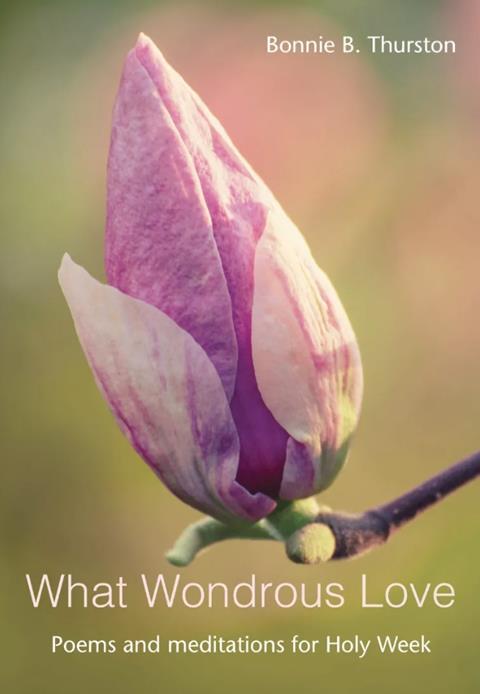
What Wondrous Love by Bonnie B. Thurston is a contemplative and carefully crafted collection of poems and meditations for Holy Week and Easter.
Thurston leads readers from the eve of Palm Sunday through Maundy Thursday, Good Friday, Holy Saturday, Easter morning, and into the aftermath of resurrection.
This is not a theological treatise or a detailed biblical commentary, but a poetic companion for the paschal journey – one intended to slow the reader down, make space for silence, and help them attend more carefully to the mystery at the heart of Christian faith.
Thurston explains that she hopes these poems and brief reflections will give readers “an opportunity to stop and catch your breath” during the steep ascent of Holy Week. The volume is shaped by the conviction that resurrection is inseparable from death, that some kind of ending or relinquishment is necessary before new life can emerge. This theme recurs throughout the collection and forms the spiritual backbone of the whole work. Holy Week is presented not merely as a sequence of liturgical observances, but as an exodus through darkness, grief, silence and surrender toward resurrection light.
Thurston writes with a poetic voice that is spare, attentive and often tender. She is particularly effective at using physical images – buds, stones, gardens, dawn, soil, tears, candles – to illuminate theological realities. At her best, she manages to say something profound without sounding forced or overly self-conscious.
The imagery of buried bulbs, opening tombs, waking soil and first light gives the book a quiet sacramental texture. Nature is never just scenery here; it becomes a witness to death and resurrection. This is one of the collection’s most striking strengths, for it suggests that death and resurrection reverberate throughout the world around us. We glimpse them in the budding of flowers after winter’s apparent death, in the return of colour and life to the earth, and even in the strange nearness of sorrow and joy – a newborn child arriving as life slips away in the next ward. In this sense, Thurston presents resurrection not as something detached from ordinary experience, but as a mystery the world itself quietly rehearses. Nature, grief and renewal all become signs that death does not always have the final word.
Elsewhere, poems about grief, loneliness, exhaustion and imperfect worship remind the reader that resurrection hope is not reserved for the triumphant or emotionally secure. Easter is for the weary, as Thurston suggests, “resurrection is for the dead.”
Thurston draws on scripture, liturgy, the Christian mystical tradition, and occasional literary voices such as Thomas Merton, Caryll Houselander and Gerard Manley Hopkins. The tone is ecumenical, contemplative and gently sacramental. The book’s purpose is not to settle debates, but to help the reader inhabit Holy Week imaginatively and prayerfully.
What Wondrous Love succeeds in what it sets out to do. It is not loud, clever or showy. It is a book of pauses, whispers and watchfulness. Thurston understands that Holy Week is not something to be rushed through. Her poems invite the reader to remain in the awkward spaces between triumph and betrayal, between cross and resurrection, between grief and recognition. In that sense, this is a genuinely useful devotional resource – especially for readers who are tired of devotional writing that feels either sentimental or superficial.
The wondrous love of God is shown as extravagant, wounded, patient and risen; a love that calls people by name, meets them in grief, and leads them through death into life.
For readers seeking a companion for Lent, Holy Week or Eastertide, this book offers something gentle but substantial: not easy answers, but a reverent invitation to watch, wait and wonder.

























No comments yet