










A new history claims the world’s most repressive state adapted the forms of Christianity to build its ruling myth. It’s a chilling idea — though the evidence is not conclusive, says our reviewer
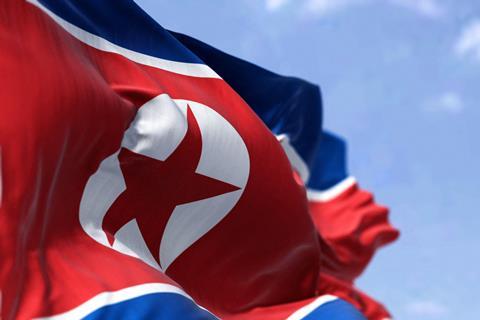
How could the country that is now the foremost persecutor of Christians in the world have emerged from the work of a dedicated Christian missionary? That puzzle is what Jonathan Cheng’s history of North Korea, Korean Messiah, sets out to explain.
Samuel Moffett, a Presbyterian missionary who arrived in ‘the Hermit Kingdom’ of Korea in 1890, built a vast mission compound in Pyongyang. His ministry helped spark the great Christian revival of 1907, which led to Pyongyang being called the ‘Jerusalem of the East’ with great churches and crowded Wednesday prayer meetings. Moffett ran a world-class seminary, and his theology carried a message of radical equality before God that resonated deeply with Koreans under Japanese colonial pressure. Cheng is a meticulous researcher, and these early chapters are among his best. I felt the vibrancy of Pyongyang coming alive on the page.
But Christian revival soon fused with Korean nationalism and anti-Japanese sentiment, even though Moffett explicitly opposed political involvement. The first of the book’s great ironies is that the man who told his congregation to ‘render unto Caesar’ created the very structures that made resistance to Caesar almost inevitable. Those structures educated and galvanised a generation of Christian nationalist Koreans. Among them was Kim Hyong-jik, father of Kim Il Sung, who became leader of North Korea after Japan’s defeat in 1945. Brought up in this Christian bubble, Kim Il Sung never apparently professed faith in Christ, but understood intuitively what faith could do to secure power. Faith has the power to mobilise devotion, create community, demand absolute loyalty, and inspire awe and fear. That understanding proved more consequential to Korea than any personal conviction.
Cheng’s core argument is that what Kim took from his upbringing was not the faith itself, but its architecture. His personality cult was not merely analogous to a religion but structurally derived from the Presbyterian Christianity in which he was immersed. Christ is displaced by the Supreme Leader and the Bible is replaced by Kim’s writings. Church ritual becomes obligatory bowing before statues and the memorising of aphorisms. The promise of salvation becomes revolutionary immortality. Kim Il Sung’s son, Kim Jong Il, perpetuated and built on this myth and his son Kim Jong Un continued it. A dynasty of messianic rulers with no precedent in the Communist world.
The evidence from North Korean defectors is striking. When they first encounter Christianity after leaving the country, many report a disorienting sensation of having worshipped the same thing under a different name. A commando captured after a 1968 assassination attempt recalled: “When they talked about God, it kept reminding me of Kim Il Sung.” A female agent arrested after bombing a South Korean airliner went further: “I think you can even replace the name Jesus with the name Kim Il Sung.”
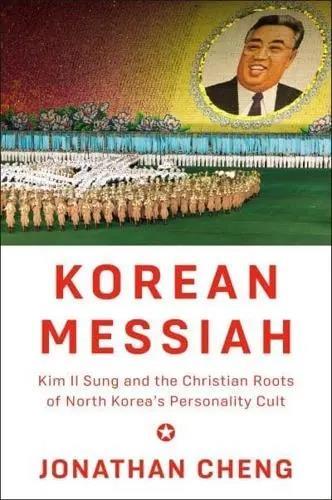
There is, however, a possible weakness in the author’s argument. Many of the features he identifies as derived from Christianity – messianic leadership and absolute personal loyalty – can be equally characteristic of the Soviet-Stalinist personality cult that owes nothing to Christianity. The book moves too quickly through Kim’s exile in Manchuria (1926–1945), when he was under Soviet influence, precisely when his transformation into a communist guerrilla occurred. And when Kim came to power, Soviet advisers helped shape the early North Korean state. Cheng acknowledges all this, but does not engage rigorously with the theory that Kim might have built a nearly identical system simply by following a Soviet model. So Cheng’s central thesis that Kim used Christianity as his state-building template is perhaps based more on evidence of correlation than direct causation.
But these limitations do not undo what the book achieves in its final act. When Kim came to power, Pyongyang’s 300,000 Christians were the one community in the north with their own institutions, their own loyalties, and their own source of ultimate meaning. For Kim’s personality cult to become supreme, they had to be eliminated. Churches were demolished, Bibles confiscated, pastors killed. History was rewritten to portray American missionaries as imperial agents who had subjected Korea to human experiments. The logic was captured in a 1980 Christmas editorial in the state newspaper: ‘Christians, do not go to Jerusalem. Come rather to Korea. Do not believe in God. Believe in the great man!’
Kim did not merely suppress Christianity. He replaced it with himself. And for the replacement to hold, the original had to be not just silenced but demonised.
Reading Korean Messiah, I felt the full weight of that arc – the faith built up with such dedication in the early chapters, then distorted by nationalism, and finally dismantled and replaced. The causal chain Cheng constructs between the missionary and the totalitarian personality cult is inferred rather than proved. But his book makes North Korea, so often described as simply incomprehensible, feel explicable. It left me with a chilling sense of warning about where the path of Christian nationalism coupled with autocracy can ultimately lead.





















No comments yet