










Mark Batterson’s vision of slow productivity in Gradually, then Suddenly is compelling, but his book fails to grapple with situations where faithfulness doesn’t lead to breakthrough, says our reviewer
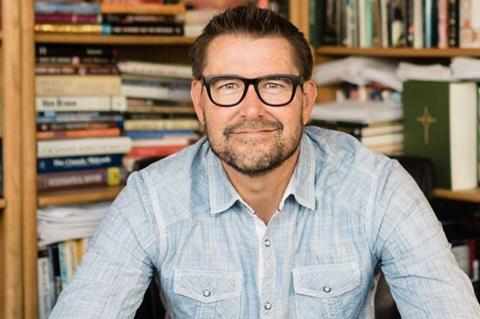
Rowdy Gaines swam around the world – 20,000 miles over eight years – for a final Olympic Gold race that lasted 49 seconds. It’s a parable of patient persistence that Mark Batterson wants every Christian to grasp: the breakthrough moment you’re waiting for is often built on years of invisible preparation.
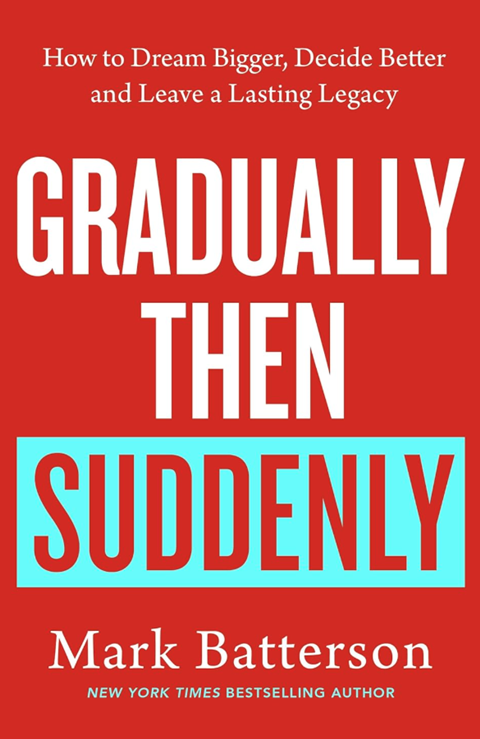
Borrowing from Hemingway’s observation that bankruptcy happens “gradually then suddenly”, Batterson repurposes that idea to explain how success follows the same pattern. His argument in Gradually, then Suddenly (Rider) is that patience and persistence create outcomes that appear sudden but result from extensive preparation.
Batterson is Lead Visionary for National Community Church in Washington DC and he certainly had a big vision. Starting with just 19 people almost 30 years ago, his church now attracts thousands and meets in the multimillion-dollar Dream Center. He describes himself as an achiever and this is his 25th book. Yet he also shows personal vulnerability, sharing that he experienced a nervous 13 year delay before publishing his first book, had a failed church plant, and panicked when his theatre venue closed with one week’s notice. But Batterson’s philosophy is to stay positive and reframe any failure as part of the success process, rather than it being evidence of inadequacy.
Batterson organises this book around a key equation: LONG VISION x LONG OBEDIENCE = LONG LEGACY
Long horizons are essential for significant work. He brings many well-researched examples to prove his thesis, to the point of over-repeating it. Readers encounter medieval cathedral builders, scientific researchers, and biblical figures. All illustrate how faithful obedience compounds over time. I particularly liked his discussion of ‘cathedral thinking’, which powerfully challenges Western Christianity’s impatience and preference for quick results. God’s timeline often spans generations and Batterson’s storytelling shines when tracing genealogies of influence. One teacher’s positive influence and investment in students can cascade across generations. Batterson’s emphasis on being ‘good ancestors’ who serve future generations and being a faithful presence across decades is inspirational and helps to counteract the individualism in our culture.
Where I was less comfortable was when I noticed the book occasionally flirting with prosperity theology, albeit in sophisticated ways. Although Batterson acknowledges difficulties, his narrative arc consistently moves from struggle to breakthrough, from closed doors to better opportunities. His church’s acquisition of seven properties worth over $100 million becomes exhibit A for God’s faithfulness – language that may trouble readers whose persistent obedience hasn’t yielded tangible success.
The fact is that not all patient faithfulness eventually produces success. The Bible’s own story includes faithful servants like John the Baptist, whose obedience eventually led to beheading, not breakthrough. Batterson’s chapter on the promise of Israel’s restoration risks overlooking that scripture sometimes presents suffering as meaningful in developing character and hope, not merely a preparation for blessing in this life. He does briefly mention Timothy’s martyrdom, but doesn’t really wrestle with how ‘gradually then suddenly’ applies when ‘suddenly’ means that suffering intensifies rather than resolves. The simplistic formula of patient faithfulness leading to restoration is not always realised, nor in scripture or everyone’s experience.
Another concern is that the book insufficiently addresses structural barriers to success and the impact of privilege. When discussing community transformation through his DC Dream Center, Batterson emphasises discipleship and opportunity creation, but doesn’t engage with concentrated poverty or discriminatory housing policies, or how racial inequity persists despite individual virtue. Power, access, and privilege can shape whose gradual efforts yield sudden breakthroughs.
In an effort to validate his core formula, the book’s examples skew too heavily toward successful people and resolved situations. Eugene Peterson’s 17 rejections before publication encourages persistence, but readers need more recognition of faithful Christians whose ministries never grew and whose prayers remained unanswered. The question isn’t whether God is faithful. Scripture settles that. But Hebrews 11 concludes by noting that some heroes of faith did not receive what had been promised. So how do we maintain hope when ‘gradually’ goes on and on without ‘suddenly’ arriving?
Nevertheless, these concerns do not nullify the relevance and usefulness of Batterson’s equation. He wisely calls us to invest in activities that are important but not urgent, and embrace slow productivity, maintaining hope through failures and delays. I also liked his emphasis on Sabbath rest and his suggestion to make ‘pre-decisions’ – deciding on habits in advance to reduce decision fatigue. This translates well into developing spiritual formation.
This book can encourage pastors, organisational leaders, and mid-career believers. Especially those fatigued and frustrated by delayed dreams, or tempted to abandon long-term vision. Batterson inspires us to continue discovering God’s big dream for our context, and to persist in pursuing it, even when breakthrough remains hidden.
Perhaps the question isn’t whether your breakthrough will come gradually then suddenly, it’s whether you trust the slow work of God long enough to still be standing when suddenly arrives.

Gradually, then Suddenly (Rider) by Mark Batterson is out now
























No comments yet