











If your goal is stable finances, you’ve misunderstood the gospel, argues Martyn Percy in his new book. Our reviewer says he makes a convincing case, challenging churches obsessed with their own survival to take radical risks instead
If your goal is to have stable finances, Martyn Percy suggests you have misunderstood the gospel.
Percy, former Dean of Christ Church Oxford, is a practical theologian known for challenging Church of England institutional practices. He argues that the currency of God’s kingdom is love, not money, and love is sacrificial. This kingdom currency of love cannot be hoarded, earned, or depleted – it must flow freely or become worthless. Percy contrasts this with human economies built on scarcity, competition, and accumulation. He challenges churches obsessed with survival and financial security, arguing they misunderstand stewardship as preservation rather than taking risks for the right reasons.
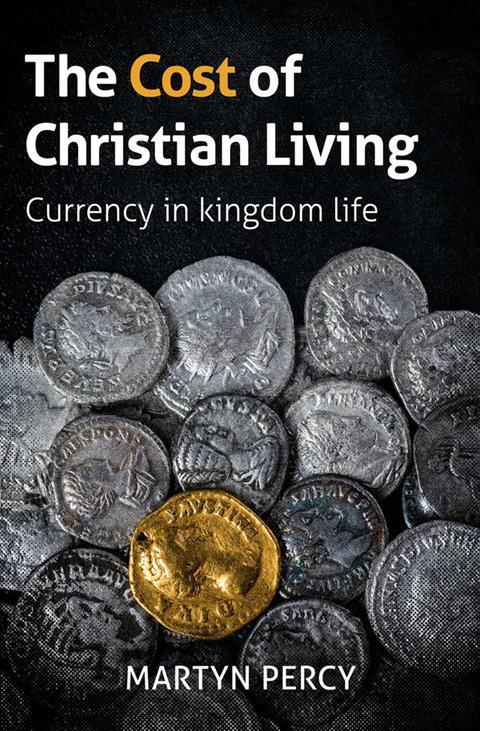
Percy’s central conviction in The Cost of Christian Living (The Bible Reading Fellowship) is that faithful stewardship is rooted in a love willing to take risks. Drawing on gospel scenes of extravagant generosity and the costly love revealed during Holy Week, he invites readers to rethink how value, faithfulness, and devotion are measured. His reflections consistently resist reducing love to monetary terms, instead pointing to a generosity shaped by grace rather than calculation. Although Percy describes himself as “more towards the Bible-busker end of the spectrum rather than the symphony concert standard”, his writing yields rich sermon material and fresh biblical insight.
Percy reframes familiar gospel stories into encounters with economic justice and reflects deeply on them. For instance, he points out that making a whip takes time. So Jesus’ temple clearing was planned, not spontaneous – a deliberate attack on religious commercialisation. This kind of careful reading characterises his work.
For the author, whenever there is any tension between prudence and generosity, generosity must win, and he cites many gospel examples. God’s radical generosity trumps merit-based reward systems in the parable of the vineyard workers. The extravagant worship of the woman who anoints Jesus with expensive perfume is affirmed. The burial costs for Jesus paid by Nicodemus and Joseph of Arimathea are sacrificial. All these show that expressions of love cannot be assessed or measured by money. Percy convinced me that God’s ‘love economy’ operates by different rules – freely given, lavishly spent, never hoarded.
Percy’s plea is for churches to empty their coffers to take risks in mission rather than institutional preservation. Good stewardship, he argues, means taking more risks with resources, not fewer. The parables of talents and minas teach that putting our resources to work is much better than hoarding them, and Percy criticises churches that prioritise institutional survival, calling this the equivalent of the servant who buries his talent. A especially valid point for wealthy denominations, but perhaps less relevant for small independent churches already practicing radical generosity despite limited resources.
This is deliberately disruptive material for institutional church leaders caught between mission and maintenance. Percy makes the provocative claim that the church’s greatest financial crisis isn’t empty coffers but full ones.
As a church trustee I found myself wondering how to square Percy’s radical generosity with sensible governance and our obligations under charity law. There are undoubtedly some gaps in the book between vision and what to do in practice. But his theology does helpfully force difficult and important questions: How large do our reserves really need to be? Does our building maintenance consume more than our community service? Are we protecting our assets or burying our talents? Percy doesn’t attempt to resolve these tensions or close the gap between the vision for radical generosity and implementation. He simply argues that God’s abundant, paradoxical kingdom economy works by different rules than trustees typically think.
Percy offers what many churches need but rarely want: theological challenge to risk everything for the kingdom’s sake. In God’s economy, faith-filled and generous spending out of love can bring unexpected abundance, but anxious hoarding leads to spiritual bankruptcy. This is a wake-up call for any institutional churches who are dying rich while the kingdom starves outside their doors. Percy himself calls this book ‘only a tiny contribution’ – a provocation, not a practical manual. But it feels like a breath of fresh air, even if it won’t calm nervous treasurers or help balance budgets. And it might just provide enough theological disruption to break us free from the kind of excessive prudence that can hinder the mission of God.


























No comments yet