










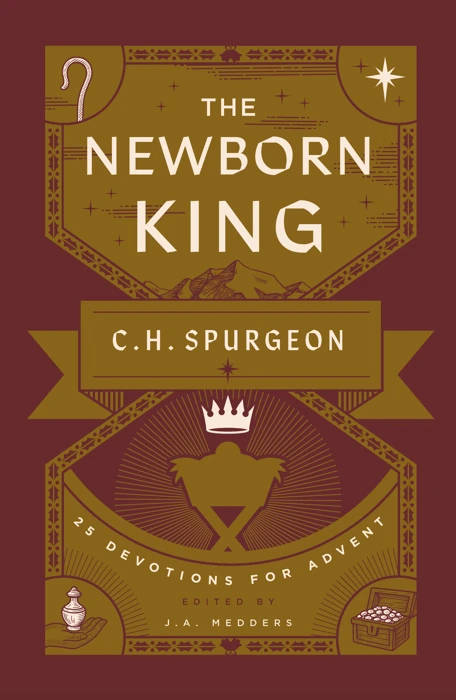
A new Advent devotional based on Charles Spurgeon’s sermons looks to place Christ back at the centre of Christmas. Anyone looking for a little Victorian fire in their quiet time will be well pleased, says our reviewer
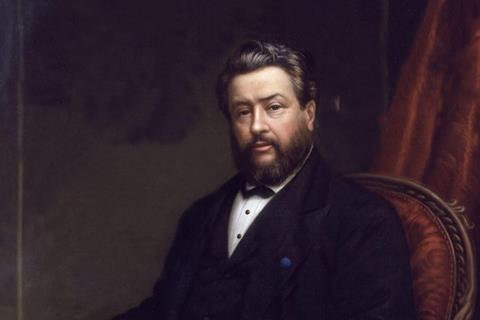
It is difficult to think of many preachers whose words have enjoyed the afterlife of Charles Haddon Spurgeon. More than 130 years after his death, the “prince of preachers” continues to be quoted and read around the world.
Now, in The Newborn King, JA Medders brings Spurgeon into Advent through this selection of his writings, gently modernised, while still retaining his distinctive Victorian voice. Beginning with the virgin birth, the 25 daily readings explore themes that include the promise of Genesis, the journey to Bethlehem, the fullness of time, Christ’s names, salvation, righteousness, Mary’s song and the wise men, before concluding with Christmas Day itself.
Depth and substance
Each entry begins with scripture, followed by a section from Spurgeon’s writing and a newly composed reflection and prayer. The format works well for the busy Advent season: there is enough substance to chew on without demanding an hour of silence amid the December chaos.
And there is substance aplenty. Spurgeon refuses to leave Jesus safely wrapped in swaddling cloth. Bethlehem opens out towards Calvary, the resurrection, ascension and Christ’s ultimate triumph. Even reflections on the nativity quickly widen into the story of salvation. His treatment of Genesis 3:15, for example, moves from Eden to Bethlehem and onto Christ’s defeat of Satan. The child in the manger is already the Saviour who will overthrow sin and death.
The cross is central to the gospel, but it should not be allowed to swallow up the whole meaning of Bethlehem
Elsewhere, his meditation on ‘Immanuel’ turns two simple words – “God with us” – into an reflection on divine solidarity with ordinary human experience. It reminds us why thousands travelled to hear Spurgeon preach. He moves effortlessly from doctrine to praise, and seems almost incapable of discussing Christ without eventually erupting into worship. His prose may belong to another century, but his enthusiasm does not.
The addition of a new reflection and prayer prevent this book from becoming an anthology of impressive quotations and instead direct Spurgeon’s preaching towards personal devotion. Questions such as: “What does Christ mean to me?” are simple, but entirely consistent with Spurgeon’s own pastoral instincts.
A singular focus
Spurgeon’s theological framework is unmistakably 19th-century evangelical and Reformed. Penal substitution, imputed righteousness, human depravity, judgement, Satan and personal conversion appear frequently. For many evangelical readers this will be familiar and welcome; others may wish for a broader account of the incarnation and salvation than the collection provides.
Spurgeon’s teaching is often closely tied to Jesus’ death and resurrection - a more natural fit for an Easter devotional, rather than an Advent one perhaps. Within the evangelical tradition he represents, there can be a tendency to read the cross back into every aspect of the incarnation.
But Jesus came not only to die, but to reveal the Father, announce and embody the Kingdom, identify with humanity, confront evil, dignify the marginalised, teach us how to love, and show us what true human life looks like.
Spurgeon’s prose may belong to another century, but his enthusiasm does not.
The cross is central to the gospel, but it should not be allowed to swallow up the whole meaning of Bethlehem.
Modern readers should also remember that Spurgeon was a preacher. Occasionally, his rhetorical imagination carries more weight than careful attention to historical context. Those seeking a detailed exploration of the infancy narratives themselves may prefer another companion alongside this one.
Nevertheless, The Newborn King succeeds because its ambitions are devotional rather than academic. It strips Christmas of its sentimentality and places Christ back at its centre. Spurgeon wants his readers not merely to admire the manger but to worship the One lying within it: eternal Son, incarnate Lord, crucified Saviour and risen King.
For anyone wanting 25 substantial but manageable Advent readings, this is an excellent companion. Medders has preserved enough of Spurgeon’s distinctive voice while making it accessible to contemporary readers. More than a century later, the preacher’s central obsession remains contagious: look to Christ, marvel at Christ and worship Christ.
























No comments yet