









Does Kanye West’s exclusion from the UK go beyond one man’s past remarks? Lois McLatchie Miller argues that embracing cancel culture will weaken the foundations of freedom
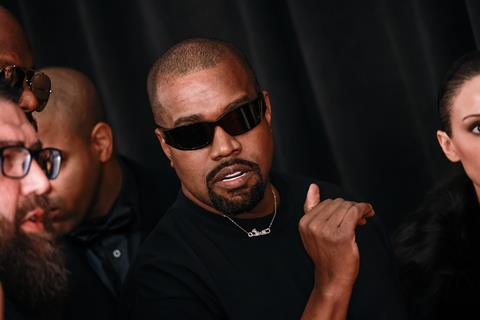
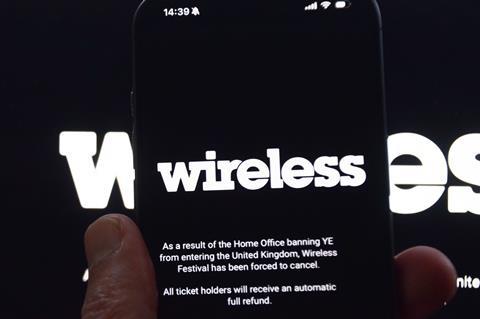
Earlier this week, the UK Home Office confirmed that Kanye West has been barred from entering the United Kingdom, following the news he was scheduled to headline this year’s Wireless Festival. The justification was that his presence would not be “conducive to the public good,” citing his past antisemitic remarks – comments that rightly sparked outrage and condemnation.
West’s words were immoral and indefensible. But Christians are called not only to tell the truth about sin, but to grapple seriously with what comes after it. Christianity does not end with condemnation. It offers something far more radically demanding: forgiveness.
Repentance in a culture of cancellation
That is where this story becomes more complicated. Since making those remarks, West has apologised, expressed a willingness to engage with Jewish communities, and spoken about his behaviour in the context of mental health struggles, including bipolar disorder. None of this erases the harm he caused. But it does raise a question that our culture increasingly avoids: what do we do when someone seeks to repent?
In the Christian tradition, repentance is a recognition of wrongdoing and a movement toward restoration. It does not guarantee immediate trust or remove consequences. But it does demand the possibility of redemption.
Cancel culture – the creation of a society which has removed God from its calculation – struggles to accommodate this. It is a system that excels at exposure and denunciation, but falters when faced with repentance. Individuals are often reduced permanently to their worst statements. This is justice without grace – something the fallible human condition cannot withstand.
Moreover, the decision to ban Kanye West is not simply a cultural signal; it is a legal one. It suggests that the state may now act not only against actions that threaten public safety, but against speech and belief that is deemed unacceptable – even when those views have been renounced.
None of this requires us to defend Kanye West’s past remarks. It requires us to defend a moral and legal framework which doesn’t erase the possibility of redemption
That should give us pause. The question is no longer just whether Kanye West deserves to perform in London. It is whether a liberal democracy should exclude individuals on the basis of what they have said – whether they still hold those views or not. Once that principle is established, it will not remain neatly contained.
A dangerous precedent
Kanye isn’t the first foreigner to experience this ban. Eva Vlaardingerbroek, a Dutch Catholic commentator with known hardline views on remigration, has also faced exclusion from the UK in recent months on “public good” grounds.
The majority of Brits likely feel little alignment with either Kanye West or Vlaardingerbroek. But the principle at stake should concern anyone who values free speech. A power that can be used to exclude one set of views can be used to exclude another.
A future far-right authoritarian government could easily use this precedent to bar critics of its regime. Or a far-left administration could apply it to those who hold traditional Christian beliefs on sexuality or life. Once the state assumes the role of gatekeeper of acceptable opinion, the boundaries will inevitably shift with the political winds.
This isn’t far-fetched to imagine. Across Europe, the expression of Christian belief is increasingly coming into tension with legal frameworks. Päivi Räsänen, a former Finnish interior minister and sitting MP, was recently convicted for spreading “hate speech” because of a pamphlet she wrote in 2004 articulating the Church’s position on marriage and sexuality – over a decade before gay marriage was even legal in Finland.
In the UK, similar concerns have emerged. Isabel Vaughan-Spruce awaits trial for silently praying, in her head, near an abortion clinic, under a “buffer zones” law which is being applied to police even private belief. Numerous street preachers have faced arrest for publicly proclaiming the Gospel.
Once the state begins to regulate contested beliefs, we are all in trouble. The category of “unacceptable” speech might have started with banning grotesque antisemitism that we all condemn; but it can become dangerously elastic all too soon.
Christians should recognise the stakes here. Our faith calls us to speak truth, even when it is unpopular. It also calls us to extend grace to those who speak evil, especially when they repent. Both commitments depend on a society where speech is not tightly controlled by the state.
None of this requires us to defend Kanye West’s past remarks. It requires us to defend something more fundamental: a moral and legal framework which doesn’t erase the possibility of redemption – and in which governments do not assume the authority to police words and beliefs.
A just society must be able to hold together truth and mercy, accountability and grace, freedom and responsibility. If we lose that balance, we will not simply have cancelled one controversial figure, but diminished the very conditions that make repentance and freedom possible.
















No comments yet