











A BBC investigation has uncovered allegations that two women were raped during filming of the reality TV show, Married at First Sight: UK. Giles Gough asks whether the format is at fault, or if wider societal attitudes towards sex and relationships need to change
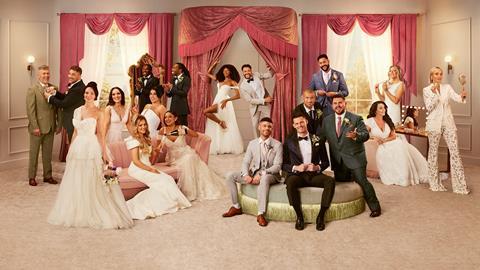
Billed as a bold social experiment, Married at First Sight is the reality TV show where strangers meet only minutes before getting ‘married’ and then go on a honeymoon.
Upon returning, they live together for a period of time, during which they meet at commitment ceremonies and choose whether or not they will continue their relationship.
This week, the BBC’s investigative news programme Panorama revealed that two women allege they were raped during the filming of MAFS:UK. A third said she had been the victim of a non-consensual sex act.
The allegations
One woman said her on-screen husband had raped her and threatened her with an acid attack while a second woman told both Channel 4 and UK production company CPL about being allegedly raped by her on-screen husband.
The third woman, Shona Manderson (who appeared on the show in 2023), is the only woman to waive her anonymity. Manderson accused her on-screen husband, Bradley Skelly, of ejaculating inside her without asking her permission.
Despite being aware of some of the allegations, Channel 4 still chose to broadcast the episodes. CPL’s lawyers said its welfare system was industry-leading, and that it had acted appropriately in all cases.
The most important thing is that we do not to let our own moral standards lead us to heap shame on women who have already been hurt
However, since the Panorama episode aired, both Channel 4 and CPL have received criticism from a wide range of sources. Farah Nazeer, chief executive of Women’s Aid, told the BBC that as soon as the women raised concerns, they should have been “pulled immediately from those relationships.”
Caroline Dinenage, chair of the Culture, Media and Sport Committee said that the very set up of the show, “being expected to share a bed and a life together within minutes of meeting” was “an accident waiting to happen.”
Wasn’t this always inevitable?
Channel 4 has now removed all episodes of MAFS:UK from it’s online platforms, but if the international versions of the show are anything to go by, there’s a significant number of grooms whose behaviour raises red flags.
In one episode from MAFS:Australia, a contestant punched the wall after his partner spoke about her sexual history. His tearful apology afterwards was a masterclass in manipulative behaviour.
We know that conflict makes for ‘great TV’, but it’s also true that this can have unintended - and catastrophic - consequences. From one perspective, it could appear that the show is effectively grooming women for abuse.
There’s also a vast amount of blurring reality and artifice. Yes, the contestants understand their marriages aren’t legally binding, but the rare success stories are heavily emphasised. Despite knowing their relationship is unlikely to survive long beyond the end of filming, there’s so much talk of building a life together. This inhibits clear communication, which is essential for any successful relationship.
These shows are reaping the fruit of a sexual ethic that is, by any normal standards, far too licentious
In addition to this, after the couples go on ‘honeymoon’, they move into a flat, where they live together for a number of weeks. They are filmed almost every day. Participants have no real choice but to share a bed with their new spouse.
When the original reality TV show Big Brother hit our screens in the early 2000s, it was comparatively chaste. But by season five, Michelle and Stu allegedly became the first couple to have sex on the show. Some were outraged - but ratings soared as contestants got increasingly physical. Now, 26 years later, streaming services are awash with reality dating shows that range from sweet to salacious. Arguably the nadir of this genre is Naked Attraction, which features singles picking their partners after being introduced to them fully unclothed.
On shows like Love Island or MAFS, couples usually have to stay together to remain on the show. This incentivises increasingly physical relationships, as well as tempting them into bad behaviour that otherwise would not be tolerated, generating drama and driving ratings. When you consider all the factors at play here, the question isn’t: “How could this happen?” but rather: “How has it taken this long?”
A flawed concept
As Christians, Married at First Sight may feel like an unsettling concept. For many who want to get married, the institution is a hope we cling to, and for those of us who are already married, it is one of the key foundations on which we build our lives. To see it being turned into a gimmick for a TV show seems galling. A cheapening of our faith and values, even.
Choosing your partner is one of the most consequential decisions you will ever make, so outsourcing that choice to the producers of a reality TV show, for entertainment purposes no less, would be unthinkable to most people, especially those with faith. Which begs the question: Why do people do it?
Perhaps for 15 minutes of fame - although these days it’s probably much closer to 15 seconds for most. Possibly, there is a deeper, underlying need; a desperation for love, affection or validation, which makes them even more vulnerable to abuse.
For Christians, we must not let our own moral standards lead us to heap shame on women who have already been hurt. Victim blaming is not what we are called to do. As Jesus proved with the woman caught in adultery, that is not what God desires.
It seems self-evident that these shows are reaping the fruit of a sexual ethic that is, by any normal standards, far too licentious. Perhaps society should ask itself whether we’re willing to tolerate a presentation of sex that is utterly transactional and so far from what God intended. More than that, Ofcom needs to consider whether a show like MAFS:UK is acceptable in its current form.
It’s unclear whether the UK version of the show will be able to survive this scandal. CPL’s assertion that it is the “gold standard” for welfare in reality TV may well have been met with some scepticism. But if we take it at face value, it is even more shocking. If the welfare system is in fact industry leading, and the victims of the alleged rape still didn’t feel they were listened to, it begs the question: How much more abuse is taking place in the reality TV genre?
Maybe the entire concept of Married at First Sight was flawed from the start.

























2 Readers' comments