





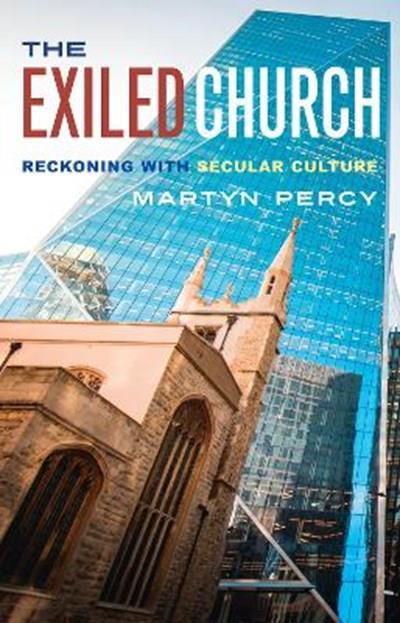
Martyn Percy’s latest book reads like a horror story told through statistics. From plummeting baptism rates to empty pews, his analysis of church decline makes for grim reading. But the real shock lies in his central thesis: that much of Christianity’s retreat is self-inflicted
As its subtitle suggests, The Exiled Church: Reckoning with secular culture examines how the Church has engaged with secularism – and, in the process, committed a degree of self-harm. If this book were a movie, it might sit in the horror genre. Much of the reading is grim, though with a measure of resolution by the end.
The horror, in this case, comes in the form of statistics. For example: “In 1970, the Church of Scotland performed around 35,500 baptisms. In 2020 the figure was 459.” Martyn Percy does not mention that Covid inevitably affected that number, but it is only one example among many figures that should give Christians pause as they consider the impact of secularisation across the UK and wider Europe.
He also puts these numbers into contexts we can picture. In the diocese of Birmingham, with a population of 1.6 million, the usual Sunday attendance for the Church of England is 6,300 – not even enough to fill one stand in either of the city’s main football grounds.
Percy presents his argument in a playful and unusual format, structuring the book like a school curriculum. Chapters are titled ‘Science’, ‘Religious Education’, ‘History’ and ‘Maths’, with an additional section, ‘Extra Maths and Equations’, which pummels the reader with yet more unsettling figures.
At times his frustrations with the Church of England hierarchy feel deeply personal, but that does not invalidate his analysis. Occasionally a heading can feel somewhat shoe-horned in but one standout chapter is ‘Science’. Percy observes that: ”in the annals of all strategic thinking, the most common error is to ‘fight the last war’, preparing uselessly for old challenges rather than gearing up for the future.” This insight is crucial, he argues, because the cultural landscape has shifted. Debates about science versus the Bible no longer loom as large for the emerging generation of evangelicals. Instead, Gen Z are: “less inclined to discrimination of any kind and broadly committed to equality – in gender, sexuality, ethnicity and any ‘protected characteristics’ (e.g. disability) – being taken as read.” In this respect, Percy suggests, many evangelicals remain backward-looking, still preoccupied with battles that younger generations no longer consider central.
Other characteristics of this generation, born after 1996, are also worth church leaders noting. They tend to be reluctant to commit long-term to institutions – though they might join a shorter-term, values-based movement such as Labour’s Momentum – and they frequently describe themselves as ‘spiritual, but not religious’.
This outlook means that younger generations are often sympathetic to faith, even appearing ‘almost Christian’. Yet Percy argues that such an approach risks losing sight of the idea of: “an imminent God with a divine mission in the world.” Looking ahead, he predicts a continued: “foregrounding of personal experience and spiritual fulfilment… [with]… formal and traditional religion consigned further into the background.” He also argues that churches have lost the moral authority to make public pronouncements when many continue to enshrine forms of discrimination.
Yet Percy’s concern in this book is not simply to identify the sociological currents shaping contemporary Christianity. He also seeks to expose areas where the Church is actively engaged in what he calls “self-secularisation”, revealing a: “marked drift away from its fundamental calling and authentic identity.” Examples include the own-goals of prioritising opposition to same-sex marriage, adopting management-style models of leadership, and responding to abuse scandals with defensive, PR-driven strategies.
The depth of research on display is exactly what one would expect from an academic of Percy’s stature. As Very Revd Professor Percy, he brings a sociologist’s eye to the subject. His appointment as Dean of Christ Church – the world’s only academic institution that is also a cathedral – demonstrated his ability to straddle both Church and academy. Other roles, including serving as a director and council member of the Advertising Standards Authority and as an advisor to the British Board of Film Classification, further underline his engagement with the wider public sphere. For that reason, his observations deserve to be taken seriously.
Percy rightly warns against falling for the illusion of a sacred–secular divide, noting that Jesus’ life, work and ministry: “not only bridges the perceived tribal and ideological boundaries of the sacred and secular realms, but sets about dissolving them at every opportunity.”
Surprisingly, however, Percy is critical of church growth programmes and the emphasis on ‘productivity’ in disciple-making. Instead, he argues that local churches should focus on being genuine and transformative communities. Yet one might ask whether these aims must be mutually exclusive. Surely churches that live authentic, faithful lives can also desire that as many people as possible experience life with God.
There is a wealth of thoughtful analysis here about the Church’s present challenges, though the proposed solutions are less clearly defined – perhaps a task reserved for the forthcoming sequel, The Pilgrim Church. For now, Percy offers a more tentative hope: that God meets his people in exile and will release them from it once its lessons have been learned – and that those lessons will ultimately prove a blessing.
Both thoughtful and provocative, this third volume in a planned four-part series is recommended for anyone concerned that churches are haemorrhaging members, funds, clergy and training resources. In many ways it reads like an end-of-term report from God to the Church: “Could do better. See me.”
The Exiled Church: Reckoning with Secular Culture (Canterbury Press) by Martyn Percy is out now

























No comments yet