







Dolly Parton rose from a one-room cabin in Tennessee to become a global country music icon, actress and radically generous philanthropist. Following her death aged 80, Derek Walker reflects on the Christian faith that empowered her to believe all things were possible, even when life suggested otherwise
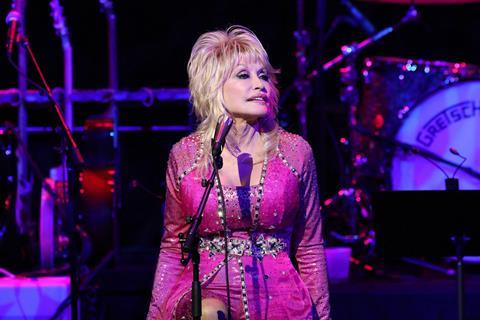
There’s something about being born into poverty that can spark steely determination. Dolly Parton, who famously grew up very poor, was about as powerful an example of this as can be expected.
Yes, she rose to record-breaking heights of country music stardom and had leading film roles. But how many other stars also have their own theme park? And can any claim to have given out millions of free books to children to help with their literacy? That the Empire State Building glowed pink to mark her death from cancer this week says something about her national – and international – appeal.
And directing this drive was her faith in Jesus.
A Tennessee childhood
Dolly Rebecca Parton was born in a one-room Tennessee cabin in 1946, the fourth of 12 children. To feed the family, her sharecropper father later tended his own tobacco farm and took on construction work. Her grandfather was a Pentecostal preacher and Dolly’s first public performances were in church, aged six, when she also started to write songs.
Her first was about a corncob doll her mother made for her called Little Tiny Tasseltop, her mother writing down the words she sang, as Dolly was too young to write. A year later she was given a homemade guitar – a mandolin with bass guitar strings – and her songwriter uncle, Bill Owens, bought her a proper one when she was eight.
Aged ten, she began making trips to Knoxville with Uncle Bill. Within three years she was appearing on local TV and radio; had played Nashville’s Grand Ole Opry, introduced by Johnny Cash; and recorded her first single, ‘Puppy Love’.
At 16, she turned professional as a songwriter, and she recorded her first album, Hello, I’m Dolly, in 1967. This was the start of a career that sold an estimated 100 million records, of which a record-breaking 25 singles topped the Billboard country music chart and a record 44 albums made the top ten.
Songs that travelled
As Parton composed over 3,000 songs, some were bound to succeed and remarkably, two of these were written within a few days. ‘Jolene’ was written about a local bank clerk, who flirted with her husband. The title came from a fan who asked for her autograph. Struck by her unusual name, Parton repeated it to herself to remember it, realising that the rhythm made it a natural chorus.
The other was ‘I will always love you,’ written for Porter Wagoner, who had a syndicated based in Nashville. Having heard her debut album, he invited her to join him in a duo and they released a dozen successful albums, spawning many top ten singles. They parted when she became more successful than him, which caused some friction. To soften the blow, she wrote this as a sign of respect.
When asked about where the 3,000 songs come from, Dolly replied, “I like to think it comes from God” and talked about giving God a high-five for some of her lines.
When Elvis wanted to record it, his manager, Col. Tom Parker, insisted that she sign over half of the publishing rights, standard procedure for any song he released. She refused, crying all night about the decision, made against the advice of her friends. Parton told Country Music TV how she remembers worrying about relinquishing some of her rights, thinking, “Don’t do that. And I just didn’t do it… Then when Whitney [Houston’s version] came out, I made enough money to buy Graceland!”
Other key songs include the Kenny Rogers duet ‘Islands in the stream’; ‘9 to 5’, written for her acting debut in the eponymous comedy film; and ‘Coat of many colours’, which she has often named as her favourite self-penned song. It deals with poverty and a mother’s love, with the mother telling the Bible story as she knits rags together to make patchwork clothes.
Books, vaccines and generosity
Parton has contributed to many causes, including $1m (£736,000) for research into Covid-19, which formed the basis for the eventual Moderna vaccine; setting up a reserve to help preserve the bald eagle; and helping coordinate relief efforts for people affected by the Great Smoky Mountain wildfires of 2016.
Most notable is her literacy project, the Dollywood Foundation Imagination Library. Initially she gave the children in her county – whether rich or poor – an age appropriate book each month from birth to kindergarten “so that they can learn to love books”.
While inspired by her father being illiterate, it is also important to her that children are recognised. “They get this little book with their little name on it in the mail, and they feel special. They start taking pride in themselves, and they know that somebody out there is thinking of [them].”
Now 40 million books are distributed worldwide annually.
The faith that made all things possible
Tributes to Dolly often tell of her poor background. Quoting a phrase from a 2002 CNN interview, Parton said that “Everybody back home was dirt poor.” What’s not quoted is the following line, “But we were also very close as a family, always had a great faith in God. That gave us strength.”
She told the Knoxville News Sentinel, “I pray a lot. I try to keep my faith strong, praying every day and feeling that Jesus is right here, close to me and is my friend.”
And in an interview with CBN, she affirmed: “I grew up knowing that Jesus loved me and that through God all things are possible…” adding that her faith is “what keeps me going!”
Of her roots in the church, she explained, “It’s very important. It has served me so well over the years to believe in those scriptures, like, ‘through God, all things are possible’. When I’m having inner problems, when anybody says, ‘You’ll never pull that off’, I say, ‘Yes, I can!’ I really lean on my faith. I remember my scriptures; I grew up with that. I pray every day. I ask God to lead me and direct me.” And when asked about where the 3,000 songs come from, she replied, “I like to think it comes from God” and talked about giving God a high-five for some of her lines.
The New Testament says a lot about actions verifying faith and being what Jesus looks for. Dolly Parton is a prime example of how that can look, even when your beginnings suggest that there is little hope.



















No comments yet