
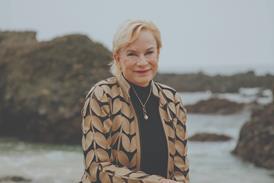


Former MP, Ann Widdecombe, has died aged 78. Gavin Ashenden pays tribute to a woman who never knowingly compromised on her convictions - even if it brought her criticism or cost her career advancement
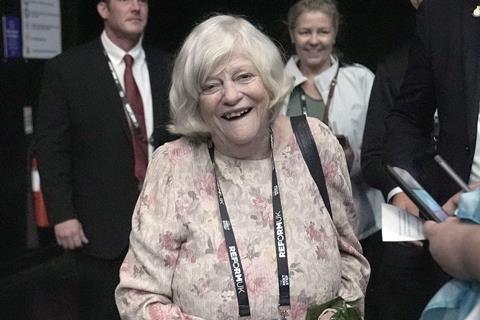
Faith was more than just a matter of what Ann Widdecombe believed. It was the basis of her whole way of life. “All I do is what I think is right,” she once explained, “and leave the rest to God.”
Ann Widdecombe made an impression on the public that very few politicians manage to create. There has already been a flurry of obituaries since her death, most of them concerned with assessing her success - or lack of it - in climbing the greasy pole to power.
If you assess her life simply in terms of political success, effectiveness or time in power, you end up with a rather ordinary political biography. 23 years as a Conservative MP, during which she served as Minister of State for Prisons and Employment as well as stints as Shadow Health Secretary and Shadow Home Secretary.
Later, a return from retirement and election as a Member of the European Parliament for the Brexit Party. In 2023, she famously resigned her Conservative Party membership to join Reform UK, serving as the party’s Immigration and Justice spokesperson.
She was not embarrassed by being out of step. On the contrary, it was, in many ways, the defining feature of her life
But Ann Widdecombe was anything but ordinary. The circumstances of her death - now the subject of a murder investigation - have tragically proved to be out of the ordinary too. But then the whole pattern of her life was out of the ordinary.
Anyone who heard Ann on the radio, in the House of Commons or on television will know that she made an immediate and powerful impression. She was a woman of extraordinary and intense integrity, and this distinguished her from the run-of-the-mill politicians with whom she worked.
Whether you agreed or disagreed with where her views lay on the political spectrum was less important than her commitment to what she believed to be true. It was very clear from everything she said, and from the way she said it, that truth was her primary concern.
This had the effect of irritating people, and sometimes making them very cross indeed. But she was prepared to give as good as she got, and she shrugged off the insults that were, in their own way, a measure of the impact she made.
One that particularly stuck was “Doris Karloff”. She was also called a battleaxe and a pantomime dame; and so far from minding the latter, she actually went on to play a pantomime dame on stage.
A journey of faith
It has been surprising that, in many of the obituaries and accounts of her life, so few people have written about her faith or her journey from evangelical Anglicanism to Catholicism.
Her brother Malcolm began, as she did, as an evangelical. He became a popular and highly effective charismatic vicar in Bristol, where he ran a successful church with a strong ministry among the city’s students. One of her nephews, Roger, was also an evangelical Anglican clergyman.
This was the Christian background from which Ann came and, in some ways, it makes it all the more remarkable that she should eventually have become a Catholic.
Her original experience of Christianity was formal and eclectic. Her parents sent her to a Catholic school in Bath, which she described as the strictest school in the city. But after leaving school, like so many others, she drifted away into agnosticism.
This may simply have been the result of formal Catholic education having its usual deadening effect, or it may have been the normal agnostic exploration that accompanied her movement from adolescence into adulthood.
By her early 30s, however, she had returned to evangelical Anglicanism and was living as a fully committed Christian.
Disillusioned
Her difficulties came when she discovered that the Church of England was unwilling to confront the pressure of secular opinion. They came to a climax with the ordination of women, when she complained that there were no theological arguments to be heard in the debate, only secular and social ones.
In 1992, she left the Church of England, explaining that this was not exactly the last straw because she already had “a huge bundle of straw”.
“For years I’ve been disillusioned by the Church of England compromising on everything”, she said. She found the terms in which the Church conducted the debate deeply disillusioning. Her main criticism was that this represented an abdication of the Church’s proper role, which was, she believed, to lead rather than to follow.
She was a woman of extraordinary and intense integrity
It was something of a surprise, even to her, that she became a Catholic. But she explained the attraction very simply: “The Catholic Church doesn’t care if something is unpopular…If it’s true, it’s true, and if it’s false, it’s false.”
She found the increasing sexualisation of society unwelcome and regarded it as the source of significant cultural and spiritual loss.
In 2014 she said: “Christians now have quite a lot of problems, whether it’s that you can’t display even very discreet small symbols of your faith at work, that you can’t say ‘God bless you’, you can’t offer to pray for somebody.”
Her argument was that militant secularism had made ordinary expressions of Christian belief increasingly difficult in public life.
Out of step
Ann took her faith seriously, just as she took everything that mattered to her seriously. Her faith and her political vision fed each other. This meant that, unlike many other politicians, she had principles she would not surrender.
It also meant that, during a period of rapidly changing culture, she possessed a yardstick by which she judged what was acceptable and unacceptable, creative and destructive, virtuous and vicious.
In a curious way, she seemed to enjoy being in the public eye. In retirement, she was recruited for comedy programmes, reality TV and even played a pantomime dame on stage - despite declaring some years before that she would never get involved in such things. Her appearance on Strictly Come Dancing endeared her to many.
There was one episode of Have I Got News For You on which she appeared as guest host - and found herself completely out of sympathy with the vulgarity and obscenity that had become normal in comedy and showbusiness.
She was not embarrassed by being out of step. On the contrary, being out of step was, in many ways, the defining feature of her life. She would rather stand alone for something she believed to be true than join a crowd travelling confidently in the wrong direction.
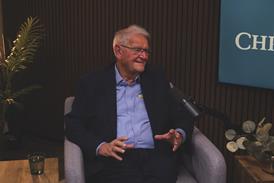
In the last ten years I interviewed Ann a number of times. I came to hold her in deep respect and affection. You knew where you were when you talked with her, and would always end up wiser and kinder for the conversation.
You can read Premier Christianity’s interview with Ann Widdecombe here















3 Readers' comments