





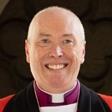
From council estates to the House of Lords, Rt Rev Andrew Watson served with humility and deep commitment to discipleship, says Rt Rev Paul Davies. His final pastoral letters to his diocese became powerful testimonies of faith even as he faced a cancer diagnosis
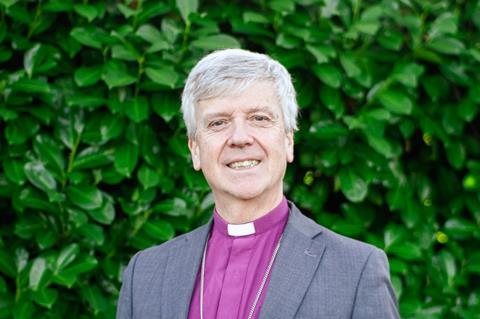
‘Who do you think you are?’ was the theme of the Bishop of Guildford’s last confirmation sermon at St Peter’s Church, Ash on 11 January 2026.
He ended that sermon by saying ”a day will come – quite certainly – when Andrew Watson becomes the late Andrew Watson”. He continued, “what on earth will be the point of my degrees and qualifications then, let alone my dubious hereditary links with King Alfred and the Emperor Charlemagne? I find who I am in Jesus Christ”.
Little did he know when he spoke those words that, within seven weeks, his earthly life would end. And yet they sum up the life of this disciple. That strong identity, which shone through his short illness, was an inspiration to so many.
Called to church ministry
Andrew John Watson was born on 16 July 1961. He was educated at Winchester College where his father was the Master of Music. He reflected that his vocation could have gone in any one of three directions: music, the church or law. Andrew inherited his father’s musical genes and played the bassoon in the National Youth Orchestra. Alongside music, his Christian commitment grew as “the truth gradually dawned” on him.
He went on to read Law at Corpus Christi College, Cambridge. Following graduation, during time as a caretaker and youth worker in Islington, he discerned that God was calling him to ordained ministry and returned to Cambridge to train at Ridley Hall. It was during this time, in a Rowan Williams lecture on Origen, that he met Beverly, whom he married in 1986.
Andrew was made deacon in 1987 at Redditch where he served his title by building a worshipping community on a large council estate. In 1991 he moved to fashionable Notting Hill where, in addition to growing the church, he enabled the development of a community café, a prison fellowship in Wormwood Scrubs and a major restoration of St Peter’s Church. In 1996 he started his longest chapter of ministry as vicar of St Stephen’s, Twickenham. These years saw him send out three planting teams to All Souls, St Margarets; St Saviours, Sunbury; and the Ivybridge Estate, as well as serving as Area Dean of Hampton. In 2008 Andrew was nominated as Bishop of Aston where he masterminded the diocesan strategy Transforming Church, engaged deeply with the wider community and grew the link with Malawi.
Vision and strategy
In 2014 Andrew was translated from the poorest diocese in the Church of England to the wealthiest. His charge as Bishop of Guildford was to enable a new vision and strategy in the diocese. He facilitated an extensive process of listening to God, the church and the community. It resulted in a strongly owned vision of Transforming Church, Transforming Lives – a framework not a blueprint. He worked hard to create a culture which was ambitious for the Kingdom of God, well-resourced and supported, with mutual accountability. He brought to Guildford his passion for and gifts in deepening discipleship, church planting, celebrating and increasing diversity, and being deeply engaged in local communities. His painful experience of abuse as a young person made him extremely committed to safeguarding.
Andrew played a significant role in the national and global church. Within the Church of England, he chaired the Ordained Vocations Working Group which enabled a significant increase in vocations, and the Steering Group on Church Governance – he was always committed to good process. He also served as Chair of Trustees of CPAS. As the grandson of Church Mission Society missionaries in China, Andrew was deeply committed to the global church – especially in places of persecution. He used his voice in the House of Lords to campaign for and strengthen freedom of religious belief. He had strong links with China, India, Pakistan, Sweden and Nigeria – where in latter years he worked hard to maintain a strong friendship in the context of strained relationships across the Anglican Communion.
Despite his sharp intellect, Andrew wore his learning lightly. He had an encyclopaedic knowledge of the Bible and read widely. He published four books on discipleship and leadership. As a gifted wordsmith, his well-crafted sermons were firmly rooted in prayer and scripture, and at once deep and accessible. He integrated his musical gifts into ministry and delighted in any opportunity to sit behind a keyboard. He was born the year in which Guildford Cathedral was consecrated and wrote a setting of the mass to celebrate its 60th anniversary. Andrew was much loved throughout his ministry for his Gospel-focus, prayerfulness, authenticity, gentleness, humility and kindness. While he held clear views on contentious issues such as same sex marriage, he was deeply respectful of those who held a different view.
Faithful to the end
In the three weeks between his diagnosis of pancreatic cancer and his death, Andrew wrote two inspirational pastoral letters to his diocese. In the second of these he reflected, “I don’t fear the prospect of dying and find to my relief that my faith in the ‘resurrection of the body and the life everlasting’ has only grown stronger over the past few weeks”. He further commented, “I still consider myself as deeply blessed to have been born into such a loving family, to have met with Christ as a teenager, to have spent nearly forty years of my life so joyfully married to the ‘wife of my youth’, to have raised four remarkable children (all equally remarkably partnered), and to have been entrusted with a series of fulfilling ministries within my beloved Church of England.”
Andrew is survived by his wife, Beverly (an incumbent in the Diocese of Guildford); his four children, Hannah, Sam, Joe and Lydia (to be made deacon next Petertide) and their spouses; three grandsons; his mother, Alison; a sister and two brothers.
I give thanks for a life which spoke so powerfully of the hope and salvation of Jesus Christ. It was the deepest honour and privilege to serve as his suffragan bishop.




















No comments yet