









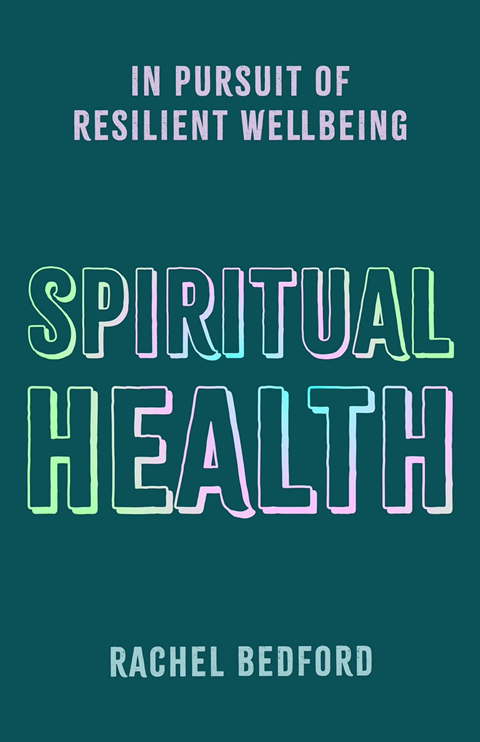
Rachel Bedford’s new book offers valuable insight into why contemporary soul care can leave the already-exhausted even more exhausted. But as warm and carefully written as it is, it does not give adequate weight to suffering and trauma, says our reviewer

Lazarus appears just once in Spiritual Health, tucked away in a subordinate clause. Jesus grieved when his friend died, Rachel Bedford writes, assuring us that we can pray to a saviour who intimately understands our sorrow. Then, the book swiftly moves on. It is a revealing moment in an otherwise careful work, because the story of Lazarus is precisely where Bedford’s argument ought to be tested most rigorously. But it isn’t.
The limits of self-help
Bedford has written a work of popular pastoral theology. Her case is clean: the wellbeing conversation has expanded from bodies to minds and then stopped. We are body, mind and soul, yet the third has been left out of a national obsession with wellness. Her sharpest formulation is that Jesus never promised rest for bodies and minds, only for souls. Less wellness, more steadfastness. Sixteen short chapters run from what a soul is, through prayer, church, communion and scripture, to tradition, money, heaven and vocation.
In chapter four, Bedford notes that the spirituality shelf in Waterstones sits alongside self-help, and that the adjacency is not accidental. Contemporary soul care asks the exhausted to heal themselves, and the effort required is exactly what the exhausted do not have. That is a genuinely good observation about a human-centred spirituality, made without condescension towards the people buying those books.
Her critique of the Rule of Life revival is rarer still. Practices do not heal, she insists, they only make room. Burnout blesses no one. Chapter three, on a young mother dying of cancer, refuses every platitude available to it and is the most disciplined writing in the book.
The wellbeing conversation expanded from bodies to minds and then stopped
Then comes the turn. Having named the trouble with a culture that makes every solution personal, Bedford offers another personal solution. Salvation arrives here as wellbeing: something lifted off the individual, placed on Jesus, and felt as peace. Her repeated phrase for prayer, lifting-stuff-off-me-and-onto-Jesus, captures the whole shape of the book. What’s missing is the older and larger claim that salvation reaches beyond the self, into the arrangements that grind souls down in the first place.
When comfort isn’t enough
The test arrives in chapter nine. Bedford lists what readers imagine would improve their wellbeing: shorter NHS waiting times, better resourced schools, a decent wage, secure housing. She treats the list as evidence of hope misplaced in politicians. But that list is not a category error. It is a description of what the tradition calls structural sin, and the people on those waiting lists have been sinned against, not merely disappointed.
Bedford senses the objection coming and asks activists to bear with her, twice. Bearing with is not answering. A theology that can tell a family in temporary accommodation that spiritual health remains available to them is telling the truth. A theology that stops there has stopped early.
The book would also be stronger for a wider register. Carl Jung, who took the word ‘numinous’ from Rudolf Otto, held throughout his writing on religion - and most directly in Modern Man in Search of a Soul - that his patients in the second half of life did not recover without regaining a religious outlook.
Bedford would welcome the claim. But Jung reached it by way of a holy that is overwhelming and wholly other long before it is comforting. Spiritual Health is warm from first page to last, and the warmth is both its charm and its ceiling. The God who arrives is a doctor with a good bedside manner. Yet something in the soul wants to be undone as well as tended.
Going it alone
The chapter on church leaves a practice gap unclosed. Bedford assumes that souls fed well will come, yet the pattern among younger readers now is a Bible in hand and no intention of going through a door. Her account of a religious resurgence among the young also leans twice on the Quiet Revival report, which was retracted in March 2026, after this book had gone to press. The timing is nobody’s fault, but the ground beneath the claim has moved. The question is not whether the Church “holds the gold”, as she puts it. It is why so many have decided they can mine it alone.
Which returns us to Lazarus and his four days dead. Jesus delays. Mary and Martha wait without knowing anything and, by the time he arrives, their brother has been in the tomb long enough for Martha to object that there will be a stench.
Theologians working on trauma have spent two decades on that middle stretch, the ground between death and rising where most people actually live. Their argument is that faith which hurries past it abandons those still standing in it. Bedford knows the terrain. Life, she writes, is full of ugly uncontrollables. Her instinct, though, is to reach quickly for the answer, and the answer arrives before the waiting has been given its due. Some souls are not looking to be lifted yet. They are looking for someone willing to sit down in the middle with them.
Spiritual Health: In Pursuit of Resilient Wellbeing (IVP) by Rachel Bedford is out now
















No comments yet