



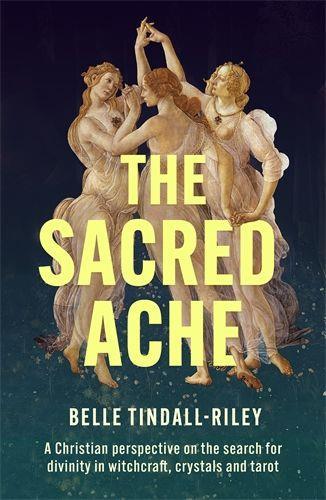
Belle Tindall-Riley’s new book explores why people are turning to witchcraft, crystals and tarot. Her empathetic approach is welcome, but the book’s analysis falls short of its promise, says our reviewer
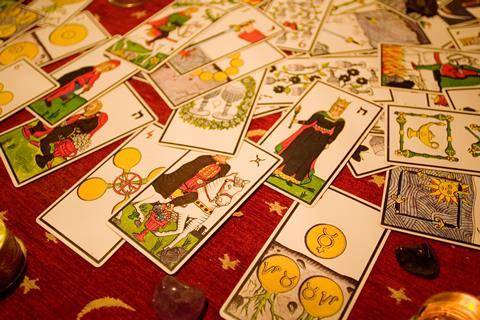
There is a courage in a Christian writer walking, on purpose, into the healing field at Glastonbury. Not to argue. Not to hand out tracts. Simply to stand among the tarot readers, crystal sellers and sound-bath facilitators, to watch thousands of people pause their frantic lives in search of awe and belonging, and to take that hunger seriously rather than tut at it.
That field is where this book begins, and it tells you everything about the spirit in which it was written.
I came to The Sacred Ache glad. Here is someone with real theological training, a doctorate in biblical studies, turning her attention to the practices an entire generation is reaching for while the Church wrings its hands from a distance. The premise is irresistible. The hunger is real, she says; the hunger might be the truest thing about us. Borrowing Augustine’s most famous line that “our hearts are restless until they rest in God”, she reframes the crowded marketplace of contemporary spirituality not as rebellion to be scolded but as homesickness to be understood. For a reader who has watched friends drift towards astrology apps and oracle decks, it lands like relief.
So let me say the admiring things first, because they are true. The book is empathetic where most Christian writing on the occult is alarmed. It refuses the squeaky-clean, disenchanted Christianity that has nothing to say to a person holding a deck of cards. Tindall-Riley insists that the faith is wilder, stranger and more mystical than the seekers assume: that the transcendence they are chasing in a Somerset field is not somewhere else, but right in the middle of the ordinary. When she is on that instinct, the book sings.
And yet.
It helps to read this as a memoir lit by theology rather than a work of theology, and to love it for what it is. The centre of gravity is Belle herself: her doubts, her childhood in the Welsh valleys, her nervousness about her own desires, the prayer she keeps returning to. The practices named on the cover tend to orbit her rather than the other way round. There is real grace in that; a life honestly told can disarm a reader in a way an argument never will. But the subtitle quietly suggests a scholar’s analysis of the spiritual marketplace, and what you receive is the warmer, more wandering gift of one woman’s restless heart. A good gift. Just a different one.
There is a Cantonese expression, 到喉唔到肺, for food or drink that reaches the throat but never quite the lungs. It satisfies the surface and stops just short of the depth. That is exactly how the book handles its headline subjects. Take the tarot chapter. She explains the mechanics gracefully: the major and minor arcana, the way a reader learns to interpret the spread like a language, the way the cards claim to tell us the story of our own lives back to us. She even reaches for an arresting image of tarot as an unbound book whose pages are shuffled into your life. And then she moves on. We do not learn what a Christian should make of why it seems to work, what is happening when a person entrusts their most vulnerable self to a stranger’s spread, or what the long, ambivalent biblical witness on divination might say to any of it. The throat is touched. The lungs are not reached.
The same is true of paganism. She leans on Paul Kingsnorth, the former Wiccan turned Orthodox Christian, whose unsettling claim that magic is real and does work, the only question being who it works for, is precisely the thread a book like this should pull until something tears. She names it. She does not pull it. Tellingly, the one place the book deepens is closest to her training: drawing on N.T. Wright, she argues that the word ‘miracle’ smuggles in a god who stays outside the world and occasionally reaches in, which is not the God of the Bible. For a few pages the writer stops narrating and starts thinking, and it is genuinely good. When she touches scripture, she has somewhere firm to stand. When she touches the crystal and the card, she is a sympathetic tourist.
Still, the deficit is promise deferred rather than promise broken. The longing is named, the empathy modelled, the ground cleared for harder building. She clearly has the equipment. For the friend with the oracle deck, the cousin deconstructing their faith, the colleague who finds church embarrassing but lights a candle anyway, this may be exactly the right gift. It will not condescend. It will sit with them in the healing field. But if you are hungry for the analysis the subtitle promises, The Sacred Ache reaches your throat and leaves your lungs wanting. The ache the title names is the ache the book leaves you with.
















No comments yet