






As Church of England attendance rises for the fifth year in a row, Michael Tang argues that the story of renewal is bigger than statistics. From online theology classes and café conversations to WhatsApp Bible studies, much of Britain’s spiritual hunger is revealing itself outside of Sunday morning church

Most weeks, I teach online theology to individual students scattered across five countries in time zones I usually have to double-check. Some have not walked into a church building for years. Others never will. The theology cards I make are designed to be read on the tube and in cafés, not in a pew. Almost none of this will ever appear on an attendance register. And I have slowly come to believe that it is not just a footnote in the story of the Church in Britain. It is half of it.
The official story is genuinely good news. In May, the Church of England announced that attendance had risen for a fifth year in a row, the first time that has happened since current records began, with the worshipping community now estimated at 1.023 million people. The figures are preliminary, drawn from around 80% of churches, but the direction is no longer in doubt.
The story and the stats
The public version of this story is mostly told through the big, visible engine of formal church planting. England now has around 100 resource churches, large congregations commissioned to plant others, and the money follows them: £60 million of strategic investment awarded in 2023 alone, with £236 million more committed for the next three years.
That story is real. Yet it is also only half of the story
The other half sits, barely noticed, in the Church of England’s own spreadsheets. According to its Statistics for Mission, some 1,400 new congregations and worshipping communities were started in 2023, and another 1,300 in 2024. This is not a handful of flagship plants, but thousands of small, local beginnings, with 8% of all churches starting at least one in a single year.
Jesus spent roughly 90% of his life simply being with the people of Nazareth, and only a fraction of it doing things for them
And here is the sentence that made me sit up: the Church’s own statisticians note that, because not every church reports, these numbers are “likely to be a slight underestimate”. They concede that online worship is nearly impossible to measure, warning that platform view counts are “wildly misleading”. The Church of England is telling us, in its own report, that informal growth is systematically under-counted.
People are seeking. Just not necessarily on a Sunday morning, through a church door.
Uncounted congregations
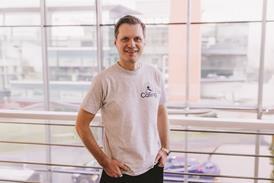
This is the half I want to name, because I work inside it. Alongside my parish role, I run a small theology platform for people most congregations will never meet: diaspora Christians, the de-churched and the quietly curious. I call this work ‘theological entrepreneurship’. Not because money is the point - usually, it is not - but because the shape is entrepreneurial: you spot a hunger no service is feeding and configure whatever you have, a café table, a deck of cards, a video call, to meet it. The aim is formation, not profit. And nobody is counting it, because it never crosses a threshold that anyone audits.
Jesus had an image for growth like this. The kingdom, he said, “is like yeast that a woman took and mixed into about sixty pounds of flour until it worked all through the dough” (Luke 13:21). Yeast is invisible while it works. You cannot count it. Yet eventually, you notice the loaf has risen.
In his book, A Nazareth Manifesto (Wiley), Rev Dr Sam Wells gives this instinct its theology. Jesus spent roughly 90% of his life simply being with the people of Nazareth, and only a fraction of it doing things for them. The Church, Wells argues, keeps defaulting to working for people, delivering programmes at them, when the gospel’s centre of gravity is being with them: presence in ordinary, shared life.
Church of England attendance has risen for a fifth year in a row, the first time since current records began
I should be honest about where my evidence runs out, because it does. Nobody collects statistics on café discipleship or the para-church fringe either. That part of the argument is testimony, not data. But the statistical evidence leans the same way.
The Church’s own strategy calls for 10,000 new Christian communities across “home, work/education, social and digital”, and for a church ”where mixed ecology is the norm”. That is an admission that a physical Sunday morning service is now one habitat among several.
None of this diminishes the parish or the plant. I serve one and am glad of the other. It simply means that when we tell the story of church growth, we should tell all of it, including the half that happens on a Tuesday, online, over coffee or between two people, one of whom has sworn never to set foot inside a church building ever again.
























3 Readers' comments