









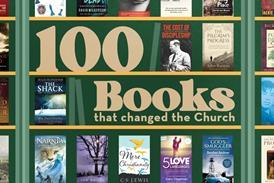


Return to the Shack is the long awaited follow up to the runaway bestseller which broke records and caused theological controversy. But can William Paul Young’s new title live up to the huge expectations? Our reviewer finds out

In 2007, William Paul Young released The Shack, a Christian fantasy story following Mackenzie ‘Mack’ Phillips who, after his daughter is murdered by a serial killer, gets an invitation to the old shack where her blood stain was found. However, when he arrives there, he is met by representations of God the Father, Jesus and the Holy Spirit.
The Shack became a word-of-mouth hit and received strong feedback, with Bear Grylls calling it: “one of the most faith-enhancing books I have ever read”. After selling more than 20 million copies and spawning a film adaption starring Sam Worthington and Octavia Spencer, a sequel to The Shack must have been something that Young’s publishers were crying out for. So it’s something of a credit to Young that he’s waited nearly 20 years to publish the sequel.
Return to the Shack picks up with Mack ten years after the events of the first book. On what would have been his daughter Missy’s 16th birthday, Mack is asked to visit death row to speak with the serial killer who murdered her. He is told that Missy’s killer wants to understand how he was caught, and in exchange will give the FBI the locations of three other victims’ bodies. It’s a compelling premise. Young’s first book asked the question: what is it like to forgive the unforgiveable? Return to The Shack ups the stakes significantly, showing that it’s one thing to forgive someone in the abstract, it is another thing entirely to forgive the person when they’re sat across the table from you.
The origins of The Shack have become almost as famous as the story itself. The novel came from his wife urging him to: “write something that puts in one place how you think, because you think outside the box”. That unusual and edifying type of thinking is very much on display here. Return to the Shack is eminently quotable; there’s an elegance to the way God’s mercy is worked out in Mack. There are no shortage of moments where the dialogue absolutely sparkles.
Unfortunately, other aspects don’t hold up quite so well. Young struggles to come up with characters who have distinct voices. In The Shack of course, this wasn’t a problem. After all, the Father, Son and the Holy Spirit are different expressions of the same being. In this story however, it can become quite frustrating. Almost every person Mack encounters seems to have a relationship with God, and everyone is quite happy to indulge him thinking out loud as he contemplates the nature of forgiveness. At its worst points, it starts to feel like an episode of Ted Lasso without the laughs. The exceptions to this are the death row inmates Mack speaks to, whom Young lifted directly from real life.

Much more of the focus of this story is on Mack’s surviving family, in particular, his wife, Nan. After all, what does it do to you when your youngest child is murdered, and God appears to comfort your spouse, but not you? The Almighty’s intervention on the part of her husband, but not her, is one of the unspoken sources of tension in their relationship.
Thankfully, Return to the Shack is not simply a re-tread of the first book. It makes it clear early on that this won’t simply be another weekend spent with God at the shack. Nonetheless, God does speak to Mack. Young putting words in The Almighty’s mouth caused quite a stir in the first book. There will, one imagines, be critics who examine Jesus or God the Father’s dialogue line by line looking for inconsistencies, which feels as pointless as critiquing Michelangelo for the way he painted God in the Sistine Chapel. This is Young’s understanding of God, one constantly informed by pure love and radical forgiveness. Does Young put words in God’s mouth? Yes, demonstrably so. But no more than the scriptwriters on The Chosen, or every single person who stands up in a meeting and starts a sentence with the words “I feel God said to me…”. Young’s books are not scripture, so it seems odd to treat them as such. Suffice to say, how you feel about how God speaks in this book will most likely be the same as how you felt about it in the first one.
If there is one bizarre choice in the book, it’s the greatly increased presence of Willie, Mack’s neighbour. In the first book, Willie gives an introductory note at the start, saying how he is recording what Mack has told him of his experiences, then largely disappears from the narrative. In this book, Willie is just…there(?) throughout a lot of the story, not doing very much. Aside from the Almighty, Mack looks for guidance from not just Nan, but also Willie. There’s a point where Willie, as the narrator, steps in to “censor” the story, leaving a key scene missing at the heart of the book. It feels patronising, intrusive, and it does make you wonder why Young has made his authorial mouthpiece so central when he does little more than provide advice on logistics.
Another maddening aspect is the amount of time dedicated to discussions around people’s coffee orders, the admin required to get Mack from the pacific northwest to the high security prison in Tennessee, and the catering. There are whole chapters at the start that could have been dealt with in a sentence.
This is what makes reading Return to the Shack such a frustrating experience. There is still absolute gold in WM Paul Young’s world, but there’s a lot of extraneous information to sift through in order to get to it. Young’s conception of God is still beautiful, it’s still loving and relevant as ever, but it tries the reader’s patience to get to it. This book doesn’t take anything away from the original – it even adds to the world Young has created – but it clearly needed more disciplined story-telling to give us the follow up we deserved.



















No comments yet