












Christopher Nolan’s The Odyssey is an epic adaption of Homer’s classic poem, says Giles Gough. It also offers a fascinating insight into how Christ’s teachings on compassion and love changed our ideas about what a civilised society really looks like
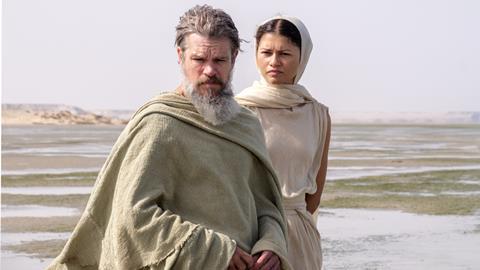
At just under three hours, Christopher Nolan’s latest film is still an incredibly condensed version of Homer’s epic tale about Odysseus (played by Matt Damon) who, after winning the Trojan War, must lead his men on a dangerous voyage back to his island home of Ithaca.
On the incredibly long journey - originally written as a poem that runs for 12,000 lines - he encounters all kinds of fantastical creatures, inlcuding the Cyclops, Sirens, sea monsters and even the occasional witch.
But getting home is only half the battle. Back in Ithaca, Odysseus’ queen, Penelope (Anne Hathaway) is struggling to hold off the potential suitors who are hoping to marry her and assume Odysseus’ throne. Their son, Telemachus (Tom Holland) must avoid the attacks of those who see him as a stumbling block to power, while searching for the father he has never known.
Zeus’ Law
The storyline of The Odyssey hinges on a concept called xenia, or Zeus’ law. The ‘golden rule’ of treating others as you want to be treated (Matthew 7:12) is literally quoted in the movie, as well as the idea that you must treat everyone kindly in case they are gods in disguise.
As Nolan told the LA Times, this hospitality rule “allows society to function. People need to travel, to trade, and everyone is at the mercy of strangers”. It is also a concept that many Christians will be familiar with, as it comes striaght from the pages of scripture.
Matthew 25:40 says: “Whatever you did for the least of these brothers and sisters of mine, you did for me”. Hebrews 13:2 adds: “Do not forget to show hospitality to strangers, for by so doing some people have shown hospitality to angels without knowing it.”
What’s not in the film
Watching an elite filmmaker use the best cast to tell an epic story is pure joy. But one of the best things about The Odyssey is how rich the text is. Critics will no doubt have much to say about the film’s depiction of colonialism, the reliability of the narrator, or the nature of myth vs reality. But perhaps one of the most interesting things is what Nolan has not included in his version.
The film is a very bloody affair, but not nearly as bloody as the source material. In the original poem, after defeating the suitors, Odysseus commands that the slave girls clean up the blood and gore from the great hall. After they have done this, he orders Telemachus to execute twelve of these girls for sleeping with the suitors and being disloyal to their queen.
It is a small section of the poem and yet harrowing in its cruelty. This act of male brutality has been a sticking point for many critics and readers alike. Perhaps Nolan chose to omit that scene from his version because he knew there would be no way of rehabilitating a character after they have acted that monstrously.
Projecting Christian values
I do not profess to be an expert on Homer or Greek mythology in general. But from what I understand of the source material, it contains no concept of pity for one’s enemies. It was written in a time and a society where ‘might makes right’ was readily accepted, with no suggestion that the poor would have any other option but suffer the fate inflicted on them by those in power.
Jesus’ teachings about mercy and loving your enemies have influenced our whole way of seeing the world
By contrast, Nolan’s version of Odysseus shows a man who is wracked with guilt over the suffering that his Trojan horse caused. A man who takes so long to get home because, on some level, he doesn’t believe he deserves to get home.
This obviously makes Odysseus a more sympathetic character than the one Homer originally wrote – and this modern-day interpretation is worth investigating. Yes, you could argue that 2,700 years later, humans have naturally become more civilized and empathetic. But when I look across the span of the last two millennia, I struggle to see any single crux point that would turn us towards such mercy and kindness to those we deem outsiders - with the exception of one man sitting on a mountainside saying: “You have heard that it was said, ‘Love your neighbour and hate your enemy.’ But I tell you, love your enemies and pray for those who persecute you” (Matthew 5:43-44).
The Odyssey is, at heart, a glimpse into what the world was like before Jesus gave us these words.
Jesus’ teachings about mercy and loving your enemies have influenced our whole way of seeing the world – whether we acknowledge that truth or not. By depicting an Odysseus who feels guilt and shame, Nolan has projected Christianity back onto a text that was old when Jesus was born. The film – like our society - is all the better for it.























No comments yet