






50 women have told the BBC that they were forced into having sex with strangers through a swingers website. Before Christians wag their fingers, Giles Gough says we should confront the power imbalances that allow abusive men to shelter within the Church - and make sure shame does not sit with the victims
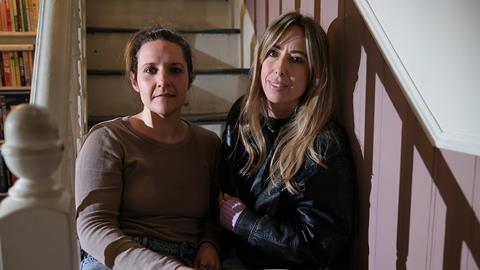
Last month, the BBC released a six-part investigative podcast series tells the story of Ruth O’Grady, a woman who was pressured by her husband into having sex with more than 100 strangers through a swinging website over an 18 month period.
Following the release of Swingers, 50 women came forward to say that they had also been coerced by their partners into having sex with people they did not know.
‘Swinging’ is normally defined as couples meeting up and exchanging sexual partners, but it can also involve just one half of a couple having sexual encounters while their partner watches. Many people take part consensually, but when this is not the case, the stories of abuse are utterly harrowing.
Many men accused of physical and sexual crimes against women have found the Church keen to embrace them
The BBC reported that many of the women who came forward said they felt traumatised by their experiences, but took part because they feared the consequences of refusing or felt they had to keep their partners happy.
One woman told the BBC: “I felt like I had been given away. I felt used. I felt so dirty.” According to the women, most of these encounters were facilitated through the website FabSwingers, which claims to have more than half a million active monthly UK accounts.
A question of consent
For many years, society has largely held the position that what happens between consenting adults is no-one else’s business. But since the dynamics of abusive relationships and issues such as coercive control and have become better understood, consent has become more clearly defined. If it’s not Freely given, Reversible at all times, Informed, Enthusiastic and Specific (or FRIES for short), then it’s not consent.
The Church is not guilt-free here: the number of Christian leaders accused or convicted of sexual abuse is simply too long to list. And neither would it be truthful to paint traditional marriage as a paragon of virtue; current statistics show one in four women in England and Wales will experience domestic abuse – whether they are married, Christian or not.
But unlike the traditional Christian value of monogamy in a loving, committed relationship, having sex with strangers - whose whose psychology, values or boundaries you do not understand - is an inherently risky prospect. So, setting up a website to facilitate this, and then refusing to take any responsibility when it leads to abuse is the height of negligence.
Much like the controversy surrounding Married At First Sight: UK, which is currently being investigated by Ofcom, this kind of abuse must surely have been inevitable.
Fabswingers has been cited in at least 329 UK police reports since 2023, including allegations of rape, serious sexual offences, controlling and coercive behaviour, harassment, blackmail, stalking, and assault. 26 individuals have been charged or summonsed in cases where FabSwingers was mentioned, with 23 cases ongoing.
Yet despite this, the site does not require even the most basic of safeguards - such as ID verification. Nine users told the BBC they had reported abuse to FabSwingers without any response, and three women said FabSwingers had failed to co-operate with police investigations. As one woman put it, the site “constantly protects dangerous men.”
In a statement FabSwingers said it has moderation policies and is not “responsible for private off-platform conduct between adults”.
“We do not accept any suggestion that FabSwingers is indifferent to misuse,” it added.
Defending the weak
There is a strong challenge for the Church in how we respond to stories like this. In theory, the Christian response to abuse should be a forgone conclusion. Jesus defended women (John 8:2–11) listened to women (John 4:1–26) and empowered women (John 20:11–18). When someone made in the image of God is abused, Jesus would be personally offended by what happened to them.
And yet many men accused of physical and sexual crimes against women - including Russell Brand, Kanye West and Shia LaBouf - have found the Church (more specifically, the American evangelical church) keen to embrace them.
Fabswingers has been cited in at least 329 UK police reports
But just because we are inclined to give people the benefit of the doubt when it comes to finding faith, it doesn’t mean we have to give them a platform. It doesn’t mean we are required to restore them to their previous positions of power, especially if they still refuse to acknowledge the hurt they’ve caused. That’s cheap grace. It suggests that the Church as a whole is still not ready to call out abuse as quickly and decisively as it needs to.
In 2024, sexual abuse survivor, Gisèle Pelicot, famously waived her right to anonymity as a victim in her husband’s rape case, stating: “Shame must be carried by the accused, not the victims.”
It was a paradigm shift. In a world where victim blaming is rife, it still seems radical to suggest that the men who commit this kind of abuse (and while it is not all men, it is still overwhelmingly men) carry the shame of it publicly.
The reputational cost to abusers should be much higher than it currently is. As the clinical psychologist Mary Pipher put it: “Young men need to be socialised in such a way that rape is as unthinkable to them as cannibalism.”























1 Reader's comment