











If it turned out tomorrow that aliens were real, how would it impact your faith? This much anticipated sci-fi thriller from Steven Spielberg examines the big questions of truth and knowledge, says our reviewer
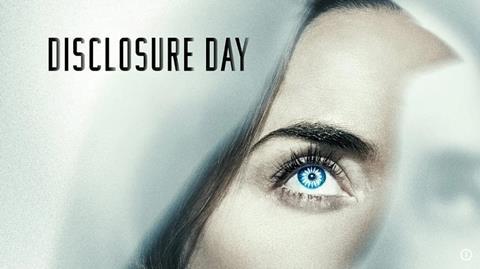
I went into Disclosure Day knowing nothing - I hadn’t seen a trailer, read a review or even a plot synopsis. I was choosing not to know, to let the story play out. It turned out to be a fitting decision for Steven Spielberg’s film, as it is all about knowledge: should people have a choice to know shattering truths? What do you do when you know something explosive and world changing? And is it your duty to share that, even if people don’t want to know?
With themes like these bubbling beneath the surface of this sci-fi thriller, it is unsurprising that Christianity ends up woven throughout its narrative, in one of Spielberg’s more religiously thoughtful films. But before you keep reading this review, you should ask yourself the question: how much do you want to know? Perhaps you should see the film first and come back to this review to ruminate on the ideas it explores.
Disclosure Day opens in medias res with a nervous looking man played by Josh O’Connor completing a swap - a backpack of sensitive data in exchange for his girlfriend, Jane. Sleek black cars, anonymous men in suits and a nefarious-looking Colin Firth let us know the genre: this is conspiracy thriller territory, replete with shady organisations wanting to control secrets.
It then pivots - before we’ve learned anything about what’s happening - to a domestic scene. A weather reporter, played by Emily Blunt, is lightly arguing with her partner when a bird flies in, stares at her, and before she knows it, she’s speaking Russian and telling traffic cops their deepest secrets. So far, so mysterious. The film then jumps between these two seemingly disconnected narratives as the audience begins to piece it together.
What is immediately impressive about Disclosure Day is the respect with which it treats its audience. It allows this measured pacing to play out, not overly explaining anything, and giving space for mystery. This is cinema that feels vintage; you can’t appreciate the more mature storytelling if you have a second screen opened in front of you.
The first two thirds of Disclosure Day are absolutely masterful
What emerges slowly is that alongside a conspiracy thriller, this is also a sci-fi. Humanity, it turns out, has had contact with aliens for decades, but has kept knowledge of them secret through a shady organisation known as WARDEX. A group of their rogue employees has decided that actually, the world deserves to know about this truth. It is knowledge that should belong to everyone.
The first two thirds of Disclosure Day are absolutely masterful, proving once again that Spielberg is one of cinema’s greatest storytellers. He shows off his aptitude for big sci-fi ideas and thrilling action sequences, including a cracking car chase that ends explosively on train tracks. But it also has his signature moments of quiet humanity amid all the madness. Perhaps the most memorable scene in the film is not anything to do with extraterrestrials, but features one character having a panic attack while another comforts them.
Spielberg does have a couple of crucial weaknesses that he can never shake. One is his cinematographer, Janusz Kaminski, who employs lens flare here like it’s 2007 all over again. It may seem petty to pick up on cinematography, but you don’t become a film critic without being a nerd about it. Kaminski regularly washes out his lighting, with overly bright backlighting that undermines Spielberg’s innate ability to frame a shot.
Spielberg’s other key weakness is knowing how to end films - think of a Spielberg film and there’s a strong chance it would be better if he ended it a scene earlier - and here the film does somewhat lose its power in the final scenes. The actual moment of “disclosure” is handled poorly, sidelining the fabulous Emily Blunt for a newsreader with much less cinematic presence.
But the journey to get there is nonetheless thrilling and thoughtful. At times, it asks the same questions that C.S. Lewis does in his Space Trilogy. His lesser known fiction explores where God would fit in if humanity were to encounter life on other planets.
It’s a fascinating thought experiment - if it turned out tomorrow that aliens were real, how would it impact your faith? Your understanding of God as creator and humans made in His image?
Spielberg handles these questions with nuance and grace - he could easily have included stereotypes of screaming evangelicals, but instead these conversations happen between Jane, who is a lapsed novitiate, and a gentle nun. Notable, too, is that in times of stress, Jane turns back to prayer and faith to help her make sense of this new reality.
At the heart of Spielberg’s best work is a humanity and empathy that elevates his blockbusters to something truly meaningful. That empathy is front and centre here. As the film asks the question of what you would do with world-changing truth, it also reminds the viewer that the truth will not be heard unless it comes with human connection. Where Josh O’Connor’s character exists to reveal truth, Emily Blunt’s character brings the humanity.
Christians believe that we do have world-changing truth, but we often forget that truth should always come hand-in-hand with grace.
“Empathy is our foremost evolutionary advantage,” a character explains late in the film. Ignoring empathy, he warns, will lead to extinction. For all of its weighty themes, the heart of Disclosure Day lies in this idea. And as many divisive voices around the world would tell you that empathy is a form of weakness, this message from one of cinema’s greats is timely and welcome.
Let us season our truth with empathy, and in the midst of global change and tumult, let us never forget that behind every news story are humans deserving of grace.





















No comments yet