








Jess Connolly offers a compassionate guide for those recovering from heartbreak and burnout. While thoughtful and encouraging, the book’s relentless optimism may not suit every stage of healing, says our reviewer
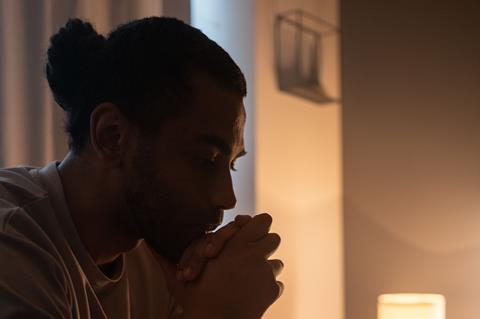
Jess Connolly’s therapist kept asking whether she felt warm.
Her initial response was confusion, then revelation. It was, Connolly explains, a diagnostic question: people in trauma or dissociation often feel physically cold, their bodies expressing what their emotions cannot.
This image – healing as a process of warming up – runs through What Comes Next: 40 Days of Healing After Heartbreak, Burnout, or Brokenness (Baker Books). The devotional takes the reader through 40 days of reflections, aiming to support their healing. It is, in its best moments, genuinely illuminating. The difficulty with this book’s warmth is that, sustained across 40 days and a rigid daily template, it can eventually become stifling.
Connolly is a church planter, speaker, and author. She has also, by her own account, been the woman sobbing in the back row of a church with no coherent explanation to offer the strangers praying over her. She has stood frozen in the hospital. She has been financially ruined. These are the experiences that underwrite everything in this book. They give a credibility that cannot be manufactured. However, the book’s focus on universality – the subtitle, for example, seems broad enough to include almost every person who has had a difficult year – limits the helpfulness of its pastoral responses.
The pivot at Day 10 (from receiving God’s care to actively engaging with recovery) is handled with real sensitivity, and the three questions Connolly introduces at that point - ‘How do you want this to go? How do you want to have shown up when it’s over? What story do you want to tell? - are among the most practically useful things in the book.
The theological material is more universal. Connolly draws primarily on 2 Corinthians and 2 Timothy, reading Paul’s accounts of suffering not as heroic endurance literature but as dispatches from a man operating at the limits of his own resources. This is a sympathetic and largely accurate reading. Her interpretation of 2 Timothy is particularly perceptive. Connolly notes that it was written by a man expecting imminent death, which transforms its exhortations from breezy confidence into something harder-won and more costly. She stresses that weakness is not a problem to be solved but the very terrain on which divine power operates. For readers who have absorbed the message that struggle indicates spiritual failure, this reframing is particularly valuable.
It’s a shame, then, that the book’s most distinctive practical feature does not match the rigour of its biblical reading. Connolly has a particular focus on affirmations. In the chapter ‘Watch Your Words’, she provides a forceful explanation for why these are a cornerstone of the book – the words Christians speak towards themselves in crisis shape what they receive and believe. This is a defensible pastoral claim, and some declarations deliver on it: “I refuse to let the enemy’s lies of shame be louder than God’s voice of victory”. Unfortunately, the actual affirmations rarely carry the theological weight they are expected to bear. Phrases such as “I was made to thrive” or “I declare healing and hope” are barely distinguishable from secular self-improvement. At best, they are soothing words which may encourage the reader to look at the scripture in the chapter. At worst, they’re a substitute for the scripture itself which encourages self-reliance rather than God-centred transformation.
The book’s regimented rhythm is another key constraint. Scripture, reflection, questions, affirmation – 40 chapters with this heartbeat provide a scaffolding which may be helpful for those who need a daily structure. However, readers earlier in their healing process may find the pace pressurising rather than supportive. The incessantly positive tone compounds this impression. Connolly is clearly a kind and well-meaning guide and even disavows toxic positivity throughout the book. Her honesty about coping mechanisms is one of the book’s more humanising moments. But, more frequently, the focus on warming up, speaking life, and getting moving can begin to feel relentless. For a reader still in the early stages of pain, that pressure may land as a subtler version of the toxic positivity the book aims to avoid.
There’s a version of this book that earns its encouragement more slowly – that sits with the reader in the dark, in their pain, and laments with them and for them – and that book would be a truly compelling read. What exists is something more uneven: real wisdom and hard-won honesty wrapped in a format that works against them. Readers who already know what they need and simply need a daily structure to find it will get something from this. Those still working out what is wrong may find the warmth, in the end, a little too insistent.


















No comments yet