




Why did so many of Britain’s leading writers and artists embrace Catholicism in the twentieth century? Melanie McDonagh’s engaging history uncovers a forgotten spiritual movement, though some stories deserved deeper exploration, says our reviewer
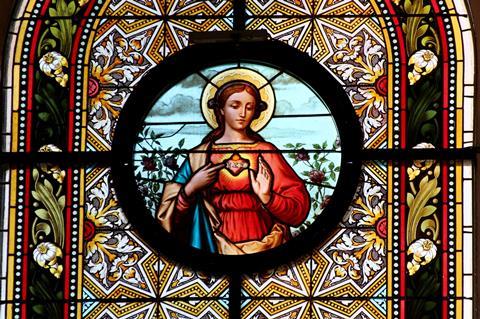
Oscar Wilde was received into the Catholic Church in 1900 on his deathbed. Aubrey Beardsley converted shortly before his own death, and Alfred Douglas would eventually do the same.
Their conversions are often framed as isolated or dramatic final acts, but they formed part of a much larger movement. Between 1910 and 1960, over half a million people in England and Wales converted to Catholicism, among them poets like Ernest Dowson and Lionel Johnson, clergymen such as Robert Hugh Benson and Ronald Knox, controversialists like G. K. Chesterton, and artists including Eric Gill and David Jones.
Not all major literary figures of the period converted, of course. Writers such as H. G. Wells, George Bernard Shaw, and Rudyard Kipling remained firmly outside the Church, some openly hostile to it. Yet many of those associated with the artistic and literary culture of the fin de siècle found themselves drawn toward Catholicism’s contradictions.
As Melanie McDonagh writes in Converts (Yale University Press): “Catholicism is itself an elaborate paradox… the Church is at once modern and yet medieval, ascetic and yet sumptuous, spiritual and yet sensual, chaste and yet erotic.” For artists and writers preoccupied with beauty, decay, symbolism, desire, and transcendence, Catholicism offered something modern Britain increasingly struggled to provide. A structure capacious enough to contain contradiction.
This is the phenomenon McDonagh explores in Converts, her account of Britain’s 20th century conversion to Catholicism. What becomes striking is not simply the scale of conversion, but the kinds of people drawn toward it. Artists, intellectuals, writers, and spiritual outsiders searching for coherence in an increasingly fragmented age.
Between 1910 and 1960, over half a million people in England and Wales converted to Catholicism
What makes these conversions particularly fascinating is that many of the figures McDonagh traces were not obvious candidates for religious devotion. Wilde’s life, after all, was defined as much by performance and contradiction as by belief. The Picture of Dorian Gray is preoccupied with sin, moral corruption, duplicity, and the consequences of unchecked desire, themes that would continue to haunt Wilde long after his imprisonment. McDonagh charts how Catholicism lingered throughout his life, from his encounters with ritual and symbolism at Oxford to his remark that he was choosing: “the devil for the time being.” In Wilde’s case, Catholicism was not a rejection of decadence so much as an extension of his fascination with beauty, suffering, and transformation.
This questioning runs throughout the book. Again and again, McDonagh presents figures drawn not only to doctrine, but to a form of spiritual and aesthetic seriousness modernity increasingly struggled to sustain. Catholicism offered ritual without emptiness and moral structure without evacuating mystery. For many artists and intellectuals shaped by the fragmentation of the twentieth century, that combination proved compelling.
McDonagh is particularly strong when tracing the atmosphere surrounding these conversions. The first and second world wars loom heavily over the book, as does the growing sense that traditional liberal certainties were failing to sustain modern life. She quotes George Orwell’s observation that, for the younger generation: “the official beliefs were dissolving like sandcastles.” Against this backdrop, Catholicism appeared to many converts not merely as a religion, but as an anchor. Graham Greene’s desire for: “something firm and hard and certain” captures a yearning that appears repeatedly throughout the book.
Yet certainty alone does not fully explain these conversions. Some readers may find themselves suspicious of the aesthetic and intellectual dimensions of these religious journeys, particularly in figures such as Wilde, Aubrey Beardsley, or even Evelyn Waugh. At times, Catholicism appears less like conviction than atmosphere, another symbol within the artistic imagination of the fin de siècle and modernist periods. McDonagh wisely resists resolving this ambiguity altogether. The relationship between spiritual sincerity and aesthetic attraction is part of what makes these stories cogent.
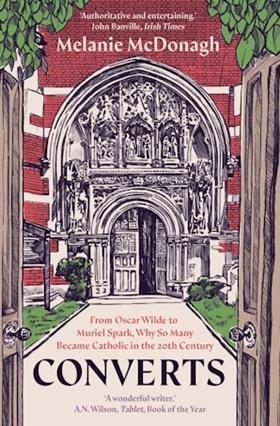
The book’s episodic structure is both its strength and its limitation. McDonagh moves through 16 biographical sketches interspersed with historical chapters on subjects such as Anglo-Catholicism, war, and the legacy of John Henry Newman. The result is vivid and accessible, particularly for readers unfamiliar with the period. Her chapters on David Jones and Graham Greene are among the strongest, especially when exploring sacramentality and the relationship between faith and artistic production. At times, however, the sheer number of figures prevents deeper analysis from fully developing. Certain conversions feel gestured toward rather than fully interrogated, particularly when the emotional, theological, and artistic motivations behind them begin to blur together.
Still, Converts makes clear that the so-called ‘Age of Unbelief’ was never quite as secular as it imagined itself to be. Beneath the surface of 20th century modernity existed a persistent spiritual hunger expressed through literature, painting, philosophy, poetry, and criticism. McDonagh’s book is most persuasive when read not simply as a catalogue of conversions, but as a portrait of artists and intellectuals searching for coherence in a fractured world.
And perhaps that is why these stories continue to resonate now. Converts suggests that the appeal of Catholicism was never simply certainty. It was the promise that contradiction, suffering, beauty, desire, and belief could coexist without needing to be reduced into something simpler than they were.





















1 Reader's comment