


The Archbishop of Canterbury has said a controversial meeting sharing the stories of ex-gay Christians can go ahead at next week’s General Synod - but a exhibition stand promoting it cannot. Tim Wyatt explains why some members think it is a safeguarding issue - and why ongoing debates about sexuality are still causing issues
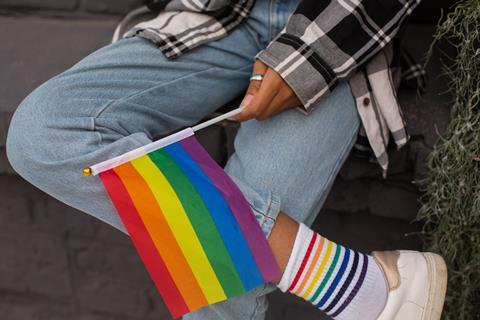
A row has broken out in the Church of England over a meeting on the fringes of the upcoming session of its governing body, the General Synod. A session planned by conservative activists has drawn the ire of liberal members, leading the Church’s two archbishops to wade into the squabble.
What is the controversial event?
During every meeting of the synod, a slew of fringe events are held to campaign for various issues or discuss things more informally. One of these is an event called ‘People change: Sexual identity transformation’, hosted by Rebecca Hunt, an evangelical synod member from the Diocese of Portsmouth.
According to the publicity, it will include two speakers from the Core Issues Trust, an evangelical group which supports people with “unwanted same-sex attraction”. One speaker, Matthew Grech, is a singer who abandoned what he calls his “homosexual lifestyle” after becoming a Christian. He was recently acquitted by courts in Malta after being charged with advertising conversion therapy, following an interview he did about his experience of transitioning. Andrea Williams, head of Christian Concern, will also be speaking.
Why is this fringe meeting taking place now?
The publicity states that, in the wake of the end of the Living in Love and Faith project (a multi-year initiative to explore questions on sexuality and marriage in the CofE, which was wrapped up by the bishops at the last synod in February), it wants to promote “neglected stories of the power of God to transform sexual identity”.
It also comes shortly after the government published a draft bill to ban so-called conversion practices – defined as anything which attempts to alter someone’s sexuality.
For many years, some Christians have argued that while they do not support coercive or abusive conversion practices, any criminal ban would have the effect of also restricting their rights. They fear Christian groups such as the Core Issues Trust would face prosecution for offering voluntary pastoral counselling to Christians who seek a change in their sexuality and also warn that churches may be unable to preach a traditional theology on sex and marriage.
What was the response?
Last week, 82 members of the synod wrote an open letter to the Archbishops of Canterbury and York. The letter, organised by Robert Thompson, a gay vicar from North London, argued that the event contravened the CofE’s safeguarding commitments.
It was inappropriate, the letter claimed, to host an event “to debate whether sibling members of Synod should be different people from those whom God has created and called them to be.
“We do not regard our sexual orientation as a defect awaiting transformation,” the letter-writers added.
It was one thing for there to be the fringe event available for members who wished to attend, but the stand advertising it in the exhibition space would be seen by all members, including those who found it distressing, they concluded. Furthermore, the event contradicts the synod’s own 2017 vote, which supported a ban on all forms of conversion therapy.
Other well-known liberal figures have also attacked the event, including Charlie Baczyk-Bell, a gay, married priest and synod member, who posted on social media: “I find it both genuinely disgusting and astonishing that this trash is being given a space in the fringe space of General Synod.”
What did the archbishops say in response?
Christian Concern said in a statement that the archbishops had written to Hunt “threatening to cancel it”. However, a spokesperson for the CofE said that “following careful consideration” the archbishops had decided the fringe meeting could go ahead but would not permit the exhibition stand.
“The organiser has made clear [the event] will challenge the principles of a ban on conversion practices,” the spokesperson added. “In 2017, the General Synod voted, by a large majority, in favour of a ban on conversion practices. A publicly visible display would act as a public statement contrary to that stated position and is not appropriate.”
What does the CofE believe about conversion practices?
In 2017, the synod passed a motion 298-74 which called on the government to ban conversion therapy, and endorsed the Royal College of Psychiatrists’ position that “gay conversion therapy has no place in the modern world, is unethical, potentially harmful and not supported by evidence”.
This motion was brought by synod member, Jayne Ozanne, a leading campaigner against conversion practices, who often shares her own story of how, as a younger evangelical woman, she spent hours with friends who prayed for her to “lead a Godly life” and become straight. Ozanne has argued that, while people can alter their behaviour, they “can never alter their innate desire”.
Since that motion, the CofE has regularly argued in favour of a legislative ban, which has been government policy since 2018, but has proven difficult to actually bring before parliament.
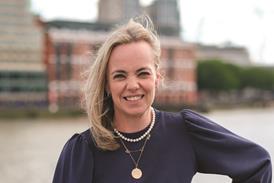
In 2021, then Bishop of London (and now Archbishop of Canterbury) Sarah Mullally said the Church looked forward to “working closely with the government to develop a viable definition and subsequent legislation”, which prevented “abuses of power” while ensuring “issues of consent are made absolutely central to any future legislation”.
Since the 2017 vote, the CofE has also been engaged in a huge debate about sexuality more generally, as part of the Living in Love and Faith project. This eventually saw bishops introduce services of blessing for gay couples, but stopped short of changing the Church’s doctrine which remains that both marriage and sex are only for straight couples.
How did the fringe organisers react?
In her response to the archbishops, Hunt warned that safeguarding must not be used to censor Christians wanting to share their testimonies and debate “weighty truths expressed in scripture that pertain to matters of salvation”.
Neither Grech nor the other speakers at the meeting had actually undergone any form of conversion therapy prayer, but had still “experienced positive, beneficial change”, she added. “There is a great need for the Church to understand what kinds of pastoral support and counselling are helpful.”
“Given the extremely broad definitions of conversion therapy, ranging from electric shocks…through to consensual, gentle prayer or ordinary talk counselling, it would be foolish to assume that every possible form of support is harmful or a safeguarding risk. Not least when even preaching the church’s own doctrine on sex and marriage is sometimes labelled ‘conversion therapy’.”
Williams added that she was “deeply concerned” by the intervention of the archbishops: “General Synod fringe events where Christians share testimony, discuss the gospel and consider the implications of proposed legislation should not be treated as a safeguarding threat.
“To threaten cancellation of this event after a social media post branding it ‘trash’ gives the clear impression that intimidation and activist pressure are being allowed to dictate what Christians may hear, say and discuss at General Synod. This amounts to censorship of one of the key gospel issues of our times.”
What does this mean for the Church?
There remains a spectrum of thinking on both sexuality and conversion therapy within the CofE. While the 2017 motion seems unambiguous, in fact – as the government itself discovered while trying to draft a bill – how to define what is and what is not considered conversion therapy is very challenging.
While everyone is opposed to abusive and non-consensual attempts to forcibly change someone’s orientation in the name of Christian discipleship, many evangelical and conservative-leaning churches would still be open to praying in a pastoral way for a Christian who wished to no longer be sexually attracted to their own gender.
In some ways, this row over a fringe meeting likely to be attended by only a few dozen people is a spillover from the hyper-contentious Living in Love and Faith project.
The liberal wing of synod remains deeply frustrated that, despite their narrow majority, they have been unable to introduce gay marriage in church or change the ban on vicars marrying their same-sex partners in civil ceremonies.
During the endless arguments over gay blessings, the liberal faction became both more organised and more dissatisfied with the status quo. This week’s synod meeting is the final one before fresh elections are held in the autumn. A central campaigning point for progressives will be to try and gain more seats to tip them over the line of a two-thirds supermajority, which would make it possible to actually rewrite Church teaching on sexuality and marriage for good.
However, the conservative minority remains equally entrenched and determined to resist what they see as dangerous revisionism. Many have long been worried that a legal ban on conversion therapy will be used by to censor and even criminalise traditional teaching on sexuality. This micro-row over a fringe meeting will only reinforce these concerns.
















2 Readers' comments