




It might be the end of the Living in Love and Faith (LLF) process, but that doesn’t mean wranglings over sexuality and marriage have ended, says Rev Dr Ian Paul. Bishops have missed an important opportunity to end the divisive discussions and focus on more important issues, he says
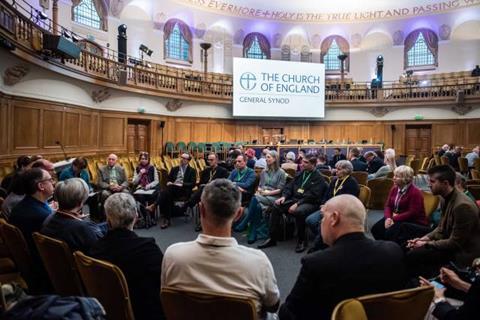
At the Church of England’s most recent General Synod, we had yet another five-hour debate on bringing the Living in Love and Faith (LLF) process to an end. The headlines in The Guardian and on the BBC were unambiguous: “Issue is put in deep freeze” and “Church abandons proposals for same-sex blessing ceremonies”.
Both were very clear: the CofE has put a stop to this debate, and abandoned the possibility of blessing same-sex relationships. By contrast, ‘Together’, the group campaigning for a change in doctrine of marriage, has declared that it is full steam ahead and, although progress has been slow, change will certainly come.
Looking back on LLF
To understand this discrepancy, we need to look at the motion that the House of Bishops proposed to Synod and what led to it. The motion went as follows:
The Archbishop of York to move: That this Synod:
a) recognise and lament the distress and pain many have suffered during the LLF process, especially LGBTQI+ people;
b) affirm that the LLF Programme and all work initiated by the February 2023 LLF Motion and subsequent LLF Motions will conclude by July 2026;
c) thank the LLF Working Groups for their committed and costly work, which will now draw to a close with the conclusion of this synodical process;
d) commend the House of Bishops in establishing the Relationships, Sexuality and Gender Working Group and Relationships, Sexuality and Gender Pastoral Consultative Group for continuing work.
The apology has been standard in content from the bishops. There is little explanation as to what caused the ‘distress’, and many wanting change see these as hollow words with no real meaning.
It is now acknowledged that any change in the doctrine of marriage will be very difficult indeed
Clause (b) is the realisation of what has happened over the last eight months or so. During the LLF process, and especially since the proposal of the ‘Prayers of Love and Faith’ in 2023, the main complaint of orthodox Anglicans (those who hold to the historic, biblical teaching on marriage) has been the lack of due process and transparency in the bishops’ discussions.
As a result, the House of Bishops promised to publish all the legal and theological advice they have received (which they still have not done) and make public any further advice they are given.
In October 2025, there was a major application of the brakes. The bishops published legal advice they had been given over the summer, together with a piece of work from the Faith and Order Commission (FAOC), a mixed body of theologians who advise the House and the Church.
It turns out that, essentially, the legal position has not changed since 2017, when clergy voted (by a tiny majority) to reject a report from the House of Bishops which proposed no change to the traditional teaching on marriage. This led to the start of the LLF process.
As the Church established by law, we are not free to say two contradictory things (as the Methodist Church have done), nor to separate practice from doctrine. The FAOC tell us that doctrine cannot easily change - and that the CofE is tied to scripture by means of its constitution in the Book of Common Prayer and 39 Articles.
An incoherent approach
What is frustrating for orthodox Anglicans is that we have been saying this for more than a decade; what is refreshing is that this is now published - and cannot easily be retracted.
But the House of Bishops is still not of one mind. Although some major revisionist bishops (those who want to see doctrine changed) have retired, there are still a number who want to continue the campaign. Hence Clause (d) commits to establishing a further working group.
Overall, this makes the motion incoherent - and it is why I and many other orthodox Anglicans voted against it.
But the different parts are there to keep different groups happy.
Those calling for change expressed their hurt and anger in the Synod chamber - one literally weeping and denouncing the bishops for having betrayed all LGBTQI+ people. But the very next day, he was on BBC Radio 4 with me, claiming this was a triumph and the direction of travel was set for change. Perhaps he realised that weeping with rage was not going to be an effective strategy for recruiting more liberals in the Synod elections this summer.
It turns out that, essentially, the legal position has not changed since 2017
So, where does that leave the CofE? It is now acknowledged that any change in the doctrine of marriage will be very difficult indeed - and is unlikely to happen unless there is a huge liberal majority in Synod. Even then, nothing is certain.
But, tragically, the House of Bishops has missed a chance to draw a line under the whole debate. So, inevitably, this summer’s Synod elections will continue to be dominated by sexuality and marriage.
There are many more important issues for us to focus on, and we will all breathe a sigh of relief when we are finally free to do so.























No comments yet