



Growing up in Palestine, Jack Nassar’s Christian faith was never theoretical. Even trying to get to church on a Sunday was fraught with difficulties, yet they continued to persevere. Perhaps British Christians could learn some lessons from those whose faith has been forged under fire, he says
My theology was not shaped in a seminary library. It was shaped on the way to church, under Israeli military occupation.
Some Sundays that meant changing plans because a road was closed by Israeli soldiers. Other times it meant leaving much earlier than needed, knowing that delay was likely and explanation was not something you could expect. Sometimes it meant taking smaller roads, instead of the main one. Sometimes it meant sitting in a car at a military checkpoint while soldiers checked IDs, asked the same questions, and decided - without saying why - whether you could go through or not.
Arriving late was normal. Not arriving at all was always a possibility. But we went anyway.
One Sunday morning, we left our home in Ramallah almost two hours early for a journey to Jerusalem that usually took 30 minutes. The checkpoint was slow that day. The soldier was young, maybe 19. He looked nervous and kept asking the same questions: “Where are you going? Why? Who else is in the car?” He held our IDs for longer than felt necessary. My sister answered calmly, the way Palestinians learn to do. Calm does not mean agreement. It is something that helps you get home.
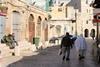
When we finally reached our church in the Old City of Jerusalem, the service had already started. We entered quietly and sat in the back. No one turned around or asked what happened. They already knew.
Faith under fire
Growing up as a Palestinian Christian, belief was never theoretical. Scripture was read with the understanding that obedience could cost you something real. Time. Opportunities. Dignity. Basic human rights. Freedom of movement. Sometimes even relationships. You did not start by asking whether faith mattered. You asked whether it could carry you when things around you felt unstable.
Life under Israeli military occupation is unpredictable. Plans are always temporary. Control is limited. A permit can be refused without explanation. A checkpoint can open or close at will. One day you can reach your home, university, workplace, or even your date. Another day you cannot.
Living like this shapes how you understand God. Sovereignty is not a concept you debate; it is something you depend on. Trust is not optimism; it is what you practise when there is nothing else to rely on. When people ask me how I learned to trust God, I think of those mornings when we left early for church, not knowing whether we would arrive or be turned back, and yet still chose to go.
In Palestine, going to church is not a lifestyle choice. It is continuity
When your world feels restricted, scripture sounds different. Stories about exile, waiting, love, and endurance stop feeling symbolic and instead sound familiar. You notice how often Jesus speaks to people with little power and no guarantees. You notice that He does not promise control, but presence. The Psalms of lament do not feel dramatic. They feel honest and real. Though on many occasions, you still ask and wonder where God is.
This kind of life does not produce a loud faith. It produces a quiet one. Palestinian Christianity is ancient and shaped by being a minority. It is conservative in the theological sense. We hold on to scripture, to historic belief, to what was passed down. When your community has survived for centuries under changing rulers and empires, you learn that continuity is not fear. It is faithfulness.
The church survives not because it is visible, but because it stays.
Being British
This experience may feel closer to British Christian life than many expect. In the UK, many Christians are learning what it means to live without cultural power. Churches are smaller. Faith is quieter. Belief is practised without the assumption that society will support it - or even understand it - despite some positive signs of growth, especially among Gen Z.
In Palestine, we never expected Christianity to shape the culture. We learned instead how to shape our character. How to remain Christian when it brought no advantage. How to love neighbours even when your identity itself could make you suspicious in their eyes. How to pray for peace while living in conditions that make peace feel very far away.
Trust is not optimism; it is what you practise when there is nothing else to rely on
Daily life under occupation taught me that obedience is often unseen. Prayer does not always change circumstances, but it changes how you stand inside them. Faithfulness is not measured by results. It is measured by whether you keep going. These are lessons many British Christians are now learning in different ways, through secularisation, marginalisation and tiredness.
I am sometimes asked how Christians in the UK should respond to a changing society. I do not have a strategy, only a posture. Stay rooted. Do not panic. Let scripture shape how you react before it shapes how you argue. Learn to trust God without needing to win.
A love that holds firm
Living under occupation also teaches you something uncomfortable. You hope for change, but you do not depend on it. You work for justice, but you learn that it may not arrive in your lifetime. You remain faithful not because faithfulness guarantees results, but because it is the only honest response to a God who has been faithful to you.
This kind of faith does not look impressive. But it has weight. It asks whether belief still works when life is difficult, not only when it is comfortable.
In Palestine, going to church is not a lifestyle choice. It is continuity. When you attend, you are not only worshipping. You are saying that you are still here. You sing hymns knowing that generations before you sang the same words in the same language and place, but under different empires and colonisations. Byzantine. Islamic Caliphates. Crusaders. Ottoman. British. Israeli occupation. The names change. The church remains.
I did not choose this formation, but I recognise it as a gift. It taught me that theology is not about being right but being faithful. Not about control, but trust. God meets you where the road is difficult, not only where it is clear. Theology was never meant to stay on shelves. It was meant to be lived: at checkpoints, in waiting, in sickness, in hunger, and in small acts of obedience.
The question it leaves you with is simple. Not whether your theology sounds correct, but whether it can hold you steady on a Sunday morning when you leave early and still might not arrive.

















1 Reader's comment