











Netflix’s House of Guinness may be gripping television, but it bears little resemblance to historical truth - particularly when it comes to evangelist Henry Grattan Guinness, writes his granddaughter-in-law
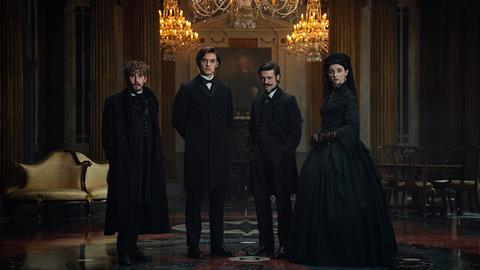
It was a bit of a shock for my husband to see his grandfather almost strangled to death with an eel by the brewery ‘fixer’, aka James Norton, in House of Guinness, Netflix’s fictionalised version of his family history.
Eels are slippery customers, whether dead or alive - impossible to hold, let alone choke anyone to death. This one looked more like a draught excluder. Still, we had a tiny insight into how the late Queen must have felt watching The Crown - if she ever did.
Created by Steven Knight of Peaky Blinders fame, House of Guinness opens with the death of Sir Benjamin Lee Guinness in 1868. His body is barely cold in the ground before his four children, Arthur III, Edward, Anne and Ben, are at each others’ throats. Possibly because they don’t appear to have ever had a mother. There is no mention of Lady Bessie Guinness who had only been dead three years, and was in fact an important moral force in their lives, a loving, deeply committed Wesleyan who insisted on family prayers and begged her children to avoid the snare of riches and fortune-hunting partners.
Callous caricatures
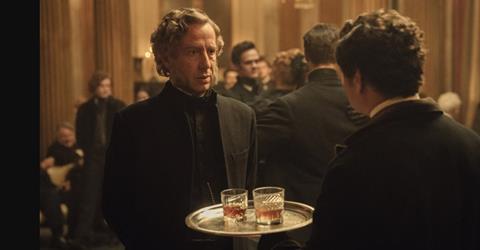
According to the disclaimer, House of Guinness is fiction, loosely based on truth. While it was in some ways a noisy, enjoyable romp, the characters quickly descended into caricature - from the boozy, bleary-eyed Fenians and ragged, benighted peasants to the metamorphosis of Henry Grattan Guinness, my husband’s kindly, gracious grandfather, into an evil, vengeful uncle, maliciously determined to expose the homosexual exploits of his young nephew, Arthur. There’s actually no evidence Sir Arthur was gay.
The truth is that Henry Grattan Guinness had been the dynamic young evangelist, still in his early 20s, who had turned Dublin upside down in the religious revival that swept like a forest fire through the UK and Ireland of 1859. With his mane of long hair, and Hollywood charisma, he appealed to the Protestant hierarchy as well as the Catholic workers - a miracle in itself. Thousands turned out to hear him preach, until he couldn’t walk out for fear of being mobbed. On one occasion, the massed response to his invitation to repent knocked him backwards off the stage. He was only saved by landing in a haycart.
If he’d been portrayed as advocating teetotalism over the evils of whisky right outside the Guinness Brewery it would have been nearer the truth. Sir Benjamin, in fact, had no problem with his fiery young cousin’s preaching. It was great PR, supporting his fight for “healthy stout” to replace whisky as the national drink of the ordinary Irishman.
By 1868, as Sir Benjamin is buried and the will is read, Henry was actually living in Paris, converting the French! He would never have expected to be floated financially by a legacy from the Brewer. And he was never minister of any church, not even in Dublin. It certainly wouldn’t have been half empty if he had! He was more famous than Cousin Benjamin after all, in later years weighed up against Spurgeon like heavy-weight boxers for the title of “Greatest Preacher of the Century.” Threatening mass damnation and the imminent end of the world, as he does in House of Guinness, was not his style. The travesty is that he was fascinated by biblical prophecy, not as a quirky clairvoyant but as a consummate theologian and Fellow of the Royal Astronomical Society. Remarkably, from studies in the Old Testament, he identified key dates that would facilitate the return of Jews to Palestine including 1917 and 1948. But half-baked notions dating the return of Christ were anathema to him.
why should my husband’s grandfather be reduced to a nasty device, simply because he was a giant of the faith
The real Henry Grattan Guinness, who counted Lord Shaftesbury, DL Moody, William Booth and Tom Barnardo as close friends, went on to establish his own Guinness empire of maternity homes, health clinics, soup kitchens, foodbanks and night schools across the poverty-stricken East End of London, as well as two, non fee-paying missionary training colleges - Harley College in Bow and Cliff College in Derbyshire - for would-be ministers who couldn’t afford them. Although he and his wife had a raft of signed-up supporters, he learned as a young man, through his close friendship with Hudson Taylor, not to be tempted to beg for money. His books on biblical prophecy sold in their thousands and largely helped to fund his many projects.
The truth is the Guinnesses were a close-knit family and Henry was very fond of his cousins at the Brewery, as they were of him. They were all around the same age and remained friends throughout their lives. According to the diaries of Henry’s daughter, Lucy, her father and Sir Arthur, later Lord Ardilaun, shared a passion for Irish politics, which they often discussed well into the night over a glass of poteen. The Ardilauns offered to introduce his four children to high society, and even the Prince of Wales. Henry consulted them on their wishes, but they had bigger fish in mind, establishing pioneer missionary and medical work in China, the Congo and Sudan - at immense risk to their lives.
Media derision
So why was Grattan Guinness caricatured as the wicked uncle of a Grimm’s fairy tale? Harley College is mentioned by name years before it was even founded - presumably to make Grattan Guinness’ identity absolutely clear. Knight knew enough about him to take and twist elements of the truth, even putting the F-word into his mouth, screaming an unspoken “hypocrite” at the viewers . Of course, a fall guy is a successful dramatic device, but why should my husband’s grandfather be reduced to being a mere device, and a rather nasty one at that, simply because he was a giant of the faith in his day? Why should “evangelist” almost inevitably spell insincerity and sanctimoniousness? Should we simply accept that being a Christian might expose us, or our relatives, to media derision - even years after death? Like many leaders Henry Grattan Guinness was subjected to a great deal of criticism in his lifetime, so perhaps he would simply smile and see it as the cost of discipleship.
My Jewish upbringing impressed upon me that all we have to leave behind us is our reputation. Is there a moral imperative therefore to try and preserve a close ancestor’s reputation for posterity – or restore it after such a misrepresentation? I certainly hope so. For the true story behind the House of Guinness - the adventures of the Grattan branch of the family through Henry and his children - is far more compelling and entertaining than the fiction on our screens.
Michele Guinness is the author of Guinness: The Untold Adventures of an Extraordinary Family
























No comments yet