












As the war in Iran continues, reports have suggested leaders in the US military are invoking language around the end times and Armageddon. Rev Dr Ian Paul, who completed his PhD on the book of Revelation explains what scripture really teaches about the end of the world
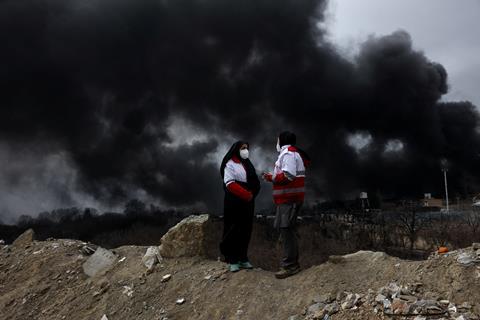
It has been alleged that US troops have been told that the war in Iran is the beginning of the final battle of Armageddon that will lead to the return of Jesus.
According to The Guardian, one noncommissioned officer said their commander had “urged us to tell our troops that this was ‘all part of God’s divine plan’ and he specifically referenced numerous citations out of the Book of Revelation referring to Armageddon and the imminent return of Jesus Christ”.
Could the current conflict be connected with Armageddon, the return of Jesus, and the end of the world?
The short answer is no. But a longer answer needs to understand where this view comes from, and what the Book of Revelation actually says.
The influence of Armageddon
Armageddon is mentioned just once in the Bible. It’s found in one verse of the Book of Revelation: “Then they gathered the kings together to the place that in Hebrew is called Armageddon” (Revelation 16:16).
This is in itself remarkable given how the idea has a grip on both the popular imagination, and in certain Christian circles, out of all proportion to its presence in scripture.
The word is a Greek transliteration of the Hebrew har Megiddo, ‘the mount of Megiddo’. Megiddo was one of the pre-Israelite cities in Canaan (Judges 1:27), and it was associated with Deborah’s victory over Israel’s enemies (Judges 5:19). It became one of Solomon’s fortified cities (1 Kings 9:15) because of its strategic location adjacent to Mount Carmel on the south side of the Jezreel valley, a frequent site of battles because of the large open plain extending north from Megiddo and the strategic route that ran along the valley from the Jordan to the Mediterranean Sea.
Present or Future?
So why would anyone in the modern world think that John is writing, 2,000 years ago, about events in our time - the distant future for him?
This interpretation comes from Dispensationalist Premillennialism, a scheme originating with John Nelson Derby around 1830, and popularised by the Scofield Bible of 1909. It takes a strictly futurist view of Revelation, seeing John’s writings as predictions of the end times, in the distant future from John, which included a time of ‘tribulation’ and a ‘secret rapture’ of believers from the earth.
There are many problems with this approach. Tribulation is something that all followers of Jesus will experience (John 16:33), not an end times event that Christians will escape from. The rapture is not taught at all, but arises from misreading Matthew 24:40 and 1 Thessalonians 4:17. In fact, all the writers of the New Testament appear to believe that the end times (or last days) began at Pentecost. Peter says this at the beginning of his speech in Acts 2:16: “No, this is what was spoken by the prophet Joel: “‘In the last days, God says, I will pour out my Spirit on all people…”
The Question of Relevance
But there are also good reasons why Revelation itself resists this kind of futurist reading, and cannot be a prediction of specific events in our world.
John locates himself very specifically in relation to the people he is writing to. He is their “brother and companion in tribulation…” in Revelation 1:9. He always names the seven cities he is writing to in the order that you would visit them if travelling in a circle, clockwise, on major trade routes. These are real people in real cities facing real situations in their world, not symbols of future ages for reading by distant people John does not know. The whole of Revelation is saturated with allusions to features of their world.
And at the end of John’s prophetic, apocalyptic letter, he records a final command from an angel: “Then he [the angel] told me, ’Do not seal up the words of the prophecy of this scroll, because the time is near.’” (Revelation 22:10)
This is a direct contrast with Daniel 12:4: “But you, Daniel, close up and seal the words of the scroll until the time of the end…Go your way, Daniel, because the words are closed up and sealed until the time of the end.”
The stories and visions of Daniel are set in the sixth century BC, with Daniel in exile in Babylon. But most commentators agree that the stories refer to the Antiochene crisis in 167 BC, when Antiochus IV Epiphanes sacrificed unclean animals in the temple. Hence the words of Daniel’s vision must be ‘sealed’ (in this case for around 400 years), until they become relevant to the readers.
Revelation 22:10 says the exact opposite. The words of John’s vision report must not be sealed; the events being referred to are not many years after the setting in which John is writing.
Revelation is deeply relevant to us, since John is offering a worked example of how to remain faithful to Jesus in an alien culture (in his case, Roman imperial power) and live well in the light of the certain hope of Jesus’ return. But it is not relevant to us because it is predicting our age. It is written for us, even though it is not written to us.
The real meaning of Armageddon
So what does the language of Armageddon in Revelation 16:16 actually tell us about evil, God’s victory, judgement, and the end of the world?
First, that whatever is happening in the world, God’s concern is for justice: “Then I heard the angel in charge of the waters say: ‘You are just in these judgments, you who are and who were, the Holy One, because you have so judged…’ And I heard the altar respond: ‘Yes, Lord God Almighty, true and just are your judgments.’” (Revelation 16.5–7).
However we read the judgement language in this book, if we do not read it as an exercise of God’s justice and his just judgements, when we have read it wrong.
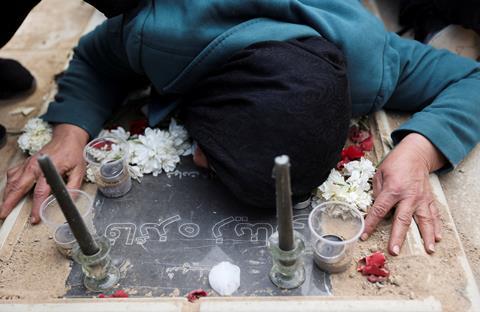
In relation to Iran and the current conflict, we must therefore turn to Christian Just War theory in thinking about this conflict. Is the conflict in pursuit of a just cause? Is the combat being pursued in a just way, seeking to minimise non-combatant casualties, and avoiding unnecessary collateral damage? And will it lead to a just peace? Note that it is the Book of Revelation itself which presses us to ask such questions!
Secondly, when Jesus comes, and God does hold evil to account, restore all things, renew the creation, and come to comfort his people - we will have no warning at all. Immediately before the mention of Armageddon, Jesus himself appears to interject: “Behold, I am coming like a thief! Blessed is the one who stays awake, keeping his garments on, that he may not go about naked and be seen exposed!” (Revelation 16:15).
It is almost as if Jesus himself is anticipating that, years hence, some people will misread this language, and think that some powerful individual will be anointed to usher in Armageddon and the return of Jesus. No, says Jesus, you cannot do that - because I will come at a time that no-one expects!
Thirdly, what is most striking about Armageddon is that there is no battle! The text moves immediately on from the assembling of the forces of evil to the return of Jesus, and all we hear is “It is done!” (Revelation 16:17). Evil vanishes as quickly as darkness disappears when we pull back the curtains to bring in the daylight.
The same is true in the recapitulation of this in Revelation 19:11–21, in the vision of the rider on the white horse. Jesus comes with the “armies of heaven” to confront the nations who have followed the beast. But no battle is described! The victory is instant! And the weapon Jesus wields is not a sword of violence in his hand, but the word of truth that comes from his mouth (Revelation 19:21).
Though Jesus’ enemies are “killed with the sword of his mouth”, this cannot refer to actual death, since the kings of the earth return in Revelation 21:24 to bring their splendour into the holy city, and the nations who were deceived by the beast “will walk by its light”.
Whatever we make of the violent imagery in the Book of Revelation, one thing we can be clear about: it is not with the weapons of war or the will of those waging it that we will see the return of Jesus.
He will come when we do not expect it, and when he does, heaven will come to earth, and God will be present with his people. Evil, violence, and oppression will end, and God will be with us, to wipe every tear from our eye.
Rev Dr Ian Paul is the author of Revelation: An introduction and commentary (IVP) and the booklet Kingdom, Hope and the End of the World (Grove). You can also hear his commentary on this issue on Premier Christian Radio.
























2 Readers' comments