









From Ramadan breaks in football to halal food in workplaces, Islamic practices are becoming more visible in Britain today. Tim Dieppe says the real issue is not Muslim assertiveness but Christian retreat – and argues the Church must regain its boldness and courage to stand up for the truth of the Gospel
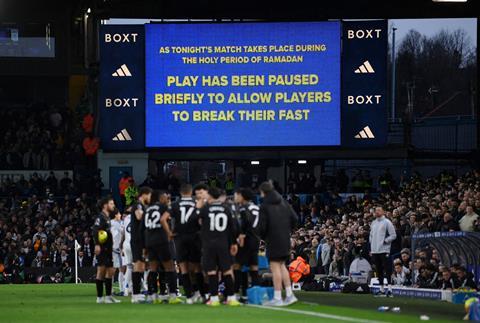
Some Premier League football matches are being paused for Ramadan this year.
The Mirror published a list of six matches that would be affected. This follows an agreement set up in 2021 to allow Muslim players to break their fast during a football match. At a natural pause in the game – such as a goal-kick or throw-in – the match is paused just after sunset to allow Muslim players to break their fast during the match.
There were loud boos in last week’s match between Leeds and Manchester City, when it was paused for Ramadan in the 12th minute. At least one Christian minister has written to complain.
It is interesting to observe this latest concession to Islamic demands for provision to accommodate fasting during Ramadan. This is the kind of accommodation to Islam that one might expect in an Islamic country, but not in a Christian country. By contrast, Christian players in the Premier League often have to play on Sundays.
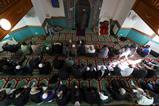
Other recent accommodations to Islam include rescheduling exams to avoid Ramadan, Ramadan lights in London, an Iftar in Manchester United’s Old Trafford stadium, provision of Muslim prayer rooms, halal food in many workplaces, and so much more.
If Christians do not stand up for Christian principles in our culture, then we should not be surprised when other values take precedence
All of these mark a significant shift in our culture towards facilitating the practices of the Islamic religion. As I write, we understand that the government is intending to adopt an official definition of Islamophobia, in an attempt to appease the demands of Muslim activists, creating in effect an Islamic blasphemy code. In another example, the Crown Prosecution Service recently persisted in trying to convict Hamit Coskun for burning a copy of the Qur’an in an act of political protest. Fortunately, this was rebutted by the courts.
Proud of your faith - or apologising for it?
Islam is an assertive religion. Its followers are unashamed and bold in making their demands. Christians, by contrast, are not often assertive, and tend more towards apologising for their faith rather than being proud of it.
Christianity and its influence in this nation has been in decline for some decades now. This has been reflected in the culture in various ways, not least in law. Sunday trading laws have been relaxed so far as to hardly make a difference, and most Christians hardly care. Christian blasphemy laws have been abolished, but now we see the prospect of an Islamic blasphemy code. Marriage has been redefined. Divorce has been made easier than exiting some phone contracts. Gender has been redefined. Abortion is now effectively on demand at home. Plans to legalise poisoning people on the NHS are being debated in parliament as I write.
Meanwhile, many Christians argue that we should just focus on preaching the gospel and not engage in issues of culture. Danny Webster from the Evangelical Alliance implies that it is wrong to want Christianity to have a “preferential position in society, culture and the formation of laws and institutions” of the nation. Would he prefer that Islam had such a preferential position? Several prominent Christian leaders signed an open letter complaining about ‘co-opting’ of Christian faith and symbols. Would they rather that Islam was co-opted one wonders?
No neutrality
The simple fact is that there is no such thing as a neutral culture. A culture or a society is either seeking to glorify the one true God and obey his commands, or it is not. If it is not, then it is going to be glorifying and obeying something else.
It is no surprise, then, that as Christianity has declined in influence, Islam has grown in influence. If Muslims are more assertive in requesting preferential treatment than Christians are, then we will see increased preferential treatment for Islam. If Christians do not stand up for Christian values and Christian principles in our culture, then we should not be surprised when other values take precedence.
Fighting spirit
There is always a battle over the soul of a nation or culture. Historically, it was a battle to outlaw under-age sex, for example. It was also a battle to outlaw Sunday trading so that Sunday was reserved for Christian worship. It was a battle to ensure that Christianity is taught in schools. It was Christians that battled to outlaw slavery.
I am so grateful for the many Christians in previous generations who fought these battles and many others which we continue to benefit from in our society today.
Sadly, few Christians today appear to have the fighting spirit that Christians of previous generations had. Some even think it is wrong to fight such battles. Consequently, Christian influence on society as a whole is rapidly deteriorating, and Islam is being allowed to take its place.
If these trends continue, it will not be too long before we become a fully Islamic nation. Once an Islamic blasphemy code is in place, it will be very hard to resist the influence of Islam.
Pausing football matches can of course be seen as a minor thing that hardly makes a difference. But it is part of a much bigger trend towards the Islamisation of Britain. Only a confident, bold, assertive Christianity can withstand this trend. The question is whether the church in Britain is up for the challenge?























10 Readers' comments