






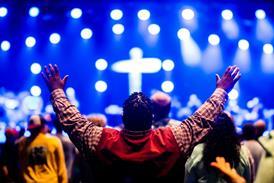





Reform UK has pledged to stop churches being turned into mosques. But this isn’t a hostile takeover, says Andy Kind. If we want church buildings to remain places of Christian worship, we just need to make sure Christians go to them

There’s a new mosque near me. It used to be St Peter’s Methodist Church, and I used to go to nursery there. There’s still part of a chipped front tooth lodged deep in a flower bed, perhaps.
I would have much preferred for it to remain a church. I do not say: “I’m just glad the building is being used” or: “Well, as long as somebody is worshipping their God there, that’s the main thing.” I believe that Christianity is true, and the only story of genuine hope for human beings. I long to see people operating within that story.
But on the other hand, I will not say: “This is an outrage!” For it to be an outrage, there would need to be some level of injustice involved, and the truth is much more prosaic.
St Peter’s closed its doors because its congregation dwindled down to a couple of Maureens and a single packet of custard creams. There are not currently enough people in the local area who see Methodism as their vibe.
There are, however, enough people to make a mosque viable. Should those people be banned from coming together as a community? This is not a game of Capture the Flag, in which some poor crusading minister was caught off-guard and found himself outflanked amid the gravestones. Nobody was kidnapped, nobody is breaking and entering.
Zia Yusuf, Reform UK’s home affairs spokesperson, has vowed that his party would “end the incendiary practice of converting churches into mosques or any other places of worship by granting listed status automatically to all churches and prohibiting that.”
you can’t magically transform a Church of England building into a mosque
This creates a rather comic picture. It means the house church that meets down the road from me will now enjoy listed status. It also means that the desolate warehouse where I currently worship - which needs condemning and putting out of its misery, not preserving - will soon be given the same level of prestige as Westminster Abbey.
I am being deliberately facetious, but the reality is that listing a building does nothing to grow a church congregation - the one factor that makes churches viable in the first place. Nobody is talking about the “incendiary practice” of vape shops occupying former WH Smiths. Because that would be nonsense.
For those people terrified that they will leave their cottage in St Mary Mead one Sunday morning and find the village church rammed with hijabs and kanduras, it’s worth pointing out that you can’t magically transform a Church of England building into a mosque. Church of England churches are ‘consecrated’, which means it is almost impossible to turn one into a place of alternative worship. Churches remain churches for as long as those churches wish to remain so. No congregation has ever been forced out of their place of worship because some Muslims put 50p on the side of a pool table.
It’s all very well talking about preserving Christian heritage, but I think some people would just like it if we lived in an episode of Downton Abbey (although not the one where world war breaks out, or half of them drop dead from Spanish Flu). Whatever you take Christian heritage to mean, the root of it is quite simple. It is built on centuries of preaching the gospel to the unconverted, and of the freely chosen commitment by millions of individuals to follow and serve Jesus Christ. People become Christians because other people tell them about Him.
If we are concerned that a church near us may be threatened with closure, we could always start going along. But we could also start giving people reasons, beyond some vague attachment to tradition, why they might want to try church.
You could also invite people to meet in your home. That way, if Reform ever does take power, you’ll be able to install a nice blue plaque on the wall.























4 Readers' comments