
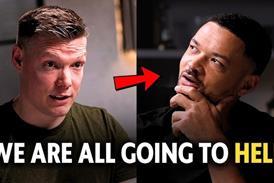
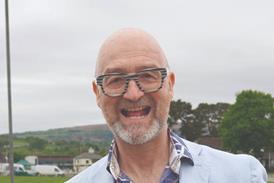



In September, Conservative MP Danny Kruger became the latest high profile Tory to defect to Reform UK. Here, he speaks with fellow Christian and MP, Tim Farron, about what the decision cost him and why he feels compelled to champion Christian values
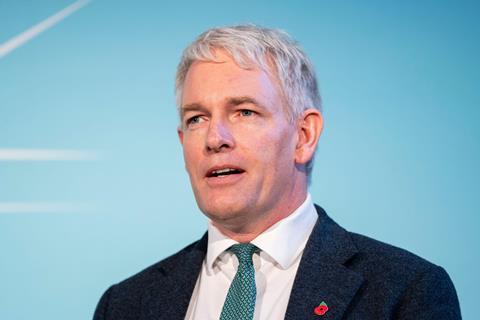
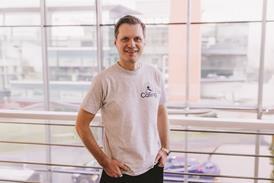
Danny Kruger MBE has been a Member of Parliament for almost 15 years. The son of Bake Off judge Prue Leith, Kruger is an outspoken Christian and has long championed the importance of recognising Britain’s Christian heritage and values.
In July, the Conservative MP for East Wiltshire gave an impassioned speech to a near-empty chamber that later went viral online. Millions viewed the video, in which Kruger called for “the recovery of Christian politics”, saying that “the route to a prosperous modernity is founded on respect for human dignity, responsibility for the created world, and the worship of God.”
Two months later, the former shadow work and pensions minister shocked many of his Conservative Party colleagues by defecting to Reform UK. Speaking at a press conference alongside Nigel Farage, Kruger said the Conservatives were “over”, describing the party as “divided” and the Tory brand as “toxic”.
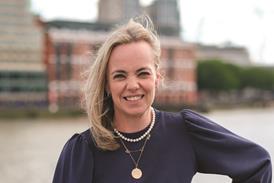
He speaks with Liberal Democrat MP, Tim Farron, about his political shift, the role of Christian faith in public life and his hopes for Britain.
Danny, you left the Conservative Party three months ago to join Reform. How has that been for you personally? Has it strained relationships?
It was painful at the time but, overall, better than I feared. Yes, I’ve moved party, but only a few seats along the green benches, and most people have understood my reasons. Friendships in the Conservative Party have taken a dent, but colleagues have treated me well. Locally it’s harder, because people who campaigned for me feel let down, and I feel that deeply. But I made the move because I believe it was right for the country and for the causes I care about.
Why Reform, and why leave a party you were part of for so long?
Ultimately, I concluded the Conservative Party couldn’t deliver the urgent change the country needs. The party is fatally split and impossible to lead with unity or purpose. Reform, meanwhile, has a leader and team united around a clear vision and capable of offering a serious alternative at the next election. I left because I lost trust in the Conservatives. I joined Reform because I believe it can deliver real change.
What kind of change do you believe the country urgently needs?
We need radical, but conservative reform. My focus is on reforming government itself. People vote for change, but nothing really changes because ministers can’t implement bold decisions. Reform will bring in changes that genuinely shift how the country works. We need to restore family life, empower local communities and renew the nation in our economy, culture, and defences. It’s about restoring democracy and putting people back in charge.
God inhabits real life, including how societies organise themselves
To what extent is this rooted in a desire to Christianise the nation?
Many people of various faiths share this socially conservative vision of family and community. These ideas are Christian, but not exclusively so. I wouldn’t talk about Christianising the nation, which raises unhelpful questions, but I would love us to be a more confidently Christian country that acknowledges its Christian heritage. A society aligned more closely with the teachings of Jesus would be a happier one.
What does a Christian country look like? Are we one?
Our institutions were founded on Christian teaching and still rest on Christian ideas. The religion of the state is Christian. But the people themselves are not Christian in the sense of being faithful followers of Jesus, and perhaps they never have been. Still, culturally and historically, we grew out of Christianity. It’s our parent tradition, and that can’t be disavowed.
The New Testament speaks about individual salvation. Do you worry that if a Christian state fails, it reflects poorly on the gospel?
I understand that concern. We shouldn’t turn the state into the Church. But it is right that our institutions acknowledge their Christian identity. Historically, the monarchy recognised its obligations to God, which shaped its role. Remembering our Christian origins is accurate and helpful, reminding us there is more to government than the people who run it. And while salvation is individual, God is also a God of nations.
If Christianity isn’t at the heart of society, what takes its place? Is there a risk of idolising the state or nation?
Yes, we can idolise anything, including the state or nation. But the incarnation shows that God inhabits real life, including how societies organise themselves, which is mostly through nations. Nations allow unity on a human scale. I’d rather people have national loyalty than loyalty to tribes or supranational structures, which more easily become idolatrous. Globalist ideas of world government risk placing humanity in the position of God. Nations, rightly ordered, are a good thing.
As Christians, we’re citizens of another kingdom. Is there a risk that nationalism or internationalism distracts from our true identity in Christ?
There is that risk. But we are placed here as sojourners, and should honour and enjoy the place we’re in. Your affection for Westmoreland isn’t wrong, even if it’s not your final home.
This is a season of hope. What are you hopeful about?
Despite how dire things are, people are searching for hope. I think something significant is happening in our politics. We’re seeing signs of revival in the Church and in our culture. If we handle this moment well, we can meet the public’s deep desire for change and restoration.
Listen to the full interview on Tim Farron’s ‘A Mucky Business’ podcast


















3 Readers' comments